

A “9H hardness screen protector” has passed the ASTM D3363 pencil test at grade 9H, meaning a 9H graphite pencil couldn’t scratch it. That’s it. It says nothing about how the protector handles a drop, a knock against a kerb, or years of pocket wear.
Three things to keep in mind before that label sways your decision:
- ASTM D3363 is the industry standard behind the number, a pencil test, not a mineral hardness rating.
- The Mohs scale, the one geologists use for rocks and gems, measures something entirely different and doesn’t convert directly to pencil grades.
- At SmartProtectors, we treat 9H as a baseline, not a selling point, and steer customers towards fit, coating quality, and warranty terms instead.
Nearly every tempered glass protector sold today claims 9H. That should indicate that it’s a baseline level, not the highest possible.
Key Takeaways
A 9H rating confirms scratch resistance under the ASTM D3363 pencil test alone, so buyers should judge protectors on fit, coating, and warranty rather than the hardness number.
| Point | Details |
|---|---|
| 9H is a pencil test | ASTM D3363 measures scratch resistance against a graded pencil, not overall toughness. |
| No Mohs equivalence | The pencil scale and the mineral Mohs scale use different methods and don’t convert directly. |
| Scratch resistance ≠ impact resistance | A 9H surface can still crack or shatter on a hard drop despite resisting scratches. |
| Material changes behaviour | Tempered glass, hydrogel, TPU, and PET all handle the same 9H label differently on curved or flat screens. |
| Prioritise fit and warranty | SmartProtectors recommends judging protectors on edge coverage, coating, installation aids, and returns policy over the hardness number alone. |
Table of Contents
- What does 9H hardness actually mean?
- How does 9H apply across different protector materials?
- What does a 9H protector protect against, and what doesn’t it stop?
- What should you prioritise instead of the 9H label?
- Which marketing claims about 9H should you be sceptical of?
- How do you install and maintain a 9H screen protector properly?
- Where to find a screen protector that fits properly
- Sources
What does 9H hardness actually mean?
The “9H” you see on packaging comes from ASTM D3363, a pencil-hardness test originally developed for coatings and paint finishes. A technician drags a pencil lead across the surface at a 45 degree angle under a fixed amount of pressure. The scale runs from 9B, the softest, up to 10H, the hardest commonly tested level in this system. If a 9H pencil fails to leave a visible mark but a harder lead would, the surface earns a 9H rating.
That’s a very different exercise from the Mohs scale, which ranks minerals from talc (1) to diamond (10) based on which materials can scratch which. There’s no official conversion between the two systems. As Android Police explains, treating a 9H pencil result as equivalent to a Mohs 9 rating is simply incorrect, though it’s a mix-up marketing copy encourages constantly.
A pencil test tells you whether graphite can scratch a surface under lab conditions. It tells you nothing about whether the surface will crack, chip, or shatter when your phone hits pavement.
HowToGeek notes that 9H is the highest level commonly advertised on consumer protectors, and it only describes scratch resistance, never drop resistance, flexibility, or how the protector bonds to your screen’s edges.
How does 9H apply across different protector materials?
The same 9H label gets slapped on wildly different products, and the material underneath changes how that hardness actually behaves day to day.
- Tempered glass: excellent scratch resistance and a smooth, glass-like feel, but rigid. On flat screens it’s superb; on curved-edge displays it can lift at the corners or leave visible gaps.
- Hybrid and glass-coated films: a thin hard coating over a flexible base, aiming to combine scratch resistance with better edge adhesion on curved glass.
- Hydrogel and TPU films: flexible, often self-healing for light surface marks, and they hug curved edges well, though their scratch resistance rarely matches tempered glass even with a 9H coating applied.
- PET films: a middle ground between plastic and glass, thinner and cheaper, sensible for older devices or as a budget backup rather than a primary shield.
Pro Tip: If your phone has a curved display, a flexible 9H hybrid or hydrogel film will usually sit flush against the screen far better than rigid glass, which tends to leave a visible edge line and can lift over time.
Our own comparison of tempered glass versus hydrogel protectors goes deeper into which trade offs matter for specific device shapes.
What does a 9H protector protect against, and what doesn’t it stop?
A 9H rating handles the everyday abrasives that actually cause most screen damage: keys jangling in a pocket, coins, grit and sand, and the light scuffing from sliding your phone across a rough table. That’s genuinely useful, and it’s the reason most people buy a protector in the first place.
What it doesn’t promise is impact resistance. A surface can pass the pencil test and still crack or shatter the moment your phone lands corner first on a tiled floor. Scratch resistance and fracture toughness are separate physical properties, and a lab pencil dragged across a flat sample simulates neither drops nor sudden shock.
Quick rules for getting the most out of one:
- Do wipe the surface with a microfibre cloth rather than an abrasive one.
- Do replace a cracked protector promptly; a compromised surface transfers impact force differently.
- Don’t assume 9H means you can drop your phone onto concrete without consequence.
- Don’t use the screen as a cutting surface or scrape it with anything harder than the rated pencil grade, such as certain ceramics or hardened tools.
What should you prioritise instead of the 9H label?
Since nearly every serious competitor also claims 9H, it stops being a differentiator and starts being table stakes. What actually separates a good protector from a mediocre one sits elsewhere on the spec sheet.
Buyer’s checklist:
- Fit and edge coverage: does it match your screen’s curvature, or leave gaps at the corners?
- Oleophobic coating quality: cheap coatings wear off within weeks, leaving smudgy, sticky glass.
- Installation aids: an alignment tray or applicator tool saves you from trapped bubbles and off-centre placement.
- Warranty and returns: a seller confident in their product usually backs it with a replacement guarantee.
- Packaging format: multi-packs are worth it if you’re prone to bubbles or cracked corners on first attempts.
Three steps for weighing it all together:
- Confirm the protector is designed for your exact device model, not a generic size.
- Check whether the listing names an actual test standard (ASTM D3363) rather than just “military grade” or “diamond hard”.
- Compare warranty length and return policy before comparing hardness numbers.
Our guide to choosing tempered glass walks through fit and coating checks in more detail if you want a longer read before buying.
Which marketing claims about 9H should you be sceptical of?
Packaging language around hardness gets creative, and some of it is designed to make a basic pencil-test pass sound like a laboratory breakthrough.
Watch for these red flags:
- Any claim that 9H equals “Mohs 9” or compares the protector directly to sapphire or diamond.
- Vague references to “independent lab testing” with no named standard, lab, or report attached.
- Impact or drop protection claims that lean entirely on the hardness number, with no separate drop-test data.
BGR points out that the pencil scale simply has no verified conversion to Mohs, and manufacturers exploit that gap because most shoppers assume higher numbers always mean tougher glass.
When a listing can’t name the test it used, assume the hardness claim is decorative rather than informative.
Trust signals worth actually weighing: a named standard like ASTM D3363, a manufacturer explaining tempering separately from surface hardness (as PrimePro’s technical overview does), and reviewer drop tests from outlets that publish their methodology rather than a single adjective like “durable”.
How do you install and maintain a 9H screen protector properly?
Getting a protector on cleanly matters more for long-term performance than the hardness number ever will.
- Clean the screen thoroughly with the supplied wipe, then check for dust under strong light before applying.
- Use the included alignment tray or guide if one is provided; align once and commit rather than repositioning repeatedly.
- Press from the centre outward to push air towards the edges, using a card or squeegee if supplied.
- Leave it undisturbed for the time stated in the instructions before your first screen clean.
Replace a protector once it cracks, even superficially, since a compromised surface can concentrate stress unpredictably on the next knock. Keep a spare in a drawer if you’re accident-prone.
Pro Tip: Don’t test scratch resistance yourself with keys or knives to “prove” the 9H claim. You risk damaging a protector that was performing fine, and a genuine failure under controlled lab conditions looks nothing like a kitchen-table scratch test.
How does SmartProtectors verify 9H claims on its products?
We don’t take a supplier’s hardness claim at face value. Every protector line we list is checked against its stated test standard, and where a supplier only offers vague marketing language without naming ASTM D3363 or an equivalent method, we push back before it goes on the catalogue.
Our approach is simple: hardness numbers matter far less than whether the protector actually fits the device, includes a proper installation aid, and comes with a warranty we’re willing to stand behind.
Dian, who covers device protection and materials for SmartProtectors, has spent years tracking how tempered glass, hydrogel, and hybrid films perform against the claims printed on their packaging.
How I choose a screen protector for daily use
For a phone that lives in a pocket alongside keys and coins, I lean towards tempered glass with a decent oleophobic coating and don’t lose sleep over whether it says 9H or claims something higher. What I actually check is whether the box includes an alignment tool, because that determines whether installation goes smoothly or ends in a bubble I’m stuck with for months.
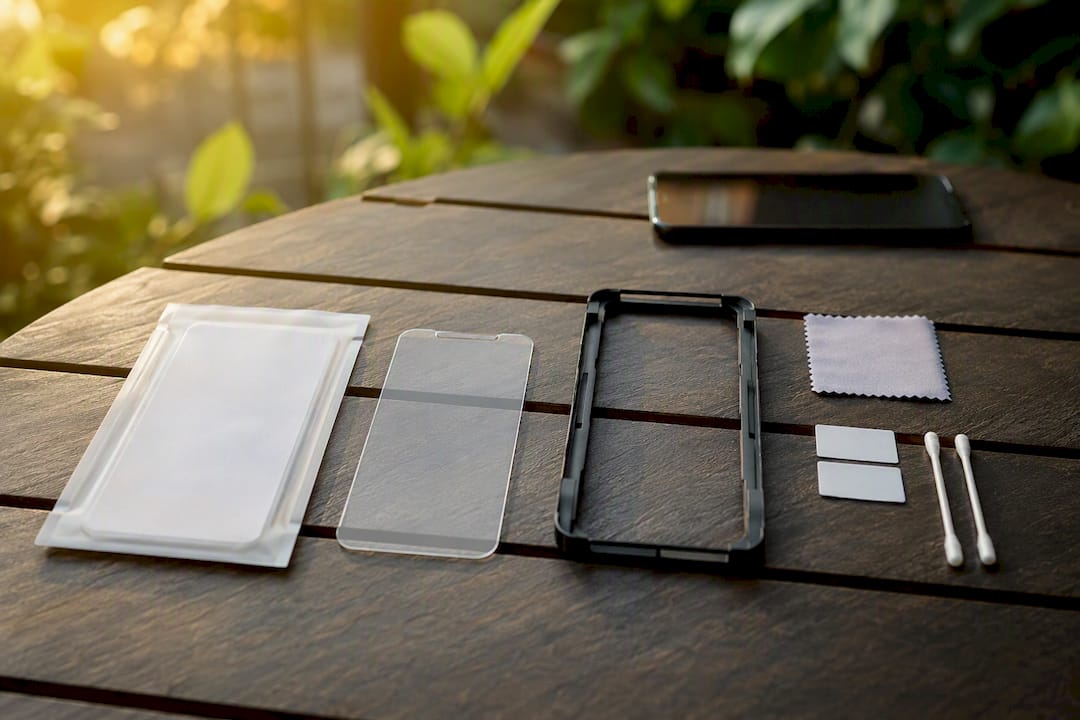
I also buy in twos where possible. Screen protectors crack; that’s their job. Having a spare ready means a five-minute swap instead of a week of squinting through a spiderweb of hairline cracks.
Where to find a screen protector that fits properly
Chasing the highest hardness number on the box gets you nowhere if the protector doesn’t match your screen’s curve or arrives without a proper applicator. SmartProtectors checks fit, coating quality, and installation kit before a product ever reaches our catalogue, alongside confirming the manufacturer’s hardness claims against named test standards rather than vague marketing copy.
Browse protectors built for your exact device, including full coverage options with installation tools that solve the bubble and misalignment problems most buyers run into. Can’t find your specific model listed? Submit a request through our full product catalogue and we’ll source it. Every listing includes warranty and returns details upfront, so you know exactly what happens if a protector arrives damaged or doesn’t fit as expected.
Sources
- ‘9H hardness’ is meaningless for glass screen protectors
- What Is Screen Protector Hardness, and Does It Matter?
- The hardness rating on your screen protector might not mean what you think
- What is 9H Tempered Glass? Why standard glass scratches so easily - PrimePro Glass Manufacturer