

What are the best tempered glass screen protectors in the UK?
The strongest all-round pick for most UK smartphone users is the Spigen GlasTR EZ Fit Tempered Glass Screen Protector, recommended by Wirecutter for its foolproof alignment tool and reliable impact protection on iPhone 17 and older models. For Android users or anyone wanting a reusable installation frame, the ESR ArmorRite Tempered Glass Screen Protector is the closest rival. Budget buyers get solid value from the amFilm Auto-Alignment OneTouch Screen Protector, while the Mothca Matte Privacy Screen Protector suits anyone working outdoors or in bright offices.
| Product | Best for | Installation system | Impact protection | Special features | Rating |
|---|---|---|---|---|---|
| Tech Supplier Ltd tempered glass | General UK users, variety and value | Standard | Good | Wide device range | Highly rated with strong customer feedback |
| Mobile Shark Limited tempered glass | Fast UK delivery, broad compatibility | Standard | Good | Competitive pricing | Moderate rating with some user reviews |
| Spigen GlasTR EZ Fit | iPhone users, easy install | Alignment tool (single-use) | Excellent | Oleophobic coating, case-friendly | — |
| ESR ArmorRite | Easy application, optical clarity | Reusable alignment frame | Excellent | Glossy finish, fingerprint-resistant | — |
| amFilm Auto-Alignment OneTouch | Budget-conscious buyers | Disposable alignment frame | Good | Case-friendly, HD clear | — |
| Mothca Matte Privacy | Anti-glare, privacy needs | Alignment frame included | Good | Matte finish, privacy filter, paperlike texture | — |
Key benefits at a glance:
- Spigen GlasTR EZ Fit: single-use alignment tray removes the guesswork; great for first-time installers on iPhone 17 or 16 series
- ESR ArmorRite: reusable alignment frame means you can reapply without buying a new kit; image quality stays crisp
- amFilm Auto-Alignment OneTouch: costs less than the ESR and delivers comparable protection, though the disposable frame requires a steadier hand
- Mothca Matte Privacy Screen Protector: reduces glare noticeably in bright environments and adds a privacy filter; trade-off is slightly reduced screen brightness
- Tech Supplier Ltd: a verified UK wholesaler with an extensive product catalogue covering many phone models, useful when you need something specific quickly
- Mobile Shark Limited: competitive prices and fast UK shipping make it a practical option for users who need a replacement in a hurry
How do you choose the right tempered glass protector for your phone?
Device compatibility comes first. A protector cut for an iPhone 16 will not fit a Samsung Galaxy S24, and even within the same brand, screen curvature varies enough to cause lifting edges or case conflicts. Curved screens present a particular challenge: no perfect flat-glass solution exists for fully curved displays, so you choose between partial flat coverage or a full-coverage protector with a border that may clip your case.
Hardness ratings deserve scepticism. The “9H” label printed on most packaging refers to the ASTM pencil hardness scale, where the hardest pencil is actually softer than tempered glass itself. That makes 9H a near-meaningless marketing figure. The Mohs scale is a more honest measure of scratch resistance, though few brands advertise it. Third-party hands-on tests from sources like Wirecutter or PCMag are far more useful than box claims.
Coatings matter for daily comfort. An oleophobic coating repels finger oils and keeps the surface easy to wipe clean. Without one, a glossy protector turns into a fingerprint magnet within hours of use.
Top selection criteria:
- Confirm exact model compatibility before buying, especially for curved-screen devices
- Prioritise an alignment frame in the installation kit, reusable if possible
- Check for oleophobic or anti-fingerprint coating
- Decide whether you need matte, privacy, or standard clear glass based on your environment
- Look for edge-to-edge coverage if your phone has minimal bezels
- Verify case compatibility, particularly if you use a thick or framed case
Pro Tip: Skip the 9H hardness claim entirely when comparing protectors. Instead, search for independent drop and scratch tests on the specific model you are considering. A mid-priced protector with a good installation frame will protect your screen better than a “9H” protector applied with bubbles and misalignment.
What types of tempered glass screen protectors are available?
Understanding the types of screen protectors on the market helps you match the right one to your lifestyle rather than defaulting to whatever is cheapest.
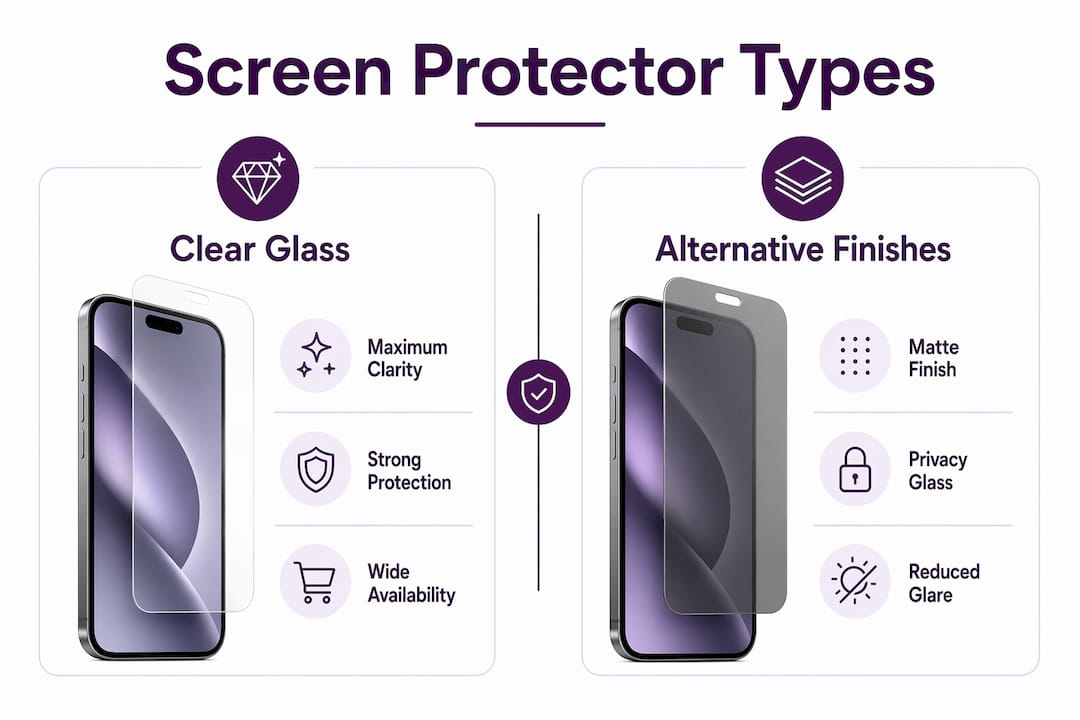
Standard clear glass
Clear tempered glass is the default choice for most users. It preserves full screen brightness and colour accuracy, feels closest to the original display surface, and offers the best impact resistance of the three main types. The trade-off is that it shows fingerprints more readily than matte alternatives.
Pros: maximum clarity, strong impact protection, widely available for most devices Cons: fingerprints visible on glossy surface, can reflect glare in bright light
Matte finish glass
Matte protectors scatter light rather than reflecting it, which makes them noticeably better outdoors or near windows. The Mothca Matte Privacy Screen Protector is a good example: it gives the screen a paperlike texture that many users find more comfortable for long reading sessions. The downside is a measurable reduction in brightness and sharpness, which matters if you edit photos or watch films regularly.
Pros: reduced glare, pleasant texture, better for bright environments Cons: slightly softer image, lower brightness, not ideal for media consumption
Privacy glass
Privacy protectors use a micro-louver filter that blocks the screen from side angles, so only the person looking straight on can read it. They suit commuters, open-plan office workers, or anyone who handles sensitive information in public. The cost is higher brightness settings needed to compensate for the filter, and viewing comfort drops if you tilt the phone even slightly.
Pros: blocks side-angle viewing, protects sensitive data in public Cons: requires higher brightness, uncomfortable at angles, typically pricier
How do you apply a tempered glass protector without bubbles?
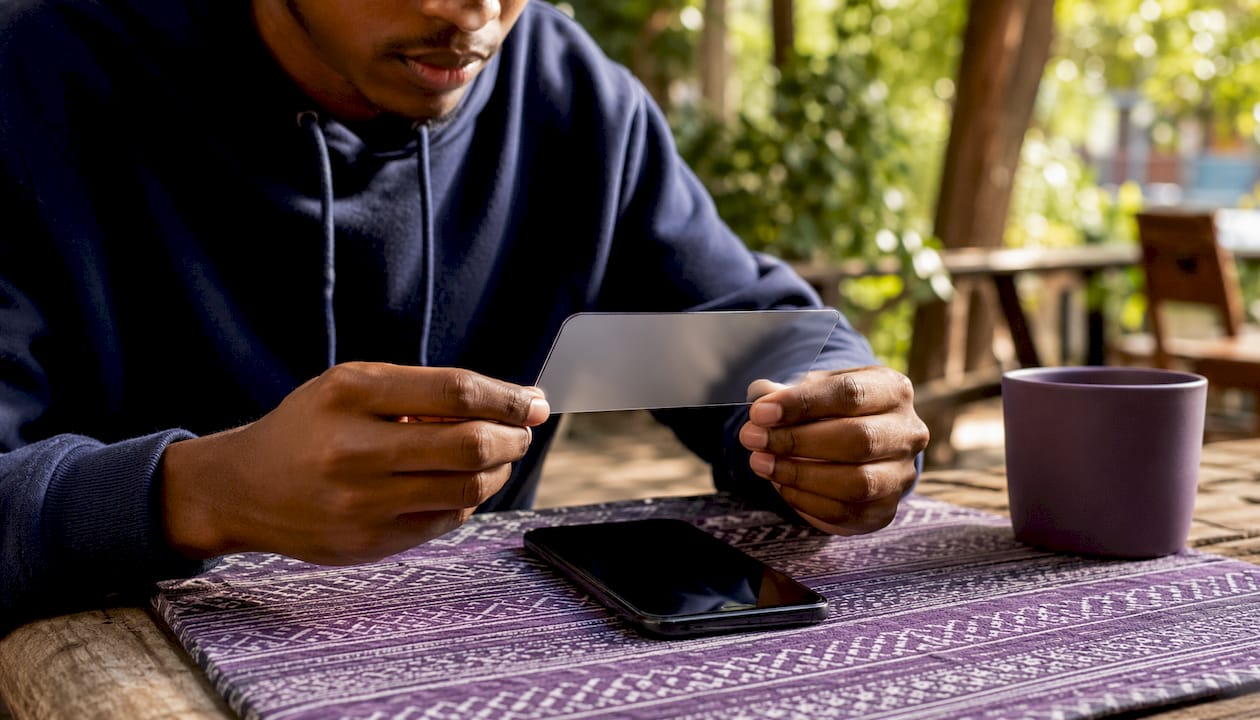
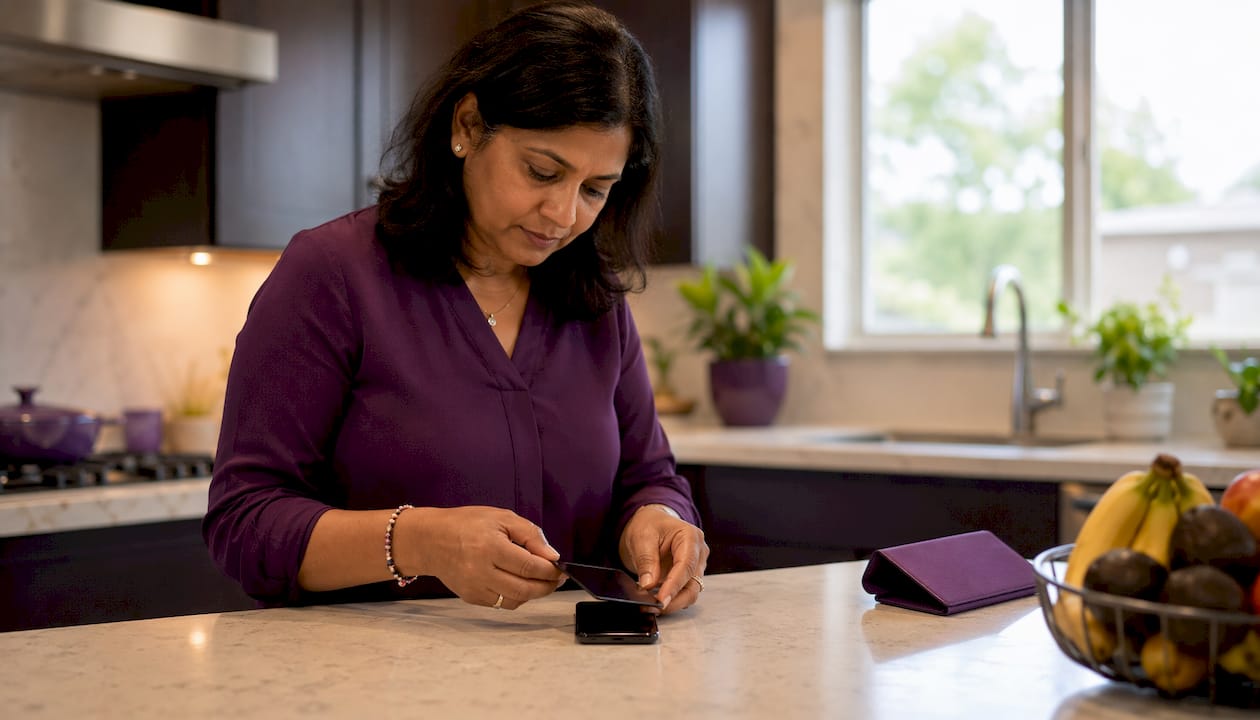
Poor installation is the most common reason a good protector fails within days. Dust trapped under the glass causes permanent bubbles, and a misaligned protector can block sensors or leave an unsightly gap along one edge.
Step-by-step installation:
- Work in a low-dust environment, ideally a bathroom with the shower briefly run to settle airborne particles
- Use the wet wipe from the kit to clean the screen, then follow with the dry cloth
- Press the dust-removal sticker firmly across the screen to lift any remaining particles
- If your kit includes an alignment frame, attach it to the phone before peeling the protector backing
- Lower the protector onto the screen using the frame as a guide; do not press yet
- Once positioned, press gently from the centre outward to push air to the edges
- Use the squeegee card in firm, overlapping strokes to remove any remaining bubbles
Pro Tip: If your protector comes with a reusable alignment frame like the ESR ArmorRite’s, take full advantage of it. Place the protector inside the frame, set the phone face-down on top, close the lid, and pull the tab. The glass seats itself. You barely need to touch it.
The alignment frame approach is particularly valuable for first-time installers because it removes the two biggest failure points: crooked placement and premature contact before the glass is properly positioned.
Why installation quality matters more than glass hardness
The best glass in the world underperforms when it is applied badly. A protector with a single trapped dust particle creates a pressure point that can crack the glass from the inside, and a misaligned edge lifts within weeks, letting grit work its way underneath.
Reviewers consistently find that installation tools, not material specifications, separate the protectors that last from those that fail early. A mid-tier protector applied perfectly will outlast a premium one slapped on in poor lighting. The ESR ArmorRite’s reusable frame is the clearest example of this principle in practice: three consecutive applications, all spot-on, with only minor squeegee work needed each time.
The “9H” hardness debate reinforces the same point. Since that rating measures pencil hardness rather than real-world scratch resistance, chasing the highest number on the box is less useful than finding a protector with a proven installation system and a reputable third-party test behind it.
SmartProtectors: one place for all your device protection
Finding the right protector for a less common phone model can be genuinely frustrating. SmartProtectors stocks tempered glass screen protectors across a wide range of smartphones, tablets, smartwatches, and laptops, including models that larger retailers often overlook. If your device is not listed, you can submit a sourcing request and SmartProtectors will add it to the catalogue.
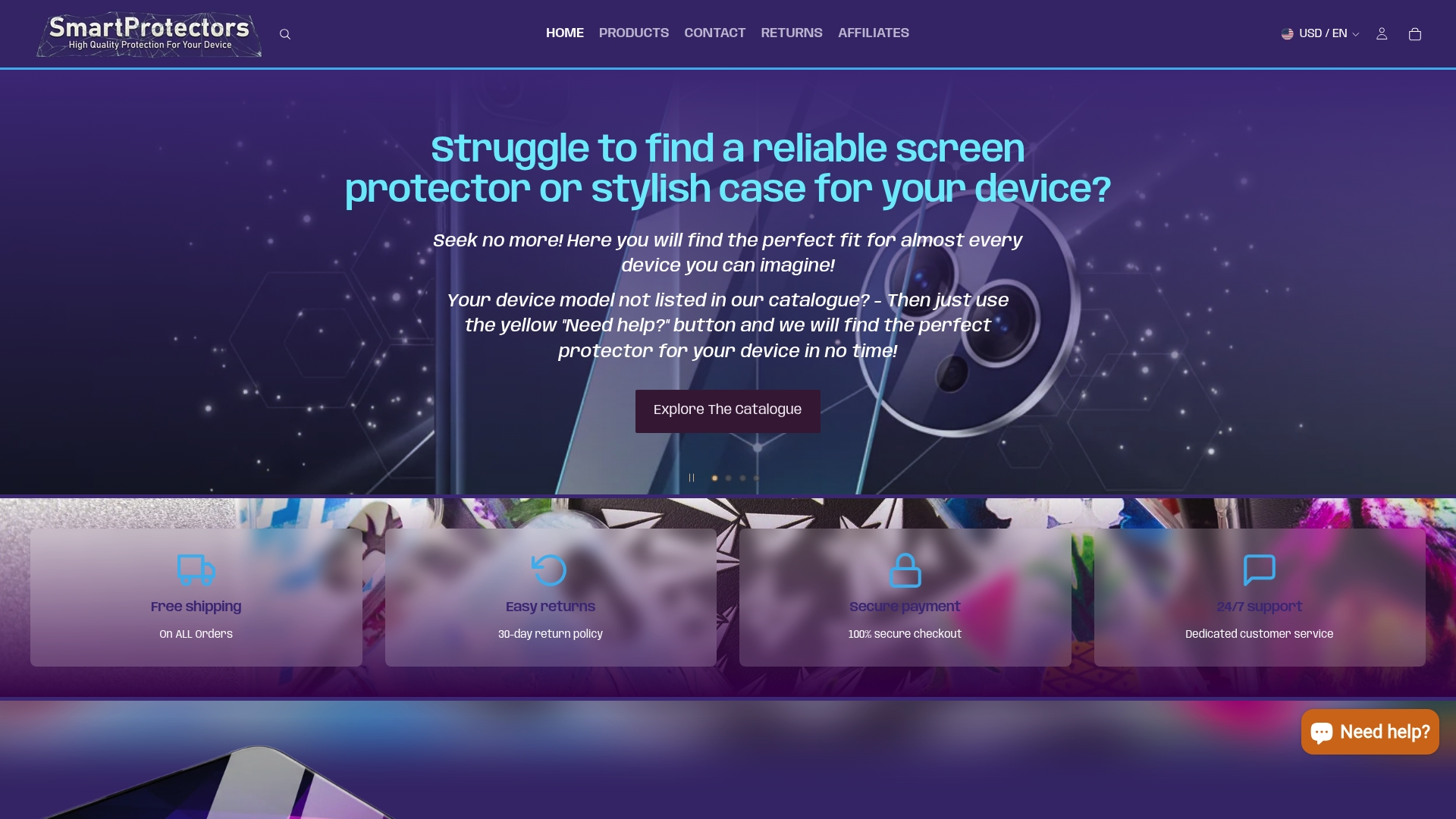
Beyond screen protectors, the range covers camera lens protectors, device cases, and back covers, all at prices that do not require a second thought before buying. Delivery is fast and the product selection is built around the reality that not everyone uses the same three flagship phones.
What SmartProtectors offers:
- Tempered glass screen protectors for a broad range of devices
- Camera lens protectors for added optical protection
- Cases and back covers for everyday and heavy-duty use
- Special order sourcing for hard-to-find models
Key takeaways
The best tempered glass protector combines a reliable installation system, honest scratch resistance, and the right finish for your environment, not the highest number on the box.
| Point | Details |
|---|---|
| Installation beats hardness | A perfectly applied mid-tier protector outperforms a premium one installed with bubbles or misalignment. |
| Ignore “9H” claims | The ASTM pencil hardness scale makes 9H a near-meaningless figure; look for third-party drop and scratch tests instead. |
| Match type to lifestyle | Clear glass suits most users; matte reduces glare outdoors; privacy glass protects sensitive data in public. |
| Curved screens need compromise | No flat tempered glass fits a fully curved display perfectly; choose between partial coverage or a bordered full-coverage option. |
| SmartProtectors for hard-to-find models | SmartProtectors stocks protectors for a wide device range and offers sourcing requests for unlisted models. |
The case for caring less about specs and more about fit
There is a tendency in screen protector buying to treat it like a technical purchase, hunting for the highest hardness rating or the thinnest glass. The spec sheet feels reassuring. But the protectors that actually survive a year of daily use are almost always the ones that were applied correctly on a clean screen, with a decent alignment tool, to a phone they were cut for.
The matte versus clear debate is similarly overthought for most buyers. Unless you spend significant time outdoors or handle sensitive data on public transport, a standard clear protector from a reputable brand, installed with care, covers everything you need. The Spigen GlasTR EZ Fit and ESR ArmorRite both prove that the real differentiator is the installation experience, not the glass composition.
For UK buyers, the practical question is less about which protector is theoretically best and more about where to get the right one for your specific device without paying over the odds. Tech Supplier Ltd and Mobile Shark Limited both serve that need from a UK base, while SmartProtectors fills the gap for less common models.