

Most tempered glass protectors need replacing every 6 to 12 months under normal use, though a light user might stretch that to two years while someone who drops their phone weekly could be back at the till within six. TPU and hydrogel films run shorter (three to nine months) because their “self-healing” surface layer is designed to wear away. Basic PET film is the cheapest and the quickest to look tired, often within three to six months.
The rule of thumb that actually matters: replace your protector the moment its protection, clarity, or touch response drops off, not on a fixed calendar date. A protector with a spider-web crack, a permanently smeary oleophobic coating, or a dead zone under your thumb has already stopped doing its job, regardless of how many months it’s been on the screen.
A few numbers worth anchoring this to:
- Tempered glass protectors typically last 6 months to 2 years, depending almost entirely on handling and drop frequency.
- The average person drops their phone 4 to 7 times a year, which is the real variable behind that wide range.
- SmartProtectors sells across all four main categories, so whichever material suits your habits, there’s a straightforward replacement waiting rather than a compromise.
Key Takeaways
Screen protector lifespan depends far more on handling and installation quality than on the material itself, and replacement should follow visible or functional decline rather than a fixed calendar date.
| Point | Details |
|---|---|
| Tempered glass ranges widest | Light users get 2+ years, heavy users 6–12 months, based on drop frequency. |
| Watch for functional signs | Reduced touch sensitivity or ghost touches mean replace now, not later. |
| Coatings fail before substrates | Privacy and anti-glare layers often need replacing well before the glass cracks. |
| Installation quality matters most | A clean, dust-free fit extends lifespan more than upgrading materials alone. |
| SmartProtectors covers all types | Tempered glass, TPU, and PET options with bundled installation tools and a sourcing service for rare devices. |
Table of Contents
- Screen protector lifespan by material and style
- What are the clearest signs you need a new screen protector?
- How and why do screen protectors actually fail?
- Does a cracked screen protector still protect your phone?
- How do you remove and fit a new screen protector without dust or bubbles?
- What habits actually extend a screen protector’s life?
- Which type of screen protector lasts longest?
- How reliable are these screen protector lifespan estimates?
- Should you replace on a schedule or wait for damage to show?
- Where to buy a screen protector that actually lasts
- Frequently asked questions
- Sources
Screen protector lifespan by material and style
The material you choose changes the entire replacement conversation. It’s not just about how tough the substance is. It’s about how it fails, and whether that failure is a slow fade or a sudden shatter.
Tempered glass: the middle ground
Tempered glass is the most popular choice because it balances scratch resistance with genuine impact absorption, and its lifespan reflects that balance. INAIRSPACE’s breakdown puts light users at two years or more, moderate users at 12 to 24 months, and heavy users (frequent drops, construction sites, gym bags full of keys) down at 6 to 12 months. A commuter who drops their phone onto a train platform floor twice a month is simply not getting the same mileage as someone who keeps their phone in a drawer half the day.
What actually ends a tempered glass protector’s life isn’t usually a full shatter. It’s the oleophobic coating rubbing off, leaving a permanently smeary surface, combined with the accumulation of pocket-grit scratches that catch the light at certain angles.
TPU and hydrogel: self-healing, but not self-renewing
TPU and hydrogel films market themselves on “self-healing” properties, meaning fine surface scratches can visibly soften or disappear over a day or two as the polymer relaxes back into shape. That’s real, but it only applies to superficial marks. Deeper cuts, edge lifting, and coating degradation aren’t reversible, and because the film itself is thinner and softer than glass, the whole thing typically needs swapping every three to nine months for a regular user. Heavier use compresses that further.
PET film: cheap, thin, and honestly, short-lived
Standard PET film and anti-glare PET variants sit at the budget end, and their lifespan matches the price. Expect three to six months before scratching or coating wear becomes noticeable, particularly with anti-glare finishes, where the matte texture itself is a coating that thins with repeated wiping. These make sense as a low-cost stopgap or for users who genuinely don’t mind replacing often, but they’re not the choice if you want to forget about your screen for a year.
Liquid glass and coating treatments
Liquid “glass” coatings, applied as a nano-layer rather than a physical sheet, claim scratch and impact resistance rivalling tempered glass. Real-world performance tends to fall well short of that marketing promise. Coating-only solutions offer no meaningful raised barrier against a sharp drop onto concrete, and most users report the perceived protection fading within weeks rather than months. Treat manufacturer claims here with more scepticism than you would for a physical film or glass sheet.
Specialty coatings change the maths entirely
Privacy filters, anti-glare layers, and antimicrobial treatments are functional add-ons riding on top of a substrate, and those layers wear out well before the base material fails. A privacy screen protector might have a technically intact glass layer at 18 months, but if the privacy angle has degraded to the point where colleagues can read your screen from the side, it’s no longer doing its one job. If that feature matters to you, plan to replace on the coating’s schedule, not the glass’s. Our guide to privacy screen protector alternatives covers which options hold their tint longest.
What are the clearest signs you need a new screen protector?
You don’t need a lab to tell whether your protector has had it. Your own eyes and fingertips are the best instrument you own, and the signs tend to cluster into three categories: visible damage, functional failure, and hygiene decline.
Cracks, spider-webbing, and edge chipping are the obvious ones. Any point where the surface has physically broken is also a point where dust, oil, and moisture can creep underneath, which speeds up everything else. Peeling or lifting at a corner isn’t cosmetic either. It’s an entry point for grit that will scratch the actual screen given enough time.
Functional signs are subtler but arguably more urgent, because they affect how you use your phone every single time you pick it up:
- Reduced touch sensitivity, where taps need extra pressure to register.
- Ghost touches or intermittent input, often caused by trapped moisture or a cracked digitiser layer beneath the film.
- Persistent bubbling that no amount of squeegeeing will move.
Then there’s the visual and hygiene decline that creeps in slowly enough that you barely notice it day to day: yellowing around the edges, a permanent haze that no cleaning restores, and heavy micro-scratching dense enough to catch glare and make text genuinely harder to read in sunlight. BGR’s guidance on oleophobic coatings notes that once that fingerprint-resistant layer has worn through, the smearing simply doesn’t clean off, no matter what cloth you use.
Pro Tip: If you’re unsure whether a mark is surface grime or actual coating failure, breathe on the screen the way you’d fog a mirror. Genuine coating wear shows as a patchy, uneven fog pattern rather than clearing evenly, and that patchiness won’t wipe away.
As for action: a crack or lifted edge means replace now. A hazy patch that’s purely surface oil often responds to a proper clean first. Reduced touch sensitivity that persists after cleaning is a replace-now signal, since it usually means damage sits beneath the surface rather than on it.
How and why do screen protectors actually fail?
Every protector eventually fails through one of five mechanisms, and understanding which one is happening to yours tells you whether cleaning will help or whether you’re just delaying the inevitable.
Oleophobic coating wear happens first and fastest. This ultra-thin layer resists fingerprints and smudges, and it’s also the first thing to go, worn away by the friction of your thumb swiping the same few paths hundreds of times a day.
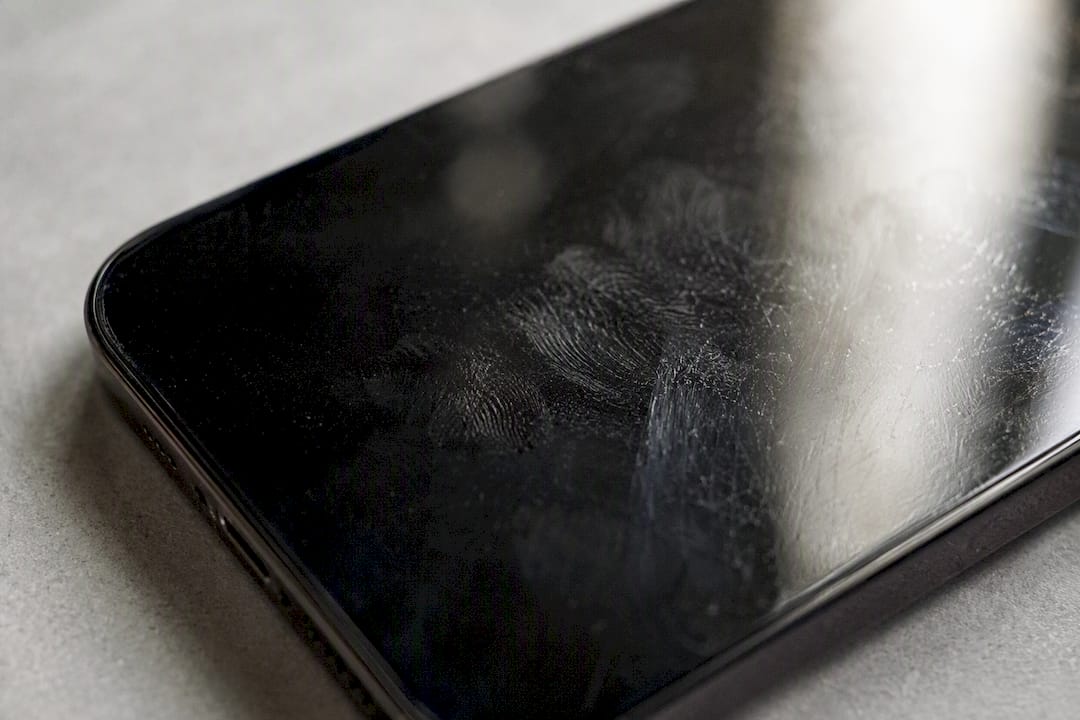
Micro-abrasion builds up gradually from pocket grit, sand, and the inevitable bunch of keys sharing space with your phone. Each individual scratch is invisible. The cumulative effect, viewed under bright light or direct sun, is a hazy surface that scatters light instead of transmitting it cleanly.
Edge chipping is more dangerous than it looks, because a chipped edge acts as a stress concentrator. A tiny nick at the corner of a tempered glass sheet is exactly where a full-width crack starts when the phone next takes a knock, even a minor one that wouldn’t have cracked an undamaged sheet.
Adhesive failure shows up as bubbling, lifting, or dust creeping in under the edges. Poor installation is one of the leading causes here: trapped dust or a slightly misaligned first attempt creates weak points that peel faster than a clean install ever would.
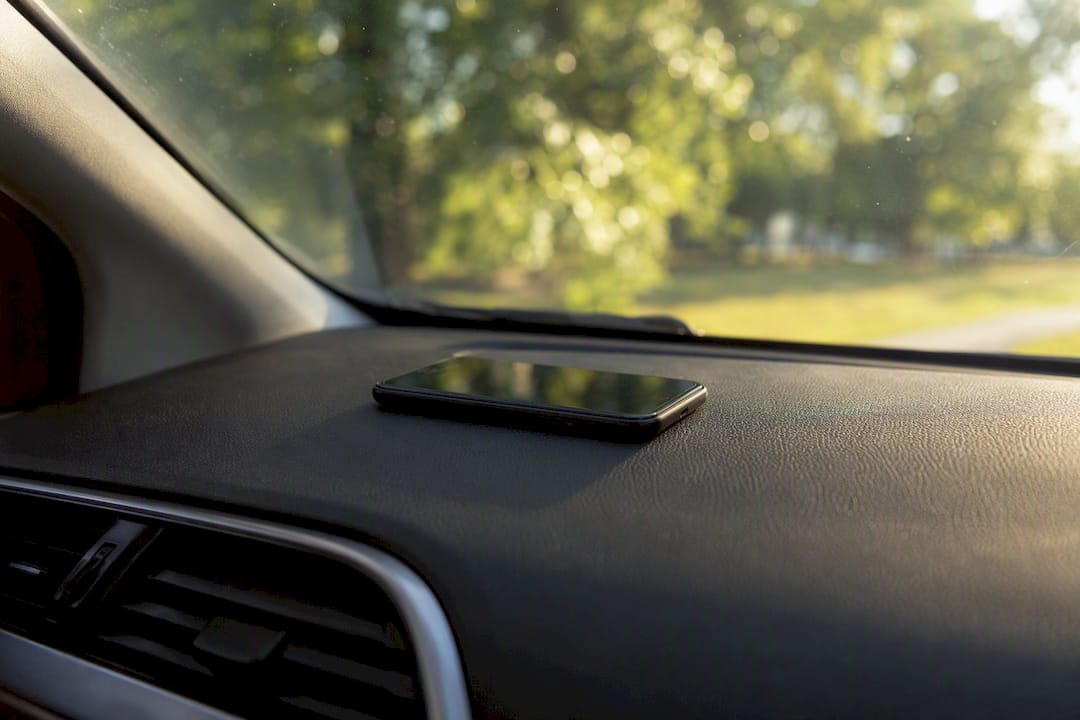
Environmental stress rounds things out. Leaving a phone on a car dashboard in summer heat, or cycling between a warm pocket and freezing air repeatedly, stresses the adhesive bond and can accelerate every one of the failures above.
Does a cracked screen protector still protect your phone?
Yes, partially, but with real limits, and the answer changes fast once the crack gets serious. A hairline crack from a single drop can still absorb some impact from a second minor knock, because the glass or film is still structurally present and distributing force across its surface. Once cracks spread into a web pattern, that’s no longer true. Fragmented glass concentrates stress unpredictably rather than spreading it, and a badly cracked protector can transmit an impact almost as directly as bare glass would.
There’s a safety issue too, separate from protection. Sharp edges from cracked tempered glass genuinely cut skin, and that risk only grows the longer a shattered protector stays on the phone.
If you can’t replace it immediately:
- Cover any sharp edge or protruding shard with a small strip of tape until you can swap it.
- Avoid further impacts, obviously, but also avoid sliding the phone screen-down across rough surfaces.
- Treat heavy cracking or any edge that’s lifted and sharp as a replace-immediately situation, not a replace-when-convenient one.
How do you remove and fit a new screen protector without dust or bubbles?
You need surprisingly little kit for this: an alcohol wipe or lens cleaning spray, a lint-free microfibre cloth, a dust-removal sticker (or a strip of tape in a pinch), and ideally an alignment frame if your new protector came with one.
Removing the old protector:
- Lift one corner gently with a fingernail or a thin piece of tape folded into a tab.
- Peel slowly and steadily rather than yanking, which reduces the chance of cracked glass fragmenting further.
- Dispose of tempered glass carefully, wrapped in the packaging it came in or a folded piece of card, since shards can cut through a thin bin bag.
Fitting the new one:
- Clean the bare screen with the alcohol wipe, then buff with the microfibre cloth until completely dry.
- Use the dust sticker to lift any remaining lint or specks, working corner to corner rather than randomly.
- Line the protector up using the camera cutout and edges as your reference points, or drop it into the alignment frame if supplied.
- Lower it slowly from one edge rather than dropping it flat, letting air escape ahead of the contact point.
- Squeegee or press firmly from the centre outward to chase remaining air towards the edges.
- Check the result under a bright light at an angle. Any trapped dust or bubble shows up instantly this way.
Trapped dust under the film almost always means starting over. It’s frustrating, but a speck of dust under glass never disappears on its own. Persistent bubbles near the edge usually mean the adhesive there needs a firmer press, held for 20 to 30 seconds. Genuine misalignment covering a speaker or camera means removing and repositioning before the adhesive fully sets, which is why speed in that first minute matters more than most guides admit. Products bundled with an installation tool and full coverage design make this whole process considerably more forgiving for a first-timer.
What habits actually extend a screen protector’s life?
Small daily choices matter more here than buying a marginally more expensive protector. Correct installation and a compatible case do more for lifespan than premium materials alone.
On cleaning: stick to a microfibre cloth and a screen-safe cleaner, and skip anything abrasive or alcohol-heavy for daily wiping, since harsh chemicals strip the oleophobic coating faster than ordinary use ever would. Paper towels count as abrasive here too, however soft they feel.
On pockets and bags: keep your phone in its own pocket where possible, away from loose change, keys, or anything with an edge. A phone sharing space with keys in a bag is accumulating micro-scratches every time it moves.
On cases: a case with a slightly raised lip does real work protecting the protector’s edges, which is exactly where chipping starts and where full-glass cracks tend to originate. A well-fitted drop-resistant case reduces that edge stress on every drop, not just the hard ones.
On storage: avoid leaving your phone on a car dashboard in summer or in a freezing coat pocket for hours. Temperature swings stress the adhesive bond more than most people expect.
Pro Tip: Keep one spare protector in a drawer at all times. When yours finally fails, you can swap it in five minutes rather than running your phone bare for a week while you wait for a replacement to arrive, which is when most accidental screen damage actually happens.
Which type of screen protector lasts longest?
| Feature | Tempered glass | TPU / hydrogel film | PET film |
|---|---|---|---|
| Typical lifespan range | 6–24 months | 3–9 months | 3–6 months |
| Scratch resistance | High | Moderate (self-healing surface marks) | Low to moderate |
| Impact/absorption performance | Strong | Moderate | Weak |
| Touch sensitivity & clarity | Excellent | Good, slightly softer feel | Good, thinner feel |
| Cost to replace | Moderate | Low to moderate | Low |
| Notable coatings/extras | Oleophobic, anti-glare, privacy, antimicrobial variants available | Self-healing top layer | Anti-glare variants common |
If you drop your phone often or want the longest gap between replacements, tempered glass is the clear pick, and it’s why it dominates the market. If you prioritise a slim feel and don’t mind more frequent swaps, hydrogel earns its keep on curved-edge phones where glass struggles to cover the full screen. PET film suits anyone who wants the cheapest possible stopgap, such as anti-glare PET for a specific model, and is genuinely happy replacing it every few months without a second thought.
How reliable are these screen protector lifespan estimates?
These ranges come from a mix of manufacturer specifications, published durability testing, and the real-world behaviour patterns that actually determine how a protector fails, not just how it performs on day one out of the packet.
The core cost-benefit statistic worth sitting with: the average person drops their phone 4 to 7 times a year, and replacing a protector twice in that same year almost always costs a fraction of a single screen repair. That maths alone justifies proactive replacement rather than waiting for a catastrophic failure.
A few honest caveats:
- Lifespan varies enormously by individual handling, climate, and even job type (a builder’s phone lives a harder life than an office worker’s).
- Manufacturer-quoted durability figures assume correct installation, which isn’t always the reality for a first-time DIY fit.
- These are ranges, not guarantees. Treat them as planning benchmarks rather than fixed deadlines.
Should you replace on a schedule or wait for damage to show?
Here’s where I’d push back on the tidy “replace every six months” advice you see everywhere. That’s a reasonable default if you want one, but it treats a construction worker and a desk-bound analyst identically, and their protectors are ageing at completely different rates. The better habit is checking condition monthly and replacing based on function, not the calendar.
The genuinely underrated call is replacing a privacy or anti-glare protector purely because the feature has faded, even when the glass underneath is flawless. I’ve seen people keep a privacy filter for a year past the point it stopped hiding anything, because there’s no crack to prompt action. If the coating was the reason you bought it, treat its failure exactly like you’d treat a cracked screen.
Where to buy a screen protector that actually lasts
Between chasing down the right size, worrying about installation defects, and wondering whether a cheap film is a false economy, choosing a replacement shouldn’t be the hard part. SmartProtectors stocks tempered glass, TPU, PET film, and privacy variants across a wide range of smartphones, tablets, smartwatches, and laptops, including hard-to-find models most retailers simply don’t carry.
Every full coverage tempered glass option comes with the alignment and installation tools bundled in, which removes the single biggest cause of early failure covered above: a botched first attempt. If your device isn’t listed, you can submit a request and SmartProtectors will source it rather than leaving you without an option. Start by browsing tempered glass protectors matched to your device, or head straight to the SmartProtectors store to check stock for your specific model today.
Frequently asked questions
How often should you replace a screen protector? Most people should replace a tempered glass protector every 6 to 12 months under normal use, though light users can stretch this to two years and heavy users may need a swap every six months.
How long do screen protectors last on average? Average screen protector life sits between 6 months and 2 years for tempered glass, 3 to 9 months for TPU or hydrogel film, and 3 to 6 months for basic PET film, depending on handling.
When should you change a screen protector immediately rather than waiting? Change it immediately if you see cracks, lifted edges with sharp fragments, persistent bubbling, or a clear drop in touch sensitivity, since these directly compromise protection or usability.
Does a cracked screen protector still protect the phone underneath? A single hairline crack offers some residual protection, but once cracking spreads into a web pattern, it can transmit impact almost as directly as bare glass and should be replaced straight away.
What shortens screen protector lifespan the most? Poor installation, harsh cleaning chemicals, and pocket grit from keys or loose change are the three biggest factors behind premature failure, ahead of material quality itself.
Sources
- How Long Do Tempered Glass Screen Protectors Last? Expert Lifespan Guide
- Here’s When You Should Be Replacing Your Phone’s Screen Protector
- How Long Does a Tempered Glass Screen Protector Last and What Affects It – INAIRSPACE
- The Ultimate Guide to Screen Protection (2026): Tempered Glass, Film & More
Sources were selected for direct relevance to real-world durability, manufacturer-backed guidance, and practical replacement economics rather than general marketing claims.