

How do tempered glass and hydrogel screen protectors actually compare?
The short answer: tempered glass wins on raw impact protection and familiar feel; hydrogel wins on curved-screen coverage, fingerprint sensor compatibility, and near-invisible aesthetics. Neither is universally better. The right choice depends on your device and how you use it.
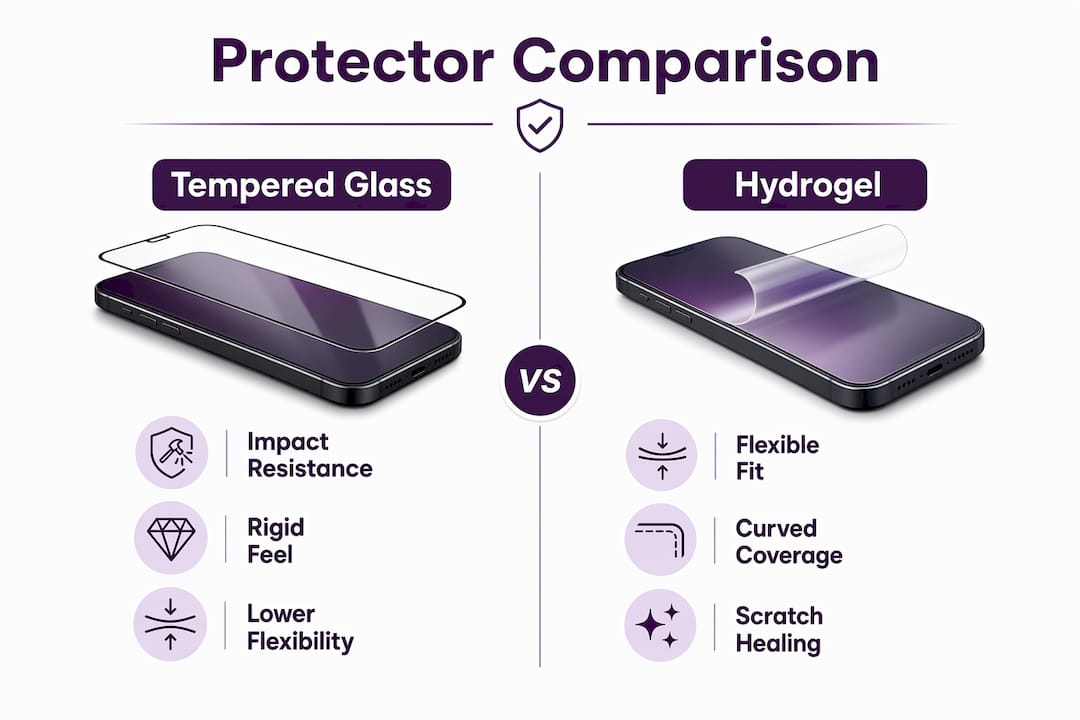
| Factor | Tempered glass | Hydrogel |
|---|---|---|
| Protection level | Strong impact resistance, shatters sacrificially | Cushions minor knocks, weaker on serious drops |
| Flexibility and fit | Rigid, best on flat screens | Flexible, conforms to curved and edge-to-edge displays |
| Scratch resistance and self-healing | Resists deep scratches, no self-repair | Self-heals minor scratches, less resistant to deep gouges |
| Touch sensitivity | Smooth, glass-like glide | Slightly softer, nearly invisible on screen |
| Aesthetic impact | Visible edges, slight frame gap on curved phones | Seamless, full-coverage finish |
| Price | Generally lower upfront cost | Higher upfront, may need replacing more often |
SmartProtectors stocks both types across hundreds of UK device models, including hard-to-find makes, so you are not forced into a compromise based on what happens to be available.
- Tempered glass suits users who drop their phone regularly, play games, or own flat-screen devices.
- Hydrogel suits owners of curved or premium smartphones, anyone with an under-display fingerprint sensor, and those who want the protector to be practically invisible.
Table of Contents
- What are tempered glass and hydrogel actually made of?
- Which protector handles drops and scratches better?
- How do they affect touch feel, screen clarity, and fingerprint recognition?
- What does each protector cost, and which offers better value?
- Which type of user should choose which protector?
- What is the final verdict on tempered glass vs hydrogel?
- Practical advice for buying and maintaining your screen protector
- Key Takeaways
- SmartProtectors has the right protector for your device
What are tempered glass and hydrogel actually made of?
The materials are genuinely different, and that difference drives almost every performance gap between them.
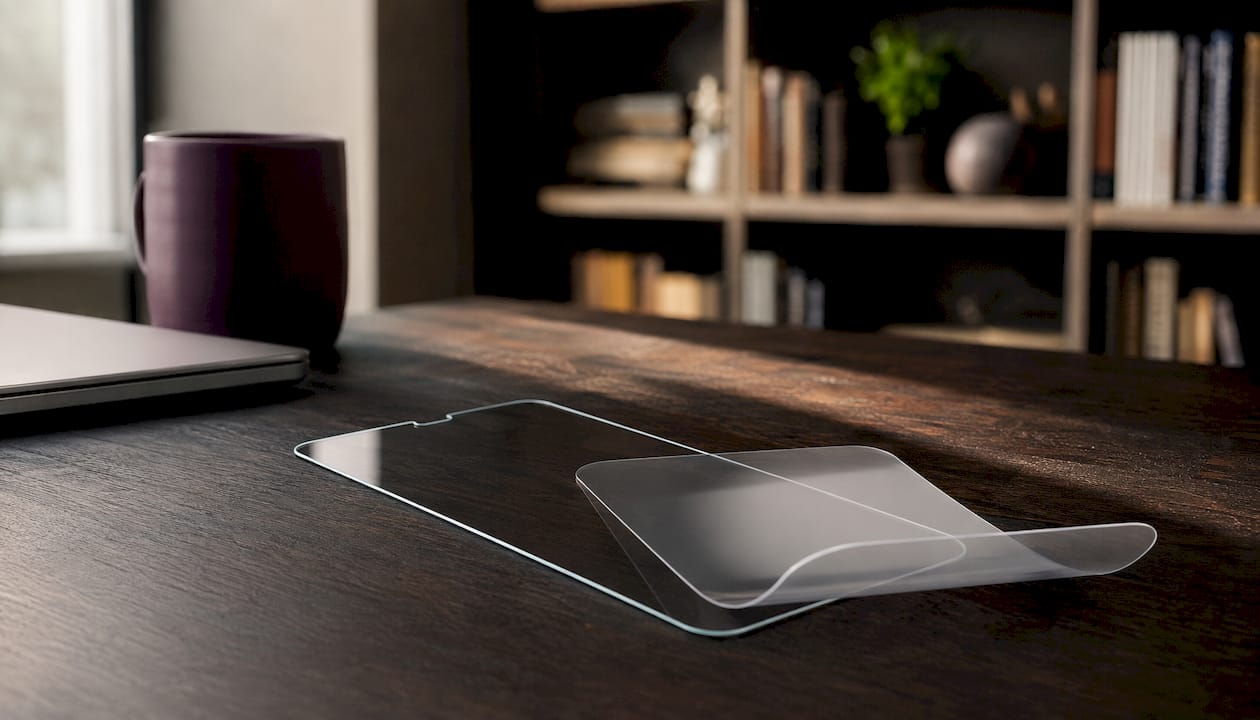
Tempered glass is chemically strengthened glass, typically a few tenths of a millimeter thick. It is rigid and hard, which is exactly what makes it so effective at absorbing a sharp impact. The trade-off is that rigidity: on a curved or edge-to-edge display, a flat sheet of glass cannot hug the contours, leaving raised edges that collect dust and eventually lift.
Hydrogel is a soft, flexible polymer film, usually less than a quarter millimeter thick. It stretches and conforms to the screen’s surface, which is why it covers curved displays so cleanly. The wet-application method it requires is trickier than peeling and pressing a glass sheet, but the result is a protector that sits flush with no air gaps.
- Tempered glass: 0.3–0.5 mm thick, rigid, best on flat screens, dry application.
- Hydrogel: under 0.2 mm thick, flexible, conforms to curves, wet application required.
- Installation: tempered glass is quicker to apply but prone to dust trapping and misalignment; hydrogel takes longer and needs careful drying, but achieves better curvature conformity.
- Fingerprint sensors: under-display sensors work more reliably with hydrogel’s thin, flexible profile; some tempered glass variants interfere unless specifically engineered for the sensor.
Pro Tip: If your phone uses an optical under-display fingerprint sensor (common on Samsung Galaxy S and OnePlus flagships), check that any tempered glass you buy is explicitly listed as sensor-compatible before purchasing.
Which protector handles drops and scratches better?
This is where the two materials diverge most sharply, and where most buyers make the wrong call.
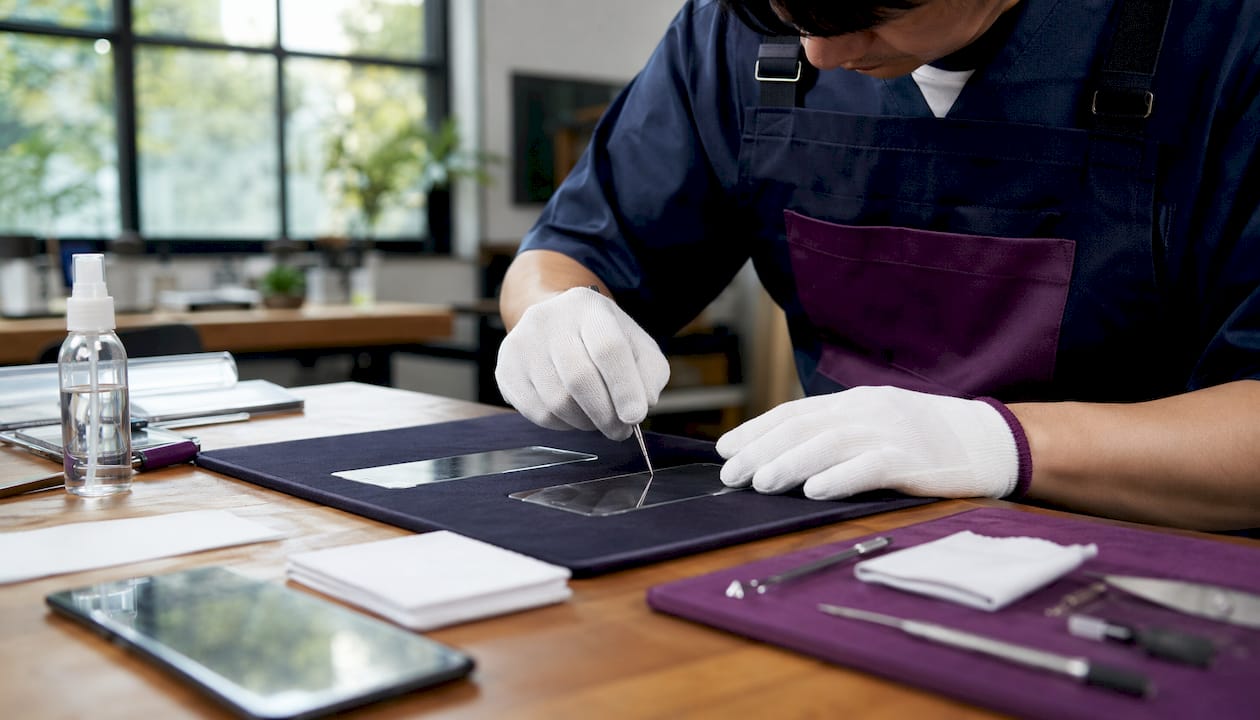
Tempered glass acts as a sacrificial barrier: it absorbs the energy of a hard impact by shattering itself, keeping the phone’s actual display intact. That is a genuine structural advantage if you regularly drop your phone on pavements or hard floors. Hydrogel cushions minor knocks and distributes low-level impact energy across its flexible surface, but it cannot replicate that sacrificial protection against a serious drop.
Scratch resistance flips the picture. Tempered glass resists deep scratches from keys, coins, and grit far better than hydrogel. Hydrogel, however, self-heals light surface scratches through its polymer structure, so fine marks from everyday contact tend to disappear over time. Deep gouges stay.
- Tempered glass: superior against heavy impacts and deep scratches.
- Hydrogel: self-heals minor abrasions, weaker against serious drops.
- Durability: tempered glass lasts longer unless cracked by a major impact; hydrogel maintains a pristine look for longer but may need replacing sooner.
- UK conditions: damp, gritty pavements and frequent phone-in-pocket contact with keys make scratch resistance a real daily concern. Tempered glass has the edge here.
How do they affect touch feel, screen clarity, and fingerprint recognition?
Most people notice the difference in feel before anything else. Tempered glass feels smoother and more like the original display surface, which matters for gaming, fast scrolling, and precision tapping. Hydrogel has a slightly softer, subtly rubbery texture that some users prefer for grip, though others find it less satisfying under the finger.
Visually, modern hydrogel is nearly indistinguishable from a bare screen. Tempered glass can show a slight frame or colour shift at the edges, particularly on curved phones where the glass does not reach the display’s perimeter.
- Touch response: tempered glass is closer to the native screen feel; hydrogel is slightly softer.
- Clarity: both offer high optical transparency; premium hydrogel films are often imperceptible.
- Fingerprint sensors: hydrogel integrates better with under-display optical sensors; tempered glass can reduce sensor accuracy.
- Smudge resistance: many tempered glass protectors include oleophobic coatings that repel fingerprints effectively; hydrogel coatings vary by brand and quality tier.
- Cleaning: tempered glass wipes clean easily with a microfibre cloth; hydrogel requires a gentler touch to avoid surface damage.
What does each protector cost, and which offers better value?
Tempered glass is generally the cheaper option upfront. Hydrogel commands a higher price, reflecting its more complex manufacturing and the material’s self-healing properties. That said, the total cost of ownership is not as straightforward as the sticker price suggests.
Hydrogel’s higher cost is partly offset by its aesthetic longevity: because minor scratches heal, the protector looks newer for longer. Tempered glass, once cracked, needs immediate replacement. If you drop your phone twice a year, you may replace tempered glass more often than you expect.
- Tempered glass: lower upfront price, replacement needed after any significant crack.
- Hydrogel: higher upfront cost, but self-healing extends its usable life for light users.
- Replacement frequency: heavy-drop users replace tempered glass more often; light users may find hydrogel lasts longer before it looks worn.
- Value tip: for a budget device, tempered glass makes obvious sense. For a flagship costing £800 or more, hydrogel’s better fit and sensor compatibility justify the extra spend.
You can browse screen protector options across both material types at SmartProtectors to compare pricing for your specific model.
Which type of user should choose which protector?
The best choice is rarely about the protector in isolation. It is about matching the protector to how you actually live with your phone.
- Frequent droppers and outdoor workers: tempered glass. The sacrificial impact protection is irreplaceable.
- Curved or edge-to-edge display owners (Samsung Galaxy S series, Google Pixel 9 Pro): hydrogel. Tempered glass simply cannot cover the full surface without lifting.
- Gamers and precision touch users: tempered glass. The glass-like glide and consistent touch response give a clear advantage.
- Flagship smartphone owners with under-display fingerprint sensors: hydrogel. Sensor accuracy is too important to compromise.
- Users who value aesthetics and slimness: hydrogel. It is practically invisible and adds no perceptible bulk.
- Budget-conscious buyers on mid-range devices: tempered glass. Lower cost, easy replacement, solid protection.
For choosing tempered glass specifically, SmartProtectors has a dedicated guide covering device-by-device considerations.
What is the final verdict on tempered glass vs hydrogel?
These two protectors are not competitors so much as tools for different jobs. Tempered glass is the workhorse: affordable, familiar, and genuinely tough against the kind of drops that crack screens. Hydrogel is the precision fit: thinner, smarter about curved surfaces, and kinder to fingerprint sensors.
- Choose tempered glass if you prioritise drop protection, own a flat-screen device, game regularly, or want the lowest replacement cost.
- Choose hydrogel if your phone has a curved display, uses an under-display fingerprint sensor, or you want the protector to be invisible.
- Consider both: some users fit tempered glass on the front (where drop protection matters most) and a hydrogel film on the camera lens or back panel.
- Device model matters: a protector that fits a Samsung Galaxy S24 Ultra perfectly may be useless on a OnePlus Nord. Always buy for your specific model.
- SmartProtectors covers both material types across a wide catalogue, including a sourcing service for devices not yet listed.
Practical advice for buying and maintaining your screen protector
Buying the right material is only half the job. Installation and upkeep determine how long any protector actually lasts.
For tempered glass, apply in a dust-free environment, ideally a steamy bathroom after a shower to settle airborne particles. Press from the centre outward and avoid repositioning once contact is made. Clean with a dry microfibre cloth; avoid abrasive wipes that degrade the oleophobic coating.
For hydrogel, follow the wet-application instructions precisely. The film needs time to bond and for any moisture to evaporate fully, typically 24–48 hours before the protector reaches full clarity. Do not peel and reapply repeatedly; each attempt weakens adhesion.
- Tempered glass maintenance: wipe with a microfibre cloth; replace immediately after cracking to avoid glass splinter risk.
- Hydrogel maintenance: use a soft, slightly damp cloth; avoid sharp objects near edges; allow full curing time after installation.
- UK-specific note: cold, damp conditions can slow hydrogel curing. Apply indoors at room temperature.
- Lens protectors: camera lenses benefit from tempered glass coverage regardless of which screen protector you choose. SmartProtectors stocks lens protectors for a wide range of models.
Pro Tip: If you are unsure which protector suits your specific device, use SmartProtectors’ request service. Submit your device model and they will source the right fit, even for less common brands.
Key Takeaways
Tempered glass delivers superior impact protection on flat screens; hydrogel is the better fit for curved displays, under-display fingerprint sensors, and users who want near-invisible coverage.
| Point | Details |
|---|---|
| Impact vs flexibility | Tempered glass absorbs heavy drops sacrificially; hydrogel cushions minor impacts but cannot match it on serious falls. |
| Curved screen fit | Hydrogel conforms fully to curved and edge-to-edge displays; tempered glass lifts at the edges on curved phones. |
| Self-healing and scratch resistance | Hydrogel self-heals light surface scratches; tempered glass resists deep gouges but cannot self-repair. |
| Fingerprint sensor compatibility | Hydrogel works better with under-display optical sensors; some tempered glass variants reduce sensor accuracy. |
| SmartProtectors | Stocks both tempered glass and hydrogel protectors for hundreds of UK device models, with a sourcing service for unlisted devices. |
SmartProtectors has the right protector for your device
Picking between tempered glass and hydrogel is straightforward once you know your device and habits. Acting on that choice is where SmartProtectors makes the difference: a single catalogue covering screen protectors, lens protectors, cases, and back covers for smartphones, tablets, smartwatches, laptops, and earbuds, including models that most retailers simply do not stock.
No need to settle for a generic fit or pay flagship prices for basic protection. SmartProtectors sources quality products at prices that do not punish you for owning a less common device. If your model is not yet listed, submit a request and the team will add it.
Find your device’s protector at SmartProtectors and get the right fit, at the right price, delivered to your door.