

Thin cases reliably protect against scratches, surface scuffs, and the everyday knocks that come from carrying a phone in a pocket or setting it down on a hard surface. They are not built to survive high drops, crushing weight, or a direct fall onto concrete from shoulder height. SmartProtectors stocks slim PC+TPU cases with airbag corners designed to close that gap between minimal bulk and genuine daily protection, and its product catalogue shows how far that construction has come.
TL;DR:
- Slim cases mainly protect against surface scratches, minor drops onto soft surfaces, and light knocks but are ineffective against high-impact falls onto hard surfaces.
- The effectiveness of a thin case depends heavily on design features like reinforced corners, raised lips, and inner micro-ribs, not just material thickness.
- Drop tests show that cases with raised lips and reinforced corners perform better, but no slim case reliably protects against drops from shoulder height onto concrete.
- Proper fit, material choice, and detailed construction information like lip height and corner protection are crucial when selecting a slim case.
- SmartProtectors’ PC+TPU cases with airbag corners for specific models meet these criteria, offering reliable protection for everyday risks without bulk.
Table of Contents
- What thin cases protect and when they fail
- Materials and thin-case construction: how design creates protection without bulk
- What tests and real-world evidence actually show
- How to choose the right thin case for your phone
- Why SmartProtectors’ thin cases meet the checklist
- When a thin case is right, and when it isn’t
- Ready to buy: SmartProtectors’ thin case lineup
- Sources
- FAQ
What thin cases protect and when they fail
A slim case earns its keep in the moments nobody thinks about until they’ve happened. Sliding a phone into a bag next to keys, resting it face down on a café table, or catching it mid-fall from a sofa cushion. These are the incidents thin cases handle well because the forces involved are modest and predictable.
- Surface scratches from keys, coins, or grit in a pocket
- Minor drops from pocket or hand height onto carpet, wood, or a bed
- Camera scuffs when the phone is set lens-down on a rough surface
- Light knocks against door frames, bags, or furniture edges
Where thin cases fall short is anything involving serious kinetic energy. A drop from height onto pavement, a bicycle or motorbike accident, or a phone caught underfoot in a crowded lift generates forces that a millimetre or two of PC and TPU cannot fully absorb. No slim shell substitutes for a dedicated rugged bumper case when the risk profile calls for one.
The practical fix is behavioural as much as material. Keep your phone in a front pocket rather than a back one, avoid stacking it under keys or coins, and use a wrist strap or grip accessory on stairs or platforms. A thin case reduces risk; it does not remove it.
Materials and thin-case construction: how design creates protection without bulk
The material a case uses matters more than its thickness. TPU (thermoplastic polyurethane) flexes on impact and spreads shock away from the point of contact, which is why most slim cases use it around the edges and corners. PC (polycarbonate) is rigid and scratch-resistant, ideal for the back panel where you want clarity and surface hardness rather than give. Some premium slim shells now use aramid fibre laminates, the same fibre family as body armour, to achieve high tensile strength in a shell barely thicker than a credit card.
Construction detail decides whether a thin case performs like a shield or a sticker. Three features separate a genuinely protective slim case from a decorative one:
- Airbag corners — reinforced TPU pockets at the four corners, the points that take the brunt of almost every drop
- Raised lips around the screen and camera module, so the case takes the impact of a face-down fall instead of the glass
- Inner micro-ribs that create a small air gap between the phone and the case, giving the shock somewhere to dissipate
Clear PC cases also vary in how well they resist yellowing over time, a common complaint with cheaper transparent shells. Anti-yellowing, adhesive-grade PC holds its clarity for longer under UV exposure and skin oils.
Fit matters just as much as material. A well-cut case leaves clearance for MagSafe or wireless charging coils, doesn’t muffle button feedback, and aligns precisely with the camera cut-outs so the lenses sit flush rather than recessed or exposed.
Pro Tip: If you’re deciding between a flexible TPU-only case and a hybrid PC+TPU build, check whether the corners are a different material to the back panel. A single uniform material almost always means a weaker compromise on either scratch resistance or shock absorption.
SmartProtectors’ own comparison of TPU and silicone construction breaks down which material suits which usage pattern, worth reading before you commit to either.
What tests and real-world evidence actually show
Editorial roundups that put slim cases through repeated drop tests consistently find that design, not thickness, decides the outcome. iLounge’s evaluation of slim protective cases found that cases combining a raised lip with reinforced corners held up to everyday drops noticeably better than wafer-thin shells with no structural detailing, even when both measured under a millimetre thick.
A few concrete details are worth checking before you buy:
- Stated drop height: many slim cases are rated for drops of around one to two metres onto a hard surface, roughly desk or waist height
- Lip height in millimetres: anything under 1mm barely protects the screen from a face-down fall
- Corner cushioning approach: separate TPU inserts perform more consistently than a single moulded edge
The same iLounge testing notes that performance varies widely by construction and test method, so a case rated well in one lab test won’t necessarily behave identically on a pavement fall versus a carpeted floor. A one-metre drop onto a desk is a fair test of most slim cases’ limits; a fall from shoulder height onto concrete is a different question entirely, and even well-reviewed slim cases show cracked corners or shattered glass at that point. Isolated reports of a slim case surviving a genuinely high-energy incident do circulate, including from Peak Design’s own case pages, but treat those as the exception rather than a benchmark to plan around.
How to choose the right thin case for your phone
Buying a slim case on looks alone is how people end up disappointed after the first serious drop. Work through this checklist before adding anything to your basket:
- Confirm exact model fit — cut-outs, button placement, and port alignment vary even between a phone and its “Plus” or “Pro” sibling
- Check the corner protection type — look for named airbag or reinforced corner technology rather than a vague “shock-resistant” claim
- Ask for the lip height in millimetres — a raised edge under 1mm offers little real screen protection
- Match the material to your risk — TPU-heavy builds cushion better, PC-heavy builds resist scratches and yellowing better
- Verify wireless charging and MagSafe compatibility if you rely on either
- Check grip and finish — a glossy clear back looks sharp but can be more slip-prone than a matte or textured finish
- Read the warranty and returns terms before buying, not after a fault appears
If a listing doesn’t answer these questions outright, ask directly. Reasonable questions for a product page or live chat include “what is the lip height in millimetres?” and “will this case fit alongside a tempered glass screen protector without a gap at the edges?” A retailer that can’t answer either is usually one to avoid. Vague marketing terms like “military-grade” with no drop height, no test standard, and no named material are the biggest red flag on any slim case listing.
Why SmartProtectors’ thin cases meet the checklist
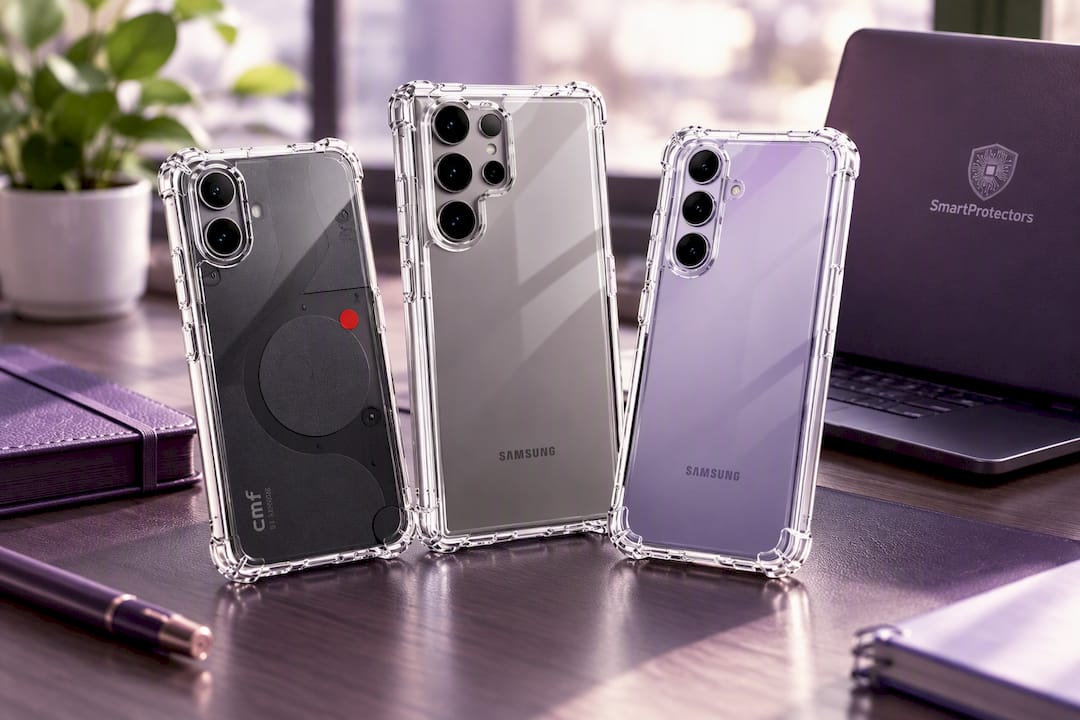
SmartProtectors runs its catalogue on exactly the criteria above. Its PC+TPU Clear Phone Case with Airbag Corners range, built by IMAK, pairs a rigid clear PC back with dedicated TPU airbag corners rather than a single blended material, and it’s available for the Nothing CMF Phone 1, the Samsung Galaxy S24 Ultra, and the Samsung Galaxy S24 FE.
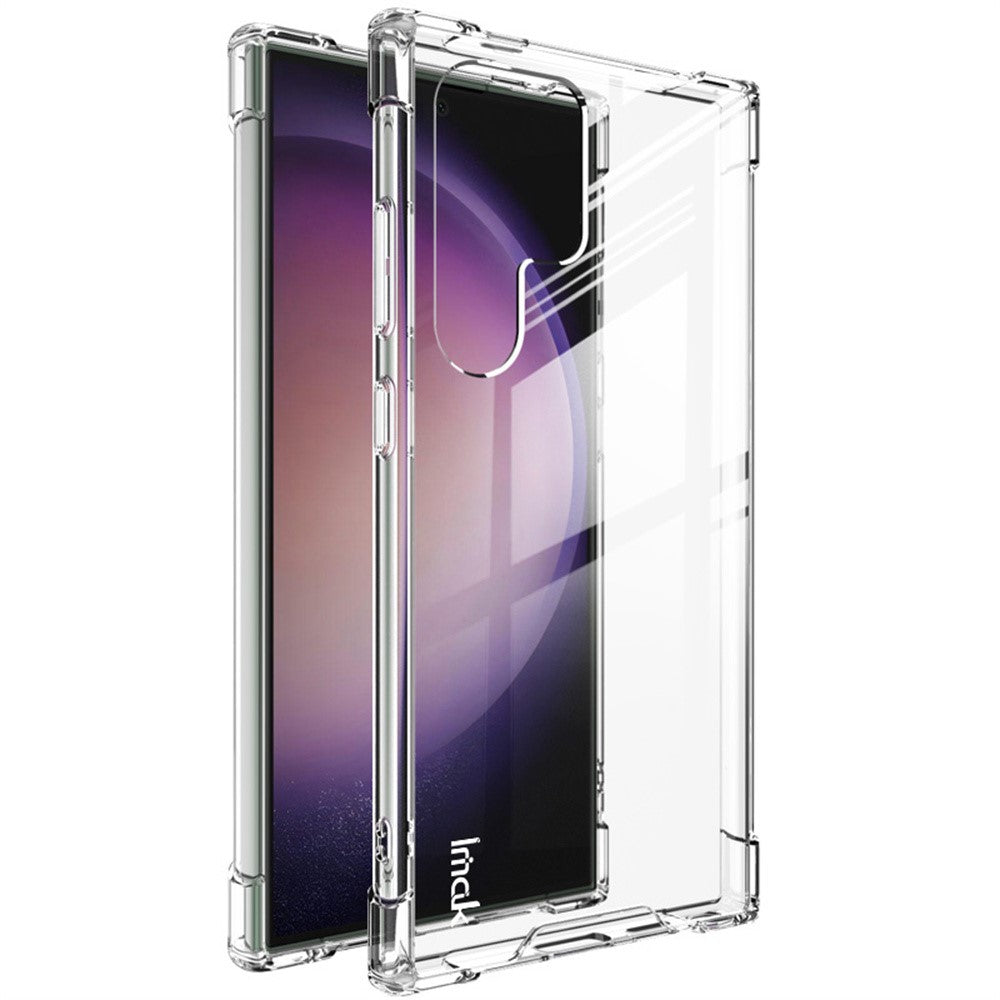
Each listing ties back to a specific model, so fit and camera cut-out alignment are never guesswork. SmartProtectors also offers a wider case catalogue beyond these three SKUs, and if your device isn’t listed, you can submit a request and the team will source it. That sourcing service matters more than it sounds. Hard-to-find models are exactly where cheaper, generic sellers give up.
When a thin case is right, and when it isn’t
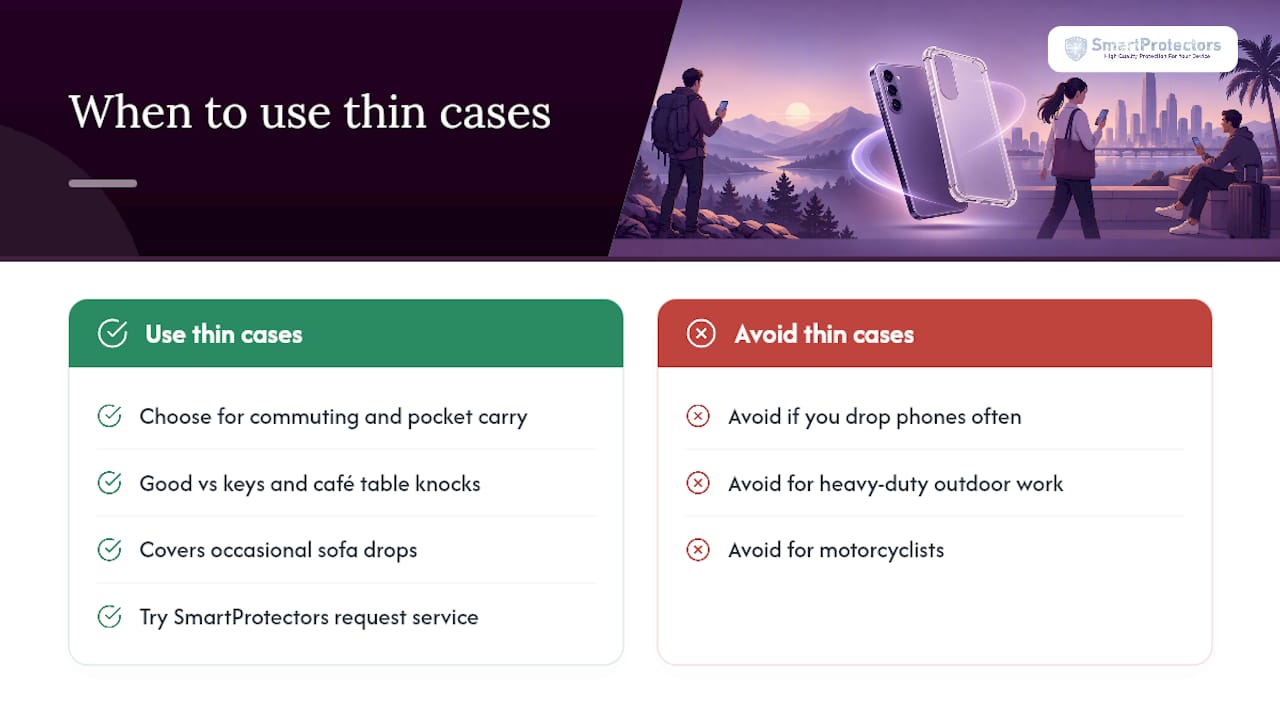
Thin cases suit commuters, pocket carriers, and anyone who values how their phone actually looks and feels day to day. If your biggest risks are keys, café tables, and the occasional sofa drop, a well-built PC+TPU case with airbag corners covers you comfortably.
Outdoor tradespeople, motorcyclists, and anyone who drops their phone often and hard should look at heavier bumper cases instead. For an unusual or discontinued model, SmartProtectors’ request service is worth trying before assuming nothing exists.
— Dian
Ready to buy: SmartProtectors’ thin case lineup
SmartProtectors gives you a direct route to durable, affordable protection without the guesswork of comparing vague marketing claims across a dozen retailers, including for phones most shops won’t bother stocking. Its three featured IMAK PC+TPU Clear Phone Cases with Airbag Corners for the Nothing CMF Phone 1, Samsung Galaxy S24 Ultra, and Samsung Galaxy S24 FE each pair rigid clear PC with dedicated TPU corner cushioning.
Every order comes with 30-day returns, so if the fit or feel isn’t right, sending it back isn’t a fight. Multi-item discounts and free shipping apply across the cases collection, and pairing a case with a screen protector or camera lens protector covers the two surfaces a case alone can’t fully shield. If your exact model isn’t listed yet, submit a request through the site and the catalogue gets expanded to match. Browse the current thin-case range and pick the one that fits your phone today.
FAQ
Which thin phone cases offer the best protection?
The best-performing slim cases combine a raised screen and camera lip with reinforced or airbag-style corners rather than relying on thickness alone, according to iLounge’s testing of slim protective cases. SmartProtectors’ PC+TPU cases with airbag corners follow that same construction principle across several device models.
Are lifestyle-brand fashion cases actually protective?
Slim, style-focused cases vary enormously in protection because branding and finish say nothing about internal construction. Check for a raised lip and dedicated corner cushioning rather than trusting the case’s appearance or marketing copy alone.
Which is the thinnest rugged-style case available?
Rugged cases are, by design, thicker than minimalist shells because they trade slimness for drop resistance at height. If a very slim profile matters more than surviving a serious fall, a PC+TPU hybrid case with airbag corners is the closer fit.
What do reviewers say about premium slim cases?
Independent reviews of premium slim cases, including Peak Design’s SlimLink case, highlight raised edges and flexible corner materials as the features that let a thin shell still absorb everyday impacts. Reviewers are also clear that results vary by construction, so specification details matter more than brand reputation alone.
Does SmartProtectors offer cases for less common phone models?
Yes. Alongside its listed catalogue, SmartProtectors accepts requests for models not yet stocked and adds them once sourced, covering phones, tablets, watches, and earbuds beyond the mainstream flagships.