

Most earbuds owners need one of two things: a silicone sleeve for daily pocket carry, or a hard-shell EVA case for travel and gym bags. If you want something slim and stylish for everyday use, the Stylish Minimalist Fully Enclosed Protective Case for Earphones covers drops and dust without adding bulk. For a low-cost option with a clip, the Compatible Silicone Protective Case for Wireless Bluetooth Headset Box does the job with a built in carabiner. If you’d rather keep things flat and pocketable, the Compatible Flat Anti-Falling Jacket for Apple Devices trims weight while still shielding the charging case. Whichever you pick, check the case still gives you charging port access without removal.
TL;DR:
- Silicone sleeves are inexpensive, protective, and convenient for daily pocket carry, especially when paired with a clip or keyring for easy access.
- Hard-shell EVA cases offer superior crush resistance suitable for travel and packed luggage, often with internal organization features for cables and accessories.
- Choose leather or PU covers for a premium look in formal settings but prefer simpler, impact-focused cases for active or moisture-prone environments.
- Confirm model compatibility, protection needs, and added features like charging port access and loss prevention tools before purchasing a case.
- Proper case maintenance and attachment methods significantly extend the lifespan of earbuds cases, reducing losses and damage over time.
Table of Contents
- What types of earbuds cases protect against damage?
- How do you choose the right protective case?
- Caring for your earbuds case day to day
- Where SmartProtectors fits into earbuds case protection
- Why most people overthink earbuds case protection
- Buying the right earbuds case: what to check before you order
- Sources
- FAQ
What types of earbuds cases protect against damage?
Not every case protects against the same threats, and picking the wrong one means paying twice: once for the case, once for the replacement earbuds. A protective case is a cheap way to head off the everyday damage and loss that shortens an earbud’s working life, according to How-To Geek. The trick is matching the case style to what actually threatens your earbuds day to day.
Silicone sleeves are the most common answer for a reason. They wrap tightly round the charging case, absorb the shock of a drop onto a kitchen floor or pavement, and cost very little. Amazon UK’s own listings show how widespread and affordable these covers have become, often bundled with a carabiner clip for attaching to a bag or belt loop. The trade-off: silicone stretches over time, picks up pocket lint, and can discolour if you’re not cleaning it regularly.
Hard-shell and EVA zip cases solve a different problem entirely. Where silicone absorbs shock, a rigid EVA shell resists crushing, which matters if your earbuds travel inside a packed suitcase or get sat on in a rucksack. Soft-lined EVA zippered pouches also tend to include internal mesh pockets, giving you crush resistance and a place to keep cables tidy in one unit, as seen with travel-focused pouches built specifically for this scenario. That internal organisation is what separates a genuine travel case from a case that just happens to be firm.
Leather and PU covers sit at the premium end. They resist scuffing better than silicone, age with a bit of character rather than yellowing, and look sharper next to a laptop bag or briefcase. The catch is maintenance: leather needs occasional conditioning and doesn’t love damp conditions, so it’s a poor match if you’re sweating through a gym session with your earbuds case in your gym bag.
Minimalist and anti-fall jackets are the thinnest option on the market. These fitted covers add barely any bulk, which is exactly why they suit people who hate a chunky case in a trouser pocket. They won’t survive a serious fall the way a hard shell will, but for someone who mainly worries about scuffs and scratches rather than drops from height, that thinness is the whole appeal.
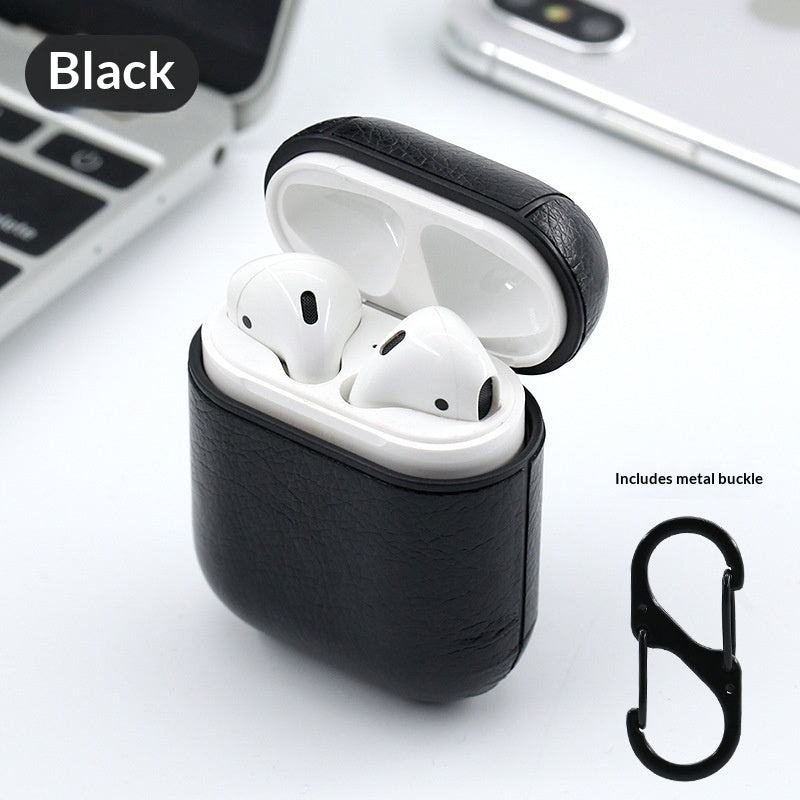
On water resistance, be precise with the language. “Splash-resistant” and “waterproof” are not interchangeable, whatever the packaging implies. Splash-proof silicone will shrug off rain or a spilled coffee; almost nothing sold as an earbuds case protection accessory is rated for submersion, so treat “waterproof” claims on cheap covers with a healthy dose of scepticism.
Quick scenarios worth matching to a case type:
- Commuting: silicone sleeve with clip, for quick pocket access and drop protection.
- Gym use: silicone or minimalist jacket, since both wipe clean of sweat easily.
- Travel: EVA zip case, for crush resistance inside luggage.
- Formal occasions: leather or PU cover, for the aesthetic upgrade over bare plastic.
How do you choose the right protective case?
Buying blind off a product thumbnail is how most people end up with a case that’s either too tight to close or so loose it defeats the point. Work through this checklist before you commit:
- Check the exact model fit. Earbuds cases are moulded to specific charging case dimensions, so confirm your generation and model number, not just the brand name.
- Decide your protection priority. Drops call for silicone or hard-shell; crush resistance calls for EVA; scuffs and looks call for leather or PU.
- Confirm charging access. Look for cut-outs over the charging port and status LED, since some accessories are designed with holes so you don’t have to remove the case to charge, a feature Bose builds into its own silicone case cover.
- Look for anti-loss features. A carabiner, keyring loop, or tracker pocket matters more than most buyers assume until the day the case slides under a car seat.
- Check cleaning practicality. Textured silicone traps grime faster than smooth PU or leather, so factor that into upkeep.
- Compare price against material. Budget silicone covers routinely sell for under £10, while premium leather or custom-fit options cost noticeably more on marketplaces like eBay UK.
If you’re unsure of your exact case dimensions, measure the charging case itself, length, width, and depth, and compare against the listed compatible models rather than guessing from the product photo alone. Seller policies matter just as much as the case itself: check the returns window, whether there’s a fit guarantee, and whether the seller offers a sourcing service for less common models. SmartProtectors, for one, will source a specific match if your model isn’t already listed.
Watch for a few red flags before you buy: a listing with no stated model compatibility, product photos that only show the case from one angle, and reviews mentioning a loose or gaping fit. Any of these usually means the case was designed to be “universal” rather than properly moulded, and universal fit almost always means loose fit.
Pro Tip: Before buying, hold your thumb over the product photo at the size of your actual charging case. If the case in the picture looks noticeably bulkier than what you’re picturing in your pocket, it probably is. Cross-reference the listed dimensions against your case’s actual measurements rather than trusting the thumbnail.
Caring for your earbuds case day to day
Keeping your earbuds in the charging case between uses is generally the right call. It shields the charging pins from pocket debris and stops you dropping loose buds, provided the case itself seals properly and isn’t so worn that it no longer clips shut. A well-fitted case is one of the cheapest ways to extend an earbud’s usable life, according to How-To Geek, largely because it prevents the routine knocks and losses that actually kill earbuds early.
For daily carry, clip the case to a bag strap or keep it in a dedicated pocket rather than tossing it loose with keys and coins, which is the fastest way to scratch a silicone sleeve or crack a hard shell.
Cleaning routines differ by material:
- Silicone: wipe weekly with a damp cloth and mild soap; avoid alcohol-based cleaners, which dry out the material.
- Fabric pouches: spot clean only, since machine washing can warp internal padding.
- Leather: use a dry microfibre cloth and an occasional leather conditioner; never soak.
- Hard-shell interiors: brush out dust with a soft toothbrush, since grit trapped inside can scratch the charging case surface.
If a case gets properly damp, sweat-soaked gym use is the usual culprit. Remove the charging case, wipe it dry immediately, and leave the outer sleeve open to air rather than sealing it back up wet. Sealing in moisture is how mould starts on fabric linings.
Small accessories like trackers and carabiners are useful for avoiding lost cases, but attach them through a dedicated loop rather than jamming a clip near the charging port or seam, where repeated pressure can crack the housing over time.
Replace your case once you spot split seams, a lining that’s compressed flat, or a silicone sleeve that no longer grips snugly. A loose case protects nothing.
Where SmartProtectors fits into earbuds case protection
SmartProtectors exists to make finding the right protective gear straightforward rather than a guessing game. The catalogue covers screen protectors, camera lens protectors, and cases built to handle everyday wear without costing a fortune.
Matching product to scenario is simple once you know your priority:
- Everyday carry: the Stylish Minimalist Fully Enclosed Protective Case for Earphones keeps bulk low without skimping on drop protection.
- Budget daily carry with a clip: the Compatible Silicone Protective Case for Wireless Bluetooth Headset Box pairs a carabiner with a personalised look.
- Slim, low-bulk protection: the Compatible Flat Anti-Falling Jacket for Apple Devices suits anyone who finds bulkier cases annoying in a trouser pocket.
Can’t find your exact model listed? SmartProtectors runs a request-based sourcing service specifically for hard-to-find devices, adding new matches to the catalogue rather than leaving you with a “close enough” fit. Orders come with a returns window, so a case that doesn’t sit right isn’t a dead loss. Further hygiene guidance on keeping buds cased daily is covered in the do AirPods need a case article on the SmartProtectors blog.
Why most people overthink earbuds case protection
The mistake most buyers make isn’t choosing a bad case, it’s choosing a case for the wrong scenario. Someone who commutes on foot and someone who flies twice a month have completely different failure points: one needs shock absorption for a dropped case on pavement, the other needs crush resistance for a packed suitcase. Buying the same silicone sleeve for both is how people end up disappointed with a “durable” case that split after one trip.
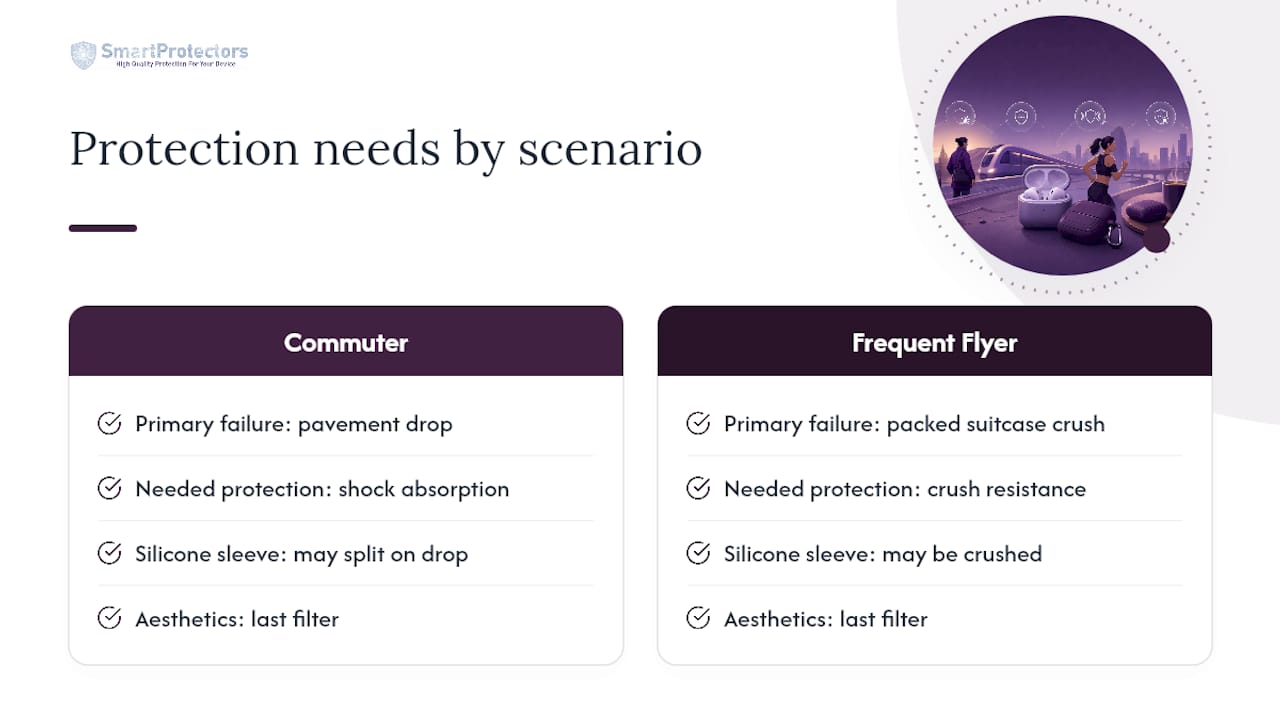
The overrated feature, in my view, is aesthetics-first shopping. A beautiful leather cover that traps moisture in a gym bag is worse protection than a plain silicone sleeve that actually fits. Looks matter, but they’re the last filter you apply, not the first.
What people underestimate is how much anti-loss design matters compared with impact protection. A case that survives every drop but has no clip point or tracker pocket still ends up lost down the back of a sofa eventually. If you’re only fixing one weakness in your current setup, fix that one first.
— Dian
Buying the right earbuds case: what to check before you order
Match the case to your main use case before you click buy: pocket commuting points towards a fitted minimalist or silicone sleeve, travel points towards an EVA zip case, and style occasions point towards leather or PU.
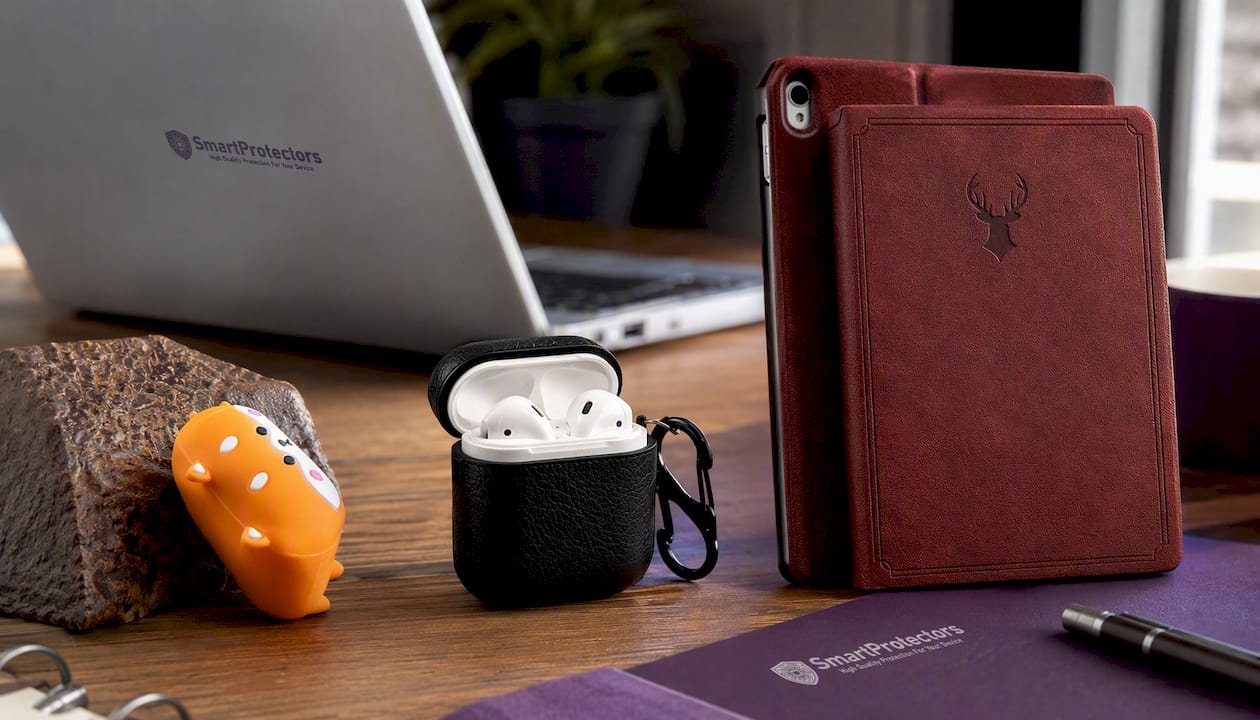
Start with SmartProtectors’ cases collection to browse by device and case style side by side, or go straight to a match: the Stylish Minimalist Fully Enclosed Protective Case for Earphones for slim everyday protection, or the Compatible Flat Anti-Falling Jacket for Apple Devices if low bulk matters most. Every listing states compatible models clearly, so check yours before ordering rather than after.
If your exact earbuds model isn’t listed, submit a request through SmartProtectors and the team will source and add it to the catalogue rather than leaving you to settle for a loose universal fit. Orders come with a returns window and multi-item discounts if you’re covering more than one device at once, so a case that doesn’t sit quite right isn’t money wasted.
Sources
- You need a case for your earbuds | How-To Geek
- HUB Earbuds Pouch | Alpakagear
- QuietComfort Earbuds (2024) silicone case cover | Bose
FAQ
What is the best protective case for earbuds?
There isn’t one universal best, it depends on your scenario. A silicone sleeve suits daily pocket carry and drop protection, while an EVA zip case is the stronger choice for travel because of its crush resistance, as Alpakagear’s design demonstrates.
Should you keep earbuds in a charging case?
Yes, keeping earbuds in a well-fitted charging case between uses is generally recommended, since it protects the charging pins and prevents loose buds getting lost. Make sure the outer protective case still allows the lid to seal properly and doesn’t trap moisture.
Why are people ditching AirPods?
Most reported frustration centres on losing individual buds or scuffing the charging case, both of which a properly fitted protective case largely solves. A case with a clip or tracker pocket addresses the loss issue directly rather than requiring a different earbud altogether.
How do I stop losing my earbuds case?
Attach a carabiner, keyring loop, or small tracker to a dedicated clip point rather than a seam, and always return the case to the same pocket or bag compartment. Several cases, including SmartProtectors’ Compatible Silicone Protective Case, build a carabiner point in for exactly this reason.