

Most “mil spec drop protection” claims on phone cases point to one thing: a lab test run under MIL-STD-810’s Method 516.x, often reported as 26 drops from roughly 1.2 metres onto a hard surface. That figure comes from a real, defined test procedure, but passing it in a lab does not mean a case survives every fall in the real world. Before trusting the badge, check three things: the exact method version cited, whether the test used the case alone or a phone inside it, and whether a third-party lab report backs the number.
TL;DR:
- Many “mil spec drop protection” claims are based on lab tests that vary in method details, such as drop height and surface, and lack publicly verifiable reports.
- MIL-STD-810 is a standard for military hardware environmental testing, but not specifically designed for consumer phone cases, and it allows tailored testing conditions.
- Proper verification of a drop claim involves checking for specific method numbers, known test parameters, and independent lab reports, not just marketing badges.
- Material choice and case design, like reinforced corners and shock-absorbing inner layers, are more critical for real-world protection than just meeting a standard.
- Environmental factors like cold, heat, or humidity can influence a case’s performance, meaning lab results may not translate directly to extreme outdoor conditions.
Table of Contents
- What is mil spec drop protection, and which standard do brands cite?
- How are drop tests actually run in the lab?
- What “military-grade” actually proves, and what it doesn’t
- How to verify a drop-protection claim before you buy
- Which materials and design features actually reduce drop damage?
- What should you look for on a case’s product page?
- A short history of how drop testing became a marketing term
- How does mil-spec drop protection compare with IP and other ratings?
- Do temperature and humidity change drop test results?
- What do real-world drop failures actually look like?
- When is a mil-spec claim worth paying extra for?
- Browse durable cases built around these same principles
- Sources
- FAQ
What is mil spec drop protection, and which standard do brands cite?
MIL-STD-810 is a US Department of Defense environmental test standard. It was never written for phone cases. It was built to help military engineers work out whether equipment could survive the environments it would actually face, from vibration to humidity to being dropped on concrete. That distinction matters because it shapes how the standard reads.
The standard is a process, not a fixed pass/fail checklist. It lays out test methods and tells engineers to tailor the parameters (how many drops, from what height, onto what surface) to match how the equipment will actually be used. A radio destined for a helicopter deck gets tested differently to one destined for a desk. When a phone case manufacturer says a product is “MIL-STD-810 tested,” they are borrowing the same test framework and running their own tailored version of it.
Most drop-protection claims reference Method 516, in its 516.6 or 516.8 revisions, under Procedure IV (transit drop). The common transit drop parameters run to:
- 26 total drops across multiple faces, edges, and corners
- A drop height of around 1.2 metres (roughly 4 feet)
- A rigid surface, typically steel backed by concrete
Because tailoring is built into the standard, two manufacturers can both claim “MIL-STD-810 tested” while using different heights, surfaces, or drop counts. That is not necessarily deceptive. It is how the standard is designed to work. But it means the label alone tells you far less than the test report behind it.
How are drop tests actually run in the lab?
A proper transit drop test follows a fairly consistent structure, even though individual labs tailor the details. Reading a lab report (or a manufacturer’s summary of one) becomes much easier once you know what to look for.
- Specimen selection. Labs test either the case on its own, the case with a dummy weight standing in for the phone, or the case with a real phone or a phone-shaped test unit inside. This detail changes everything about what the result actually proves.
- Drop height and count. The most commonly cited figure is 26 drops from about 1.2 metres, matching Method 516’s transit drop procedure, though tailored tests can use different numbers.
- Surface type. Most rigorous tests use steel plate backed by concrete, which is far harder than the wood, tile, or carpet most people actually drop their phones onto. Some tests substitute plywood or a foam pad for gentler simulations.
- Orientation sequence. Drops are spread across faces, edges, and corners rather than repeated in one spot, because real-world falls rarely land the same way twice.
- Instrumentation and criteria. Better labs record impact data and define pass/fail criteria before testing (does the screen crack, does the case detach, does the device still power on) rather than judging results after the fact.
An example qualification report from SKB Cases shows what a complete record looks like: Method 516.8, Procedure IV, 26 drops from 48 inches (about 1.22 metres) onto steel backed by concrete, with specimen condition and results documented drop by drop. Compare that level of detail against a product page that simply says “mil-tested” with no numbers attached. One gives you something to verify. The other gives you a phrase.
What “military-grade” actually proves, and what it doesn’t
A MIL-STD-810 pass tells you a case survived a defined sequence of drops under specific lab conditions. It does not tell you the case is indestructible, and it does not tell you how it performs outside those conditions.
Several real-world variables sit outside what most consumer drop tests replicate. A single catastrophic impact, such as a fall onto a sharp stone edge or a corner strike on a stair nosing, behaves differently to a flat drop onto a lab’s steel plate. Camera glass and screen glass remain vulnerable even when the case body itself survives intact, because the test standard concerns the case’s structural performance, not necessarily the display underneath it. Temperature also matters: TPU stiffens in cold weather and softens in heat, which changes how it absorbs energy on any given day.
Marketing language often blurs these limits. Some product pages state precise figures, such as “26 drops from 1.26 metres,” without linking to a test report or naming the lab that ran it. That is not automatically false. It is unverifiable as written, and consumer guides consistently flag “mil-spec” as one of the most misused phrases in device accessory marketing, precisely because a badge is cheap to print and a full test report is not.
Pro Tip: If a listing gives you a drop count and height but no lab name, no method number, and no downloadable report, treat the number as a marketing claim rather than a verified result. A genuine test summary is usually happy to show its working.
How to verify a drop-protection claim before you buy
Checking a claim takes about two minutes once you know what to search for on a product page or in a manufacturer’s specification sheet.
- Find the exact method and version. “MIL-STD-810G, Method 516.6” is a checkable claim. “Military grade” on its own is not.
- Read the test parameters. Drop count, drop height, and surface type should all be stated together, not cherry-picked.
- Check what was actually dropped. A test using an empty case tells you far less than one using a phone or a matched dummy weight inside it.
- Look for a named third-party lab. Independent labs such as NTS or SKB, or an equivalent qualification report, carry more weight than an in-house claim with no external check.
- Prefer numbers to badges. A shield icon proves nothing on its own; a downloadable PDF with drop-by-drop results does.
According to MIL-STD-810’s own documentation, the standard itself warns that laboratory tests cannot reproduce every real-world condition, which is exactly why the verification burden sits with the buyer, not the badge. A brand that publishes its full test parameters is telling you it has nothing to hide in them.
Which materials and design features actually reduce drop damage?
The material doing the work under that “mil-spec” label matters more than the label itself. TPU (thermoplastic polyurethane) flexes and absorbs shock on impact, which is why it dominates budget and mid-range rugged cases. Polycarbonate is harder and more scratch-resistant but transmits more shock through to the device unless it is paired with something softer. Many of the sturdiest cases use a dual-layer construction, combining a rigid polycarbonate shell with an inner TPU liner, so each material compensates for the other’s weakness.
A handful of specific design choices consistently show up in reviews of well-performing protective cases:
- Reinforced or “airbag” corners, since corners take the brunt of most drops
- Raised bezels around the screen and camera to stop the glass touching the ground first
- Internal shock liners or microcellular foam that absorb energy before it reaches the device
- Textured or anti-skid grip surfaces that reduce the odds of a drop happening at all
None of this comes free. Thicker shock layers add bulk, dual-layer builds can interfere with some wireless charging pads, and heavily reinforced corners rarely look as sleek as a slim polycarbonate shell. A rugged case built around airbag corners trades a little visual restraint for a genuine reduction in corner-impact damage, and for most people that trade is worth making.
What should you look for on a case’s product page?
Some retailers offer cases built around common TPU and textured anti-skid principles covered above, rather than relying on unverified badges alone.
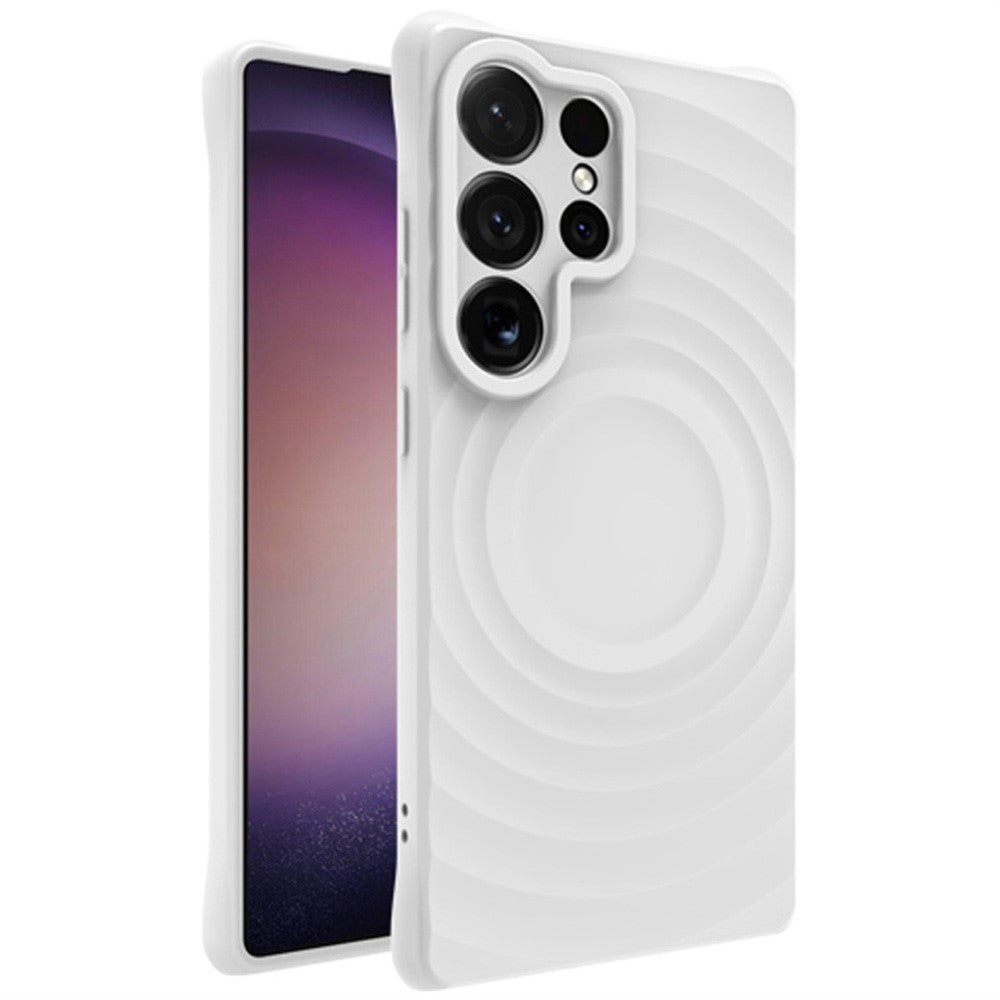
The IMAK UC-6 Series for the Xiaomi 15 and 15 Custom Edition, the Xiaomi 14T, and the Samsung Galaxy S25 Ultra all use a matte anti-skid TPU shell with a water-drop texture, addressing the “reduce the odds of dropping it” side of protection alongside the material cushioning itself. When you land on any of these product pages, apply the same checklist from earlier: read the listed material and construction, note the case’s design features against the list above, and treat any drop-protection figure the same way you would on any other listing, by checking for the underlying test detail rather than the badge.
A short history of how drop testing became a marketing term
MIL-STD-810 dates back to the 1960s, developed to give US military procurement a consistent way of specifying environmental durability requirements for equipment ranging from radios to weapons systems. Early revisions focused narrowly on defence hardware, with drop, vibration, and climate tests built around genuine field deployment scenarios rather than consumer electronics.
The standard has been revised repeatedly since, through versions including 810F, 810G, and 810H, refining test methods as electronics and materials science moved on. Method 516, covering shock and drop testing, evolved alongside these revisions, eventually settling into the 516.6 and 516.8 versions most commonly referenced today.
Consumer electronics brands began borrowing the language in the smartphone era, as ruggedised phones and later protective cases looked for a credible-sounding way to signal toughness. The appeal was obvious: a defence-grade standard carries authority that a made-up marketing term never could. What often got lost in translation was the standard’s own emphasis on tailoring. A military radio tested to a spec chosen for helicopter transit and a phone case tested to a spec chosen by its own manufacturer can both cite “MIL-STD-810” while proving very different things.
How does mil-spec drop protection compare with IP and other ratings?
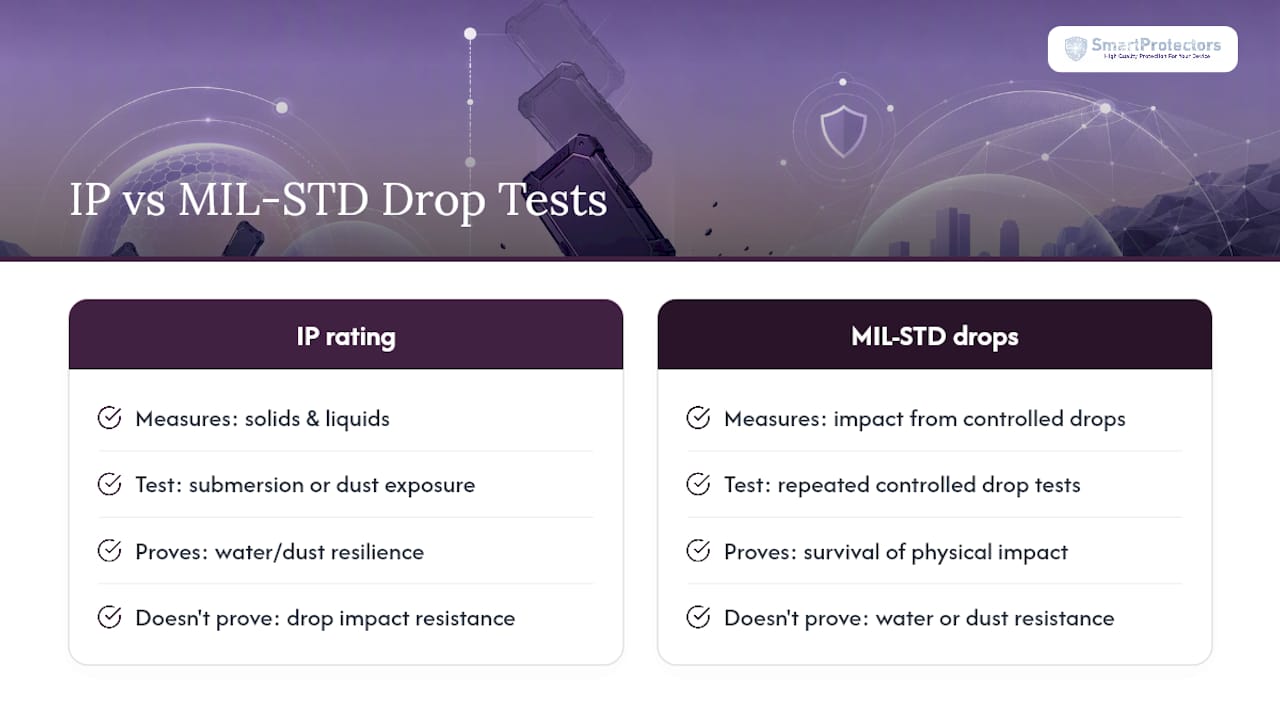
IP ratings and MIL-STD drop testing measure different things entirely, and confusing them leads to real misunderstandings. An IP rating (IP68, for example) certifies resistance to solids and liquids under an International Electrotechnical Commission standard, tested by submersion or dust exposure, not by dropping anything. A case or phone can carry a strong IP rating and still crack on the first hard drop, because the two ratings test entirely separate failure modes.
Non-military drop ratings, meanwhile, vary enormously in rigour. Some brands run their own in-house drop tests with no external standard at all and describe the result as “military-grade” regardless. Others genuinely commission MIL-STD-810 testing through an accredited lab. Without a named method number and a visible report, a reader has no way to tell these two situations apart from the marketing copy alone.
The practical takeaway: treat IP ratings and drop ratings as separate specifications answering separate questions, and never assume one implies the other. A device rated for water resistance says nothing about how it fares falling onto pavement, and a device that passed a drop test says nothing about how it copes with rain.
Do temperature and humidity change drop test results?
Environmental conditions genuinely affect how materials absorb impact, which is why MIL-STD-810 bundles drop testing alongside climate and humidity procedures rather than treating them as unrelated. TPU, the material behind most rugged phone cases, stiffens in cold conditions and softens as temperatures rise. A case that cushions well at room temperature can behave differently left in a hot car or used outdoors in winter.
Humidity plays a smaller but real role too, particularly for adhesives and any internal foam layers that can absorb moisture over time and lose some of their shock-absorbing consistency. Labs running a full MIL-STD-810 test regime typically test drop resistance alongside, or after, climate conditioning specifically because a case that passes a drop test at 20°C is not guaranteed to pass the same test at minus 10°C or in high humidity.
For everyday buyers, the lesson is less about lab science and more about expectations. A case marketed as drop-tested was almost certainly tested at a controlled, comfortable temperature. If you spend a lot of time outdoors in genuinely extreme conditions, treat the manufacturer’s drop rating as a baseline rather than a guarantee that holds in every climate you might encounter.
What do real-world drop failures actually look like?
The gap between lab results and everyday life shows up most clearly in the failure modes people report anecdotally rather than in any single dramatic test. A phone dropped flat onto carpet from waist height rarely breaks anything, mil-spec case or not, because carpet absorbs far more energy than the steel-on-concrete surface used in most qualification tests. The cases that earn their reputation tend to prove it on the drops that matter: corner-first falls onto kerbs, tile, or stone, where a reinforced corner and raised bezel genuinely change the outcome.
Failures cluster around a few predictable patterns. Screens crack even inside a well-reviewed case when the drop lands directly on an exposed corner with no raised lip to intercept the impact first. Camera lenses scratch or shatter on cases that protect the body well but leave the lens module flush or unprotected. And cases that pass a lab’s flat-surface transit drop can still let a phone slip loose entirely if a clip or seam fails on an off-axis impact the test never included, since the standard’s tailoring means not every real-world angle gets tested.
None of this means drop-tested cases underperform. It means the specific failure point almost always lives in whatever the test didn’t cover, which is exactly why reading test parameters (not just the pass/fail headline) tells you far more about a case’s actual weak points.
When is a mil-spec claim worth paying extra for?
A lab-certified drop rating earns its price for people who genuinely stress-test their phones: tradespeople, delivery drivers, anyone working outdoors or on-site where a fall onto concrete is a realistic weekly event rather than a rare accident. For that reader, a documented Method 516 pass with a named lab behind it is worth seeking out specifically.
Most people fall into a different category. If your phone mostly travels between a desk, a bag, and a sofa, the practical design features (reinforced corners, a raised bezel, decent TPU) matter more than whether a certificate exists behind them. Weigh protection against bulk and price honestly, rather than paying a premium purely for a badge you can’t verify.
— Dian
Browse durable cases built around these same principles
Some companies provide cases based on the materials and design features covered above, rather than relying on unverified drop-count badges, and may offer a request service for hard-to-find device models.
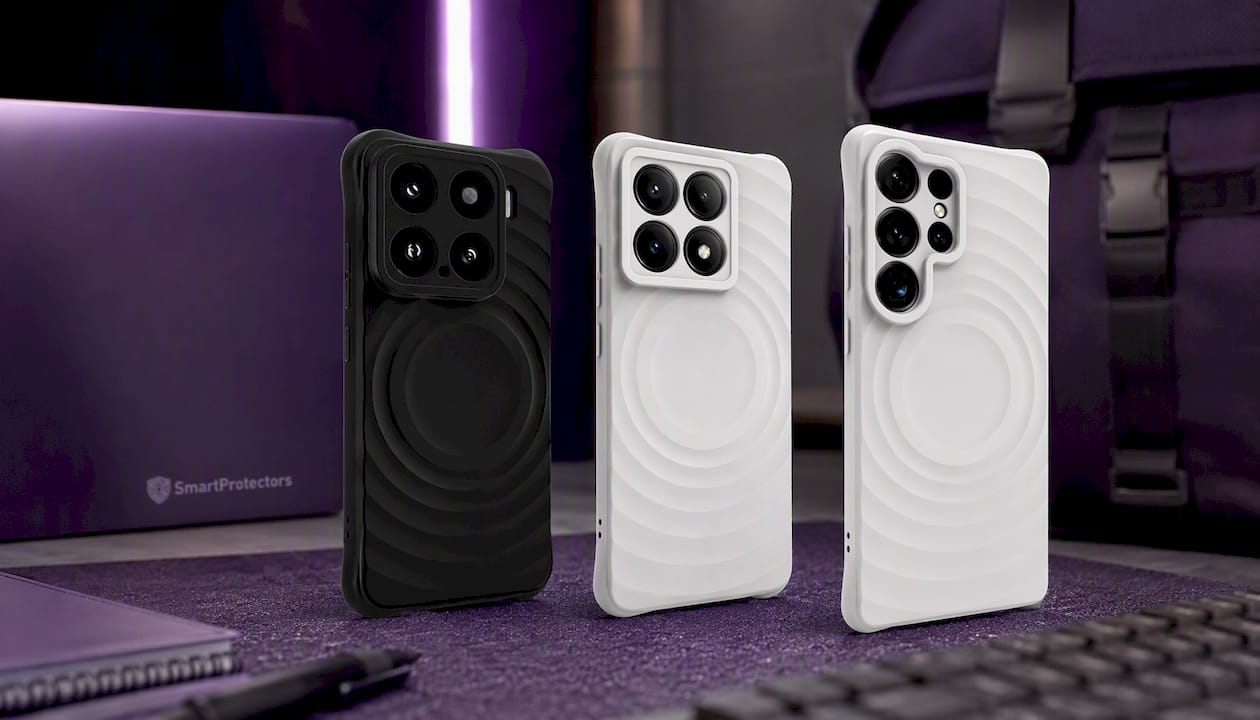
The IMAK UC-6 Series cases run through this article, the water-drop textured builds for the Xiaomi 15 and 15 Custom Edition, the Xiaomi 14T, and the Galaxy S25 Ultra, all use matte anti-skid TPU to cut down on drops in the first place while cushioning the ones that happen anyway. If your device isn’t listed, SmartProtectors’ request service actively sources it. Browse the full cases collection, pair whatever you choose with a screen protector or camera lens protector for the parts a case alone won’t cover, and submit a request if your exact model isn’t in the catalogue yet.
Sources
For readers who want to check claims themselves, the primary MIL-STD-810 standard and its technical method summary explain how test methods and tailoring work. HowToGeek’s consumer explainer breaks down common marketing misuse, and the SKB Cases qualification report shows what a full third-party test document actually contains.
- MIL-STD-810 — Wikipedia
- What Is MIL‑SPEC drop protection? — HowToGeek
- MIL-STD-810G test method summary — EverySpec
FAQ
What is mil-grade drop protection?
Mil-grade (or “military-grade”) drop protection means a case has been tested against a procedure drawn from MIL-STD-810, usually Method 516’s transit drop test. It is a lab process, not a fixed design certification, so results vary between manufacturers depending on how they tailored the test.
What is the military standard for drop tests?
The standard is MIL-STD-810, a US Department of Defense environmental test standard, with drop and shock testing covered under Method 516 (commonly 516.6 or 516.8). A typical transit drop test involves 26 drops from around 1.2 metres onto a steel surface backed by concrete, though the standard allows engineers to tailor these parameters.
What is the most drop-proof iPhone case?
No case is completely drop-proof, but dual-layer builds combining a rigid outer shell with an internal TPU or shock-foam liner, plus reinforced corners and a raised bezel, consistently perform best in real-world falls. Look for a case that states its exact material construction and design features rather than relying on a drop-protection badge alone.
Can phone cases have military grade drop protection?
Yes, many phone cases are tested against MIL-STD-810’s Method 516 procedures, and some publish full qualification reports similar to the SKB Cases example. The key is verifying whether a manufacturer’s claim is backed by a named lab and documented test parameters, since the phrase is frequently used loosely in marketing without that backing.