

Most slippery phone cases are fixable without replacement. Clean the surface properly, add a small grip accessory or textured patch, or apply a thin rubberised coat, and grip usually improves within minutes. Try, in order: remove the case, clean it to suit the material, then test with a tilt or oil check before you commit to anything permanent. Skip coatings that block ports or interfere with MagSafe.
TL;DR:
- Cleaning and surface prep are crucial, involving warm water, alcohol wipes, and thorough drying before applying any grip-enhancing modifications.
- Oils, manufacturing residues, and material type all contribute to slipperiness, with oils being the most common culprit, especially after several months of use.
- Micro-abrading silicone and matte finishes, along with strategic placement of grip patches or textured zones, can restore or improve case grip effectively.
- Factory-textured cases with built-in micro-engraving or grip particles outperform DIY patches, which require ongoing maintenance and rarely last as long.
- Reusable accessories like grip stickers, finger rings, or wrist straps offer quick, non-permanent solutions for improving grip without altering the case itself.
Table of Contents
- What actually makes a phone case slippery?
- Cleaning and surface prep before you try anything else
- Fixes that match the material you’re actually holding
- How to add grip yourself, step by step
- When is it time to stop fixing and just replace the case?
- Quick accessory fixes worth trying before anything permanent
- Why some cases just aren’t worth patching up
- Ready-made grip solutions when DIY has run its course
- Sources
What actually makes a phone case slippery?
Grip loss almost always comes down to one of three things: what’s on the surface, what the surface is made of, or how long you’ve owned it.
Skin oils are the biggest culprit. Every time you pick your phone up, a thin film of sebum, hand cream, or sunscreen transfers onto the case. On its own that’s barely noticeable, but it builds up over weeks, filling in the microscopic texture that once gave the case its bite. Laboratory work on friction and surface contamination backs this up directly: oils and lotions measurably reduce surface friction, and cleaning restores a meaningful chunk of that grip. That single fact explains why a six-month-old case feels glassier than the day you bought it, even though the material hasn’t changed.
Manufacturing residues play a role too. Fresh cases sometimes carry mould-release agents or a thin protective film from the factory that hasn’t fully worn off, which can make a brand-new silicone case feel oddly slick for the first week or two.
Material matters just as much as what’s sitting on top of it:
- Silicone starts naturally tacky but loses that tack as pocket lint, dust and oils fill its texture.
- Glossy polycarbonate and TPU stay slick almost permanently, because the surface has no texture to lose in the first place.
- Matte or soft-touch finishes resist slipperiness longer, since their micro-roughness hides minor contamination better than a mirror-smooth surface.
- Leather and leather-effect cases slip when the finish wears thin or picks up hand oils, especially around the edges where fingers grip most.
Heat is the sleeper factor nobody mentions. A phone that spends summer afternoons in a hot car or a back pocket softens slightly at the surface, and that softened layer picks up grime faster and holds onto it. Combine that with months of pocket abrasion, which slowly polishes down the fine texture manufacturers built in, and even a genuinely well-made grippy case can end up feeling like a bar of soap.
Cleaning and surface prep before you try anything else
Skipping this step is the single biggest reason DIY grip fixes fail. Adhesive tape, silicone dots and rubberised sprays all need a genuinely clean, dry, oil-free surface to bond properly, and a quick wipe with a damp cloth doesn’t get there.
- Remove the case and check the inside for trapped dust or a cracked seam. Fix or discard, don’t proceed with a compromised case.
- For silicone and TPU, wash with warm water and a drop of washing-up liquid, then follow with an isopropyl alcohol wipe on the areas where oils build up. Alcohol lifts oil residue efficiently without softening most silicone blends.
- For glossy plastic, use the same alcohol wipe but avoid anything acetone-based. Acetone can cloud or craze polycarbonate almost instantly.
- For leather and leather-effect finishes, use a dedicated leather cleaner or a barely damp cloth. Never use alcohol here; it strips the finish and leaves the surface patchier than before.
- Dry fully before applying anything. Fifteen minutes of air-drying is the minimum; longer in humid weather.
Pro Tip: Test any solvent on a hidden patch inside the case first, wait five minutes, and check for clouding or tackiness before you treat the whole surface.
Fixes that match the material you’re actually holding
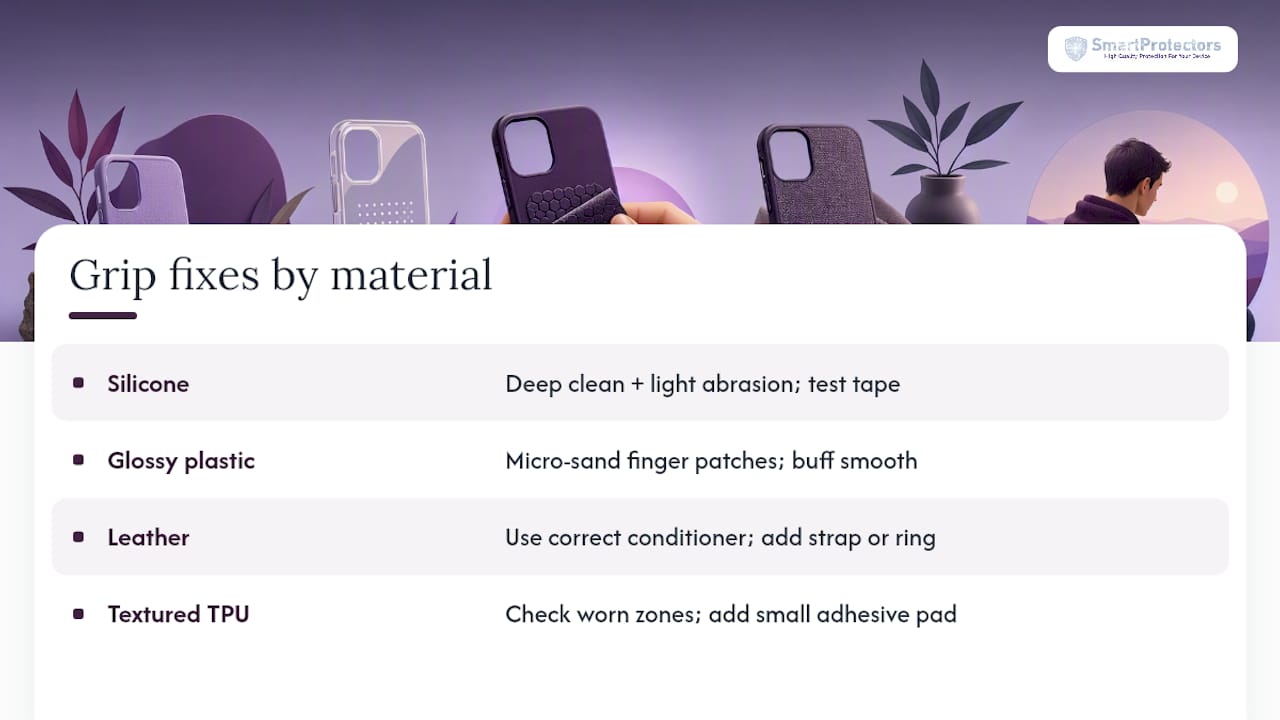
Silicone responds well to a deep clean plus light physical abrasion. A very fine abrasive pad, used briefly and gently, can reopen the microscopic texture that oils have clogged. Some silicone blends resist adhesive coatings entirely because of the oils used in manufacture, so test a small corner with tape before committing to a full patch.
Glossy plastic rarely benefits from sanding the whole case. Instead, micro-sand only the specific patches your fingers actually rest on, using a fine grit and light pressure, then buff smooth. Full-case sanding looks worse and rarely improves grip evenly.
Leather needs restraint. A conditioner made for the specific leather type keeps the surface supple without adding slickness, and a slim strap or ring at the back does more for handling than any surface treatment. Avoid anything with silicone or wax additives; they sit on top of leather and make it slippier, not less.
Textured TPU cases that have gone slick usually still have grip somewhere. Check the side rails and corner grips first. If those textured zones have worn smooth, a small adhesive pad in that exact spot often fixes the whole problem without touching the rest of the case.
How to add grip yourself, step by step
Once the surface is clean and dry, pick one method and commit to it. Mixing tape, spray and stickers on the same case rarely ends well.
- Plan placement before you stick anything down. Mark where your wireless charging coil and any MagSafe ring sit (usually centred on the back), and keep additions clear of that zone and away from ports, buttons and camera cut-outs.
- Cut anti-slip tape or silicone grip material to size. Silicone grip material sold in rolls or kits, such as egrips’ anti-slip sheeting, cuts easily with scissors and works best on flat sections rather than wrapped around curved edges.
- Press firmly and hold for 30 to 60 seconds, then leave the case untouched for several hours before using it normally. Adhesive bonds strengthen considerably over that resting period, and rushing this step is the top reason pads peel within a week.
- If you’re using a rubberised spray instead, mask off ports, buttons and camera lenses with tape first. Apply in thin coats rather than one heavy pass; a demonstration from Flex Seal’s grip-coating video shows the same rule that applies here, thin and even beats thick and lumpy every time.
- Cure fully before handling. Most rubberised coatings need several hours minimum, sometimes overnight, before the surface stops feeling tacky.
- Test compatibility on a hidden edge first. Some case plastics react badly to rubberised coatings, so check before you commit the whole back panel.
Production testing on grip-focused cases typically checks performance with a tilt test at a 35° incline and an oil-simulation test, and you can run a rough version of both at home once your fix has cured: rest the phone on an angled surface and see if it holds, then rub a small amount of hand cream on your palms and try gripping it normally.
If bubbles appear under tape, you likely trapped air or moisture. Peel back gently, re-clean, and reapply. If a coating peels at the edges, the surface probably wasn’t fully clean or dry before application. Remove any leftover adhesive residue with isopropyl alcohol, not a blade, which risks scratching the case underneath.
When is it time to stop fixing and just replace the case?
Two simple tests tell you whether your fix is working or whether you’re wasting time. The tilt test: rest your phone screen-up on a smooth, slightly angled surface and slowly increase the angle. A case with decent grip should hold well past 30 degrees. The oil test: apply a small amount of hand cream, wait a minute, then try a normal one-handed grip. If the phone slides noticeably, the fix hasn’t taken.
Certain damage signals mean no amount of cleaning or DIY texturing will help:
- Delamination, where layers of the case are visibly separating or lifting at the edges.
- Permanent oil saturation, where the material has gone soft or slightly sticky all the way through rather than just on the surface.
- Cracks or structural splits, especially near corners, which compromise drop protection regardless of grip.
- Worn-smooth factory texture that no longer responds to cleaning, meaning the micro-texture itself has physically eroded away.
If you’re at that point, look for a replacement with genuine edge texture, a material known for holding grip (textured TPU rather than gloss polycarbonate), and confirmed compatibility with wireless charging and MagSafe if you use either. SmartProtectors’ textured anti-skid TPU case is a fair benchmark for what to look for in that category.
Quick accessory fixes worth trying before anything permanent
Before you reach for tape or spray, small accessories solve a surprising number of grip problems on their own, and they’re fully reversible if you change your mind.
Grip stickers and adhesive dots are the lowest-commitment option. A low-profile pad placed where your fingers naturally rest adds noticeable friction without changing how the case looks or feels in a pocket. Guides that track everyday grip complaints consistently point to low-profile stickers and adhesive dots as the first thing worth trying, precisely because they’re cheap and easy to remove.
Pop-up rings and finger loops solve one-handed slipping almost completely. They give your finger something to hook onto rather than relying on friction alone, which is a different mechanism entirely and works even on the glossiest case. The trade-off is bulk: a ring adds thickness that some slim cases and card wallets don’t accommodate well.
Wrist straps and crossbody tethers don’t improve grip directly, but they remove the consequence of a slip. If you’re regularly on the move, phone in hand, and dropping isn’t an option, a strap through a case’s lanyard hole is arguably more useful than any coating.
Check ring and sticker placement against your wireless charging coil before applying anything permanent. A ring sitting directly over the coil, or a thick adhesive pad blocking it, will slow or stop charging entirely.
Why some cases just aren’t worth patching up
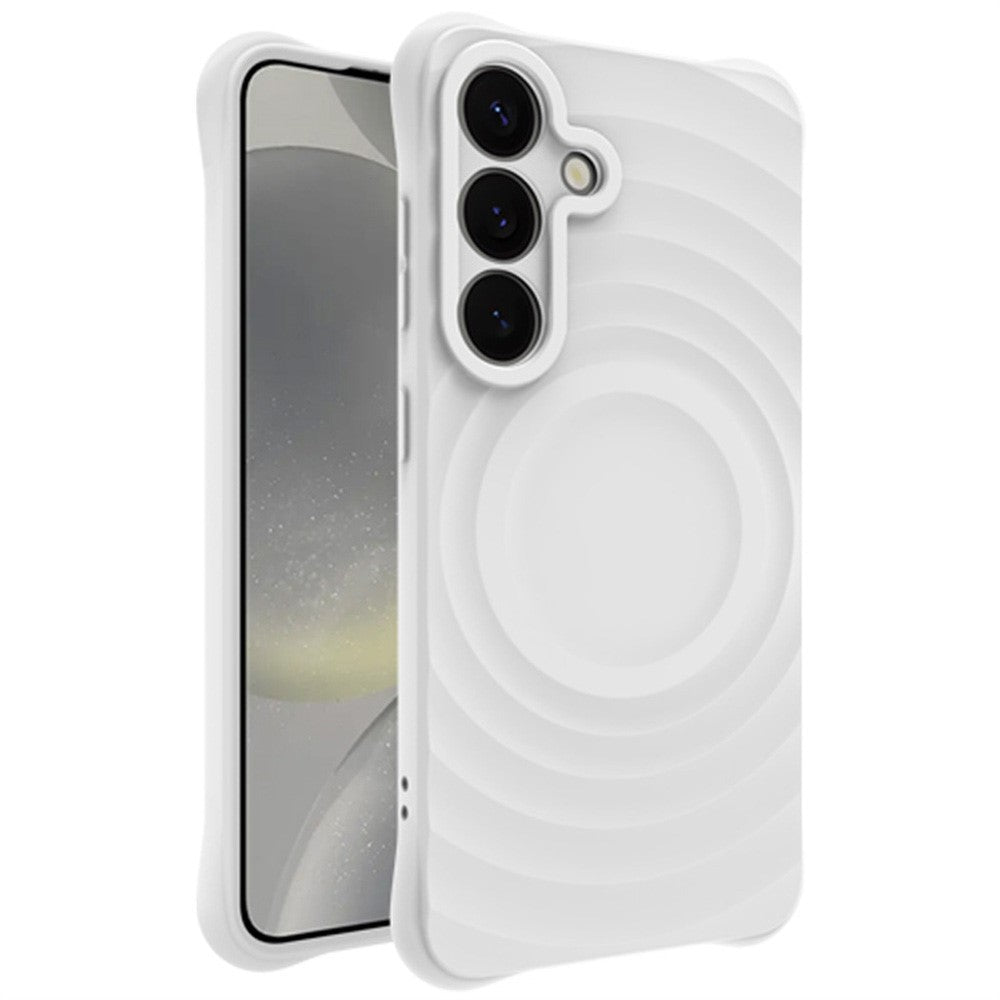
Factory-textured grip beats anything you can bolt on at home. Micro-engraved patterns, grip particles mixed directly into silicone, and plasma surface treatments are built into the material during manufacturing, which means the texture is uniform and doesn’t peel, bubble, or wear off in patches the way stick-on grips eventually do.
That doesn’t mean DIY fixes are pointless. A £3 sticker or an evening with grip tape genuinely extends the life of a case you already like, and for most people that’s the right call before spending money. But there’s a ceiling to what surface treatments can achieve on a case whose base material has already gone slick through age or heat exposure. At that point you’re maintaining a losing position rather than fixing one.
The honest trade-off is this: DIY patches are fast and cheap but need occasional reapplication, while a properly textured case keeps its grip for its entire working life without any upkeep at all. Choose based on how much fiddling you’re willing to tolerate, not on which option sounds more impressive, or consider a shock-resistant silicone snap-on case with stand for tablets designed for enhanced grip and durability.
— Dian
Ready-made grip solutions when DIY has run its course
Not every slip problem needs a screwdriver and a roll of tape. Some are best solved by choosing a case built for grip from the start, and matching the right design to your actual problem gets you further than trial and error.
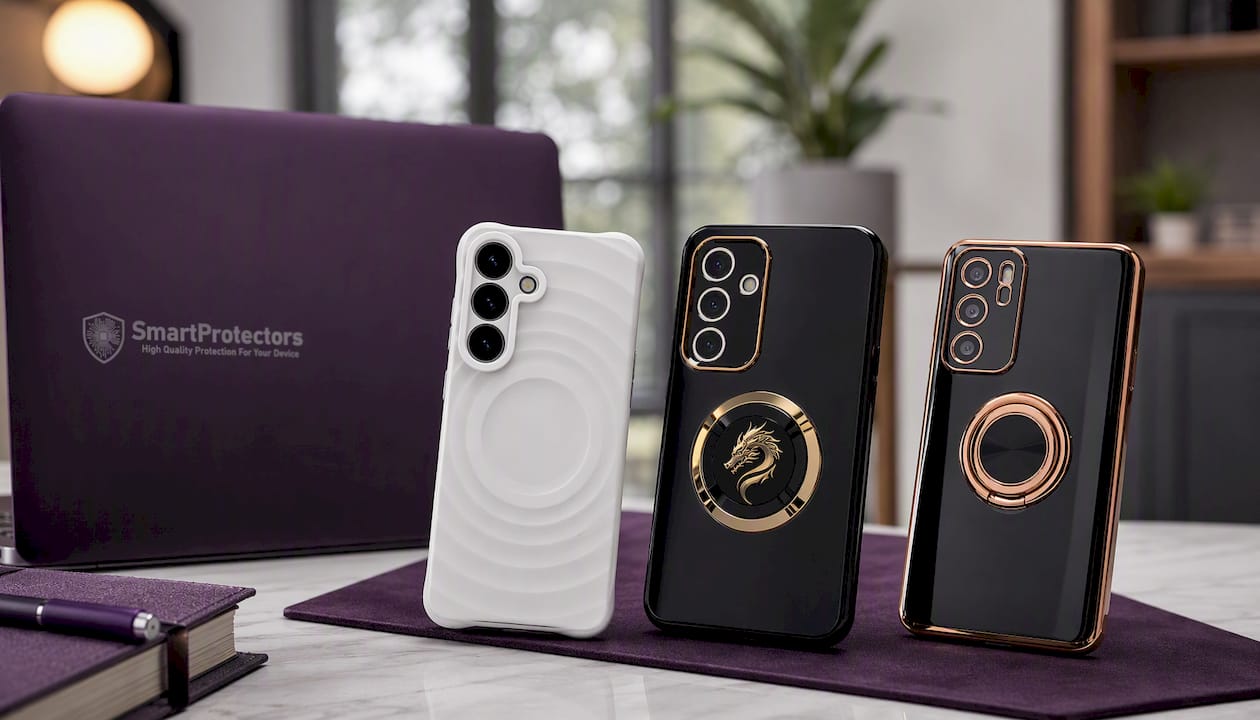
If your hands sweat or you handle your phone in wet conditions often, the Drop Textured Anti-Skid TPU Case uses raised texture rather than a smooth back, which keeps its grip wet or dry without any maintenance. For anyone who wants drop protection and better handling in one purchase rather than treating them as separate problems, the Liquid Glass Drop-resistant Case covers both at once. And if one-handed control is your main issue, the ring-equipped TPU case with metal edges gives your finger something to hook onto, which solves slipping through mechanics rather than friction alone.
If your exact phone model isn’t listed, a sourcing service can add hard-to-find models to the catalogue on request. Browse the full range at SmartProtectors and find the case built for how you actually use your phone.