

The travel phone protection kit that actually works is simple: a dual-layer protective case combining flexible and rigid materials, a tempered glass screen protector, a camera lens protector, and a secure carry option like a lanyard or crossbody pouch. Each item defends against a different threat. The case absorbs drops (the kind of impact rated under standards like military drop test certifications), tempered glass takes scratches and cracks before your screen does, the lens protector stops camera glass from shattering against a hard surface, and a tether stops the phone leaving your hand in the first place. SmartProtectors builds this exact kit around real travel conditions, not showroom shelves.
- Dual-layer case (TPU + PC hybrid)
- Tempered glass screen protector
- Camera lens protector
- Lanyard, wrist strap, or crossbody pouch
A wrist strap or lanyard tackles the root cause of most travel breakages: the phone slipping out of a hand on cobblestones, a boat deck, or a crowded platform.
Key Takeaways
Effective travel phone protection combines a dual-layer case, tempered glass, a camera lens protector, and a secure tether, each matched to your specific travel style and device model.
| Point | Details |
|---|---|
| Build a four-item kit | Pair a TPU+PC case with tempered glass, a lens protector, and a lanyard or pouch. |
| Match kit to travel style | Choose slim for cities, rugged for adventure, and waterproof pouches for water activities. |
| Prioritise fit over price | Confirm case, glass, and lens protector are sized for your exact model before checkout. |
| Maintain daily | Inspect and clean after sand, salt, or dust exposure to keep protection working. |
| Use SmartProtectors for hard-to-find models | IMAK TPU PC and Airbag Corners cases cover most trips, with product-fit requests for rarer devices. |
Table of Contents
- Why travel phone protection needs a different approach
- The travel-ready protection kit: what to buy and why
- How should your kit change by travel style?
- What makes a good travel phone case?
- Should you choose tempered glass or a plastic film?
- What daily habits protect your phone while travelling?
- Pre-purchase checklist: does everything fit together?
- How SmartProtectors makes building your kit simple
- Get your travel kit sorted before you fly
- Frequently asked questions
- Sources
Why travel phone protection needs a different approach
Your phone at home, lives on a desk or in a pocket for short stretches. On a trip, it’s out constantly: navigating, photographing, paying for a train ticket, dangling out of a cable car window. Daily travel puts far more stress on a device than an ordinary day at home or in the office, which is exactly why dual-layer protection consistently outperforms a single thin case once you’re away from familiar surfaces.
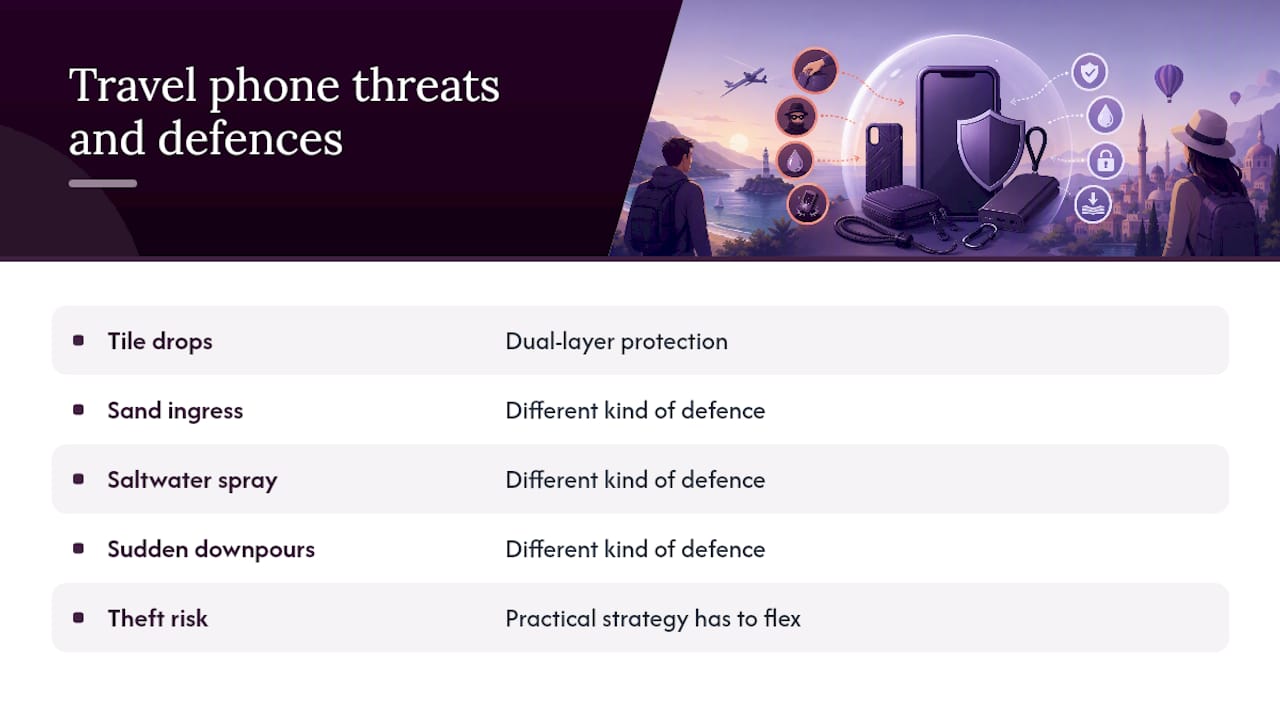
The threats also multiply. At home you worry about drops onto carpet. Travelling, you’re dealing with drops onto tile, sand working into ports, saltwater spray, sudden downpours, and the theft risk that comes with being visibly distracted in an unfamiliar place. Each of these calls for a different kind of defence, which is why “just get a case” is bad advice for a trip, even if it’s fine for daily life at home. A practical strategy has to flex around your destination and how you actually move through it.
The travel-ready protection kit: what to buy and why
Here’s the shopping list, in the order it matters most:
- A hybrid TPU + PC case. Soft TPU corners absorb shock; a rigid polycarbonate shell resists bending and abrasion. This combination is the closest thing travel accessories have to a default recommendation.
- A tempered glass screen protector. Cheap, replaceable, and it takes the scratch or crack that would otherwise be a £200+ repair bill.
- A camera lens protector. Often forgotten until a lens gets scuffed against a pocket zip or dropped on gravel, at which point every photo you take for the rest of the trip looks slightly hazy.
- A waterproof pouch or lanyard. Pick a pouch for beach or boat days, a lanyard or wrist strap for everyday carry.
- A spare adhesive strap anchor or two. Anchors wear out with heat and humidity; carrying spares means a failed strap doesn’t become a lost phone.
Prices for the full kit typically sit well under the cost of one cracked screen. Pro Tip: If your phone is a less common model, don’t assume you’re out of luck. SmartProtectors runs a product-fit request service that sources parts for rarer devices, so you’re not stuck retrofitting a case that’s almost, but not quite, the right shape.
How should your kit change by travel style?
Not every trip needs the same armour. Matching protection to how you actually travel keeps you from either being under-protected or lugging around bulk you don’t need.
- Urban and city travel. Slim is fine here. A snug hybrid case, tempered glass, and a crossbody pouch for pickpocket-prone areas cover most of what a city throws at you. Bulk works against you when you’re weaving through crowds and reaching for your phone twenty times an hour.
- Business travel. You want something thin enough for a blazer pocket but still shock-rated, since airport floors and hotel bathroom sinks are unforgiving. A slim case with reinforced corners plus tempered glass is usually enough.
- Backpacking and adventure travel. This is where rugged, sealed cases with reinforced corners provide robust protection, though they add bulk — see our guide on how to choose tactical gear for adventure travel for tips on rugged, reinforced accessories ideal for adventure travel. Add a wrist strap for scrambles and hikes where a drop could mean a cracked screen at the bottom of a ravine.
- Water and extreme-climate travel. Waterproof pouches and highly water-resistant rated solutions beat rugged cases when submersion, not impact, is the main risk. A rugged case won’t save a phone dropped off a kayak; a sealed pouch will.
The trade-off is always bulk versus protection level. Decide which threat is more likely on your specific trip before you decide how much case you’re willing to carry.
What makes a good travel phone case?
Material matters more than most buyers assume. TPU outer bumpers paired with a polycarbonate inner shell give you the best balance of energy absorption and structural rigidity, which is why this hybrid construction dominates the travel-case category. Aramid fibre cases go further for ultralight ruggedness at a premium price, and silicone remains the budget option, though it offers noticeably less structural protection.
Beyond material, run through this checklist:
- Raised lip around the screen and camera, so the case, not the glass, hits the ground first.
- Reinforced corners, where the overwhelming majority of drop damage actually occurs.
- Port covers, useful for dusty or sandy environments, less so for daily charging convenience.
- Camera bezel protection, raised enough that the lens never touches a flat surface directly.
- Wireless charging compatibility, worth confirming if your case is thicker than around 3mm, as some MagSafe-style chargers struggle beyond that.
Pro Tip: If you’re torn between two cases, pick up both and drop-test them (gently, over a bed) from hand height. You’ll feel the difference in corner rebound immediately.
Should you choose tempered glass or a plastic film?
Tempered glass wins for travel, consistently. It absorbs minor impacts and resists scratches far better than film, keeps touch response sharp, and doesn’t cloud or bubble the way film does after a few days of heat and humidity. A good tempered glass protector is cheap enough to treat as disposable insurance rather than a precious accessory.
Fit matters as much as material. Check whether a screen protector is cut edge-to-edge or case-friendly, and confirm it doesn’t interfere with a fingerprint sensor or Face ID array before you travel, not after.
Installation, step by step:
- Clean the screen thoroughly and let any dust settle before opening the protector packet.
- Use the alignment tray if supplied; align by camera cutout, not by eye.
- Press from the centre outward to push air toward the edges.
- Check under strong light for trapped dust before the adhesive fully sets.
What daily habits protect your phone while travelling?
Protection gear only works if you use it consistently. Build a routine around it:
- Morning check. Confirm the case is seated properly and the strap anchor is secure before you leave the room.
- Pouch swap. Move the phone into a waterproof pouch before beach, boat, or rain exposure, not after the first splash.
- Post-activity inspection. After sand, salt spray, or dust exposure, check ports and seams before they trap grit that scratches from the inside out.
- Evening clean. Wipe the case and screen with a soft, slightly damp cloth. Avoid alcohol-based solvents on lens coatings.
Pro Tip: Pack a spare tempered glass protector and one extra strap anchor in a small zip pouch. They weigh almost nothing and save you hunting for a replacement in an unfamiliar city.
Pre-purchase checklist: does everything fit together?
Before you check out, run through this list so your case, screen protector, and lens protector actually work as a set:
- Confirm your exact device model and generation (a “Pro” or “Plus” variant often shifts camera cutout position).
- Check that the tempered glass size matches the case lip, so the case doesn’t peel the protector’s edge.
- Verify camera cutout alignment against your specific lens layout, not a generic “compatible with most models” listing.
- Confirm wireless charging or MagSafe-style compatibility if you rely on it while travelling.
- Check the return and warranty policy, and order spares early if you’re heading somewhere without easy replacement options.
If your model isn’t listed anywhere, that’s not a dead end. SmartProtectors’ product-fit request service exists precisely for rarer phones, tablets, and smartwatches that mainstream retailers overlook.
How SmartProtectors makes building your kit simple
Two case styles cover most travel scenarios straight off the shelf: the IMAK TPU PC Shockproof Case, built for everyday drop protection without excess bulk, and the IMAK Airbag Corners TPU PC Case, which adds reinforced corner cushioning for anyone heading somewhere rougher. Both pair with tempered glass and camera lens protectors sized to match.
Travellers with uncommon phone, tablet, or smartwatch models often assume protective gear simply doesn’t exist for their device. It usually does, or it can be sourced through a request rather than left to chance.
- IMAK TPU PC Shockproof Case: everyday drop protection, low bulk
- IMAK Airbag Corners TPU PC Case: reinforced corners for adventure travel
- Tempered glass and lens protectors matched to both case styles
- Product-fit requests for models not yet listed
If your trip is a fortnight away, ordering now leaves time for a request-based part to arrive before departure.
A trip that would have gone very differently
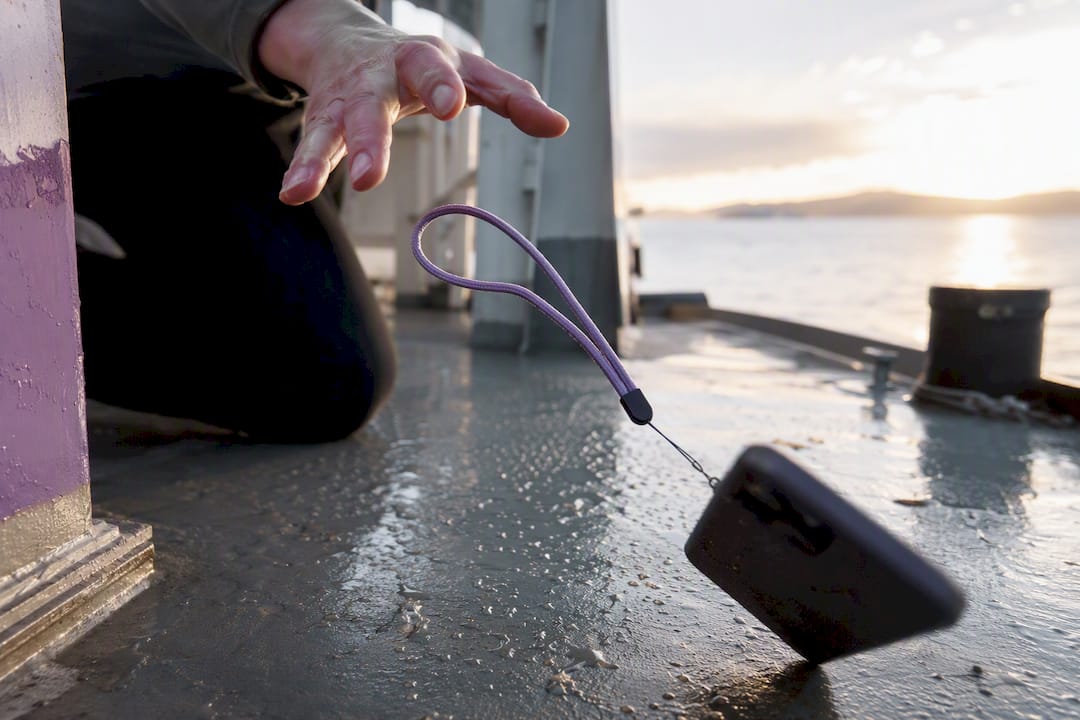
A colleague once caught her phone mid-fall on a ferry deck, saved only by the wrist strap she’d almost left at home. The case took a scuff, the tempered glass took a hairline scratch, and the phone kept working through the rest of the trip. A £15 strap and a £10 glass protector were the difference between a great holiday and three days without a phone in a country where the nearest repair shop was a ferry ride away.
Get your travel kit sorted before you fly
You could piece protection together from three different retailers, hoping the case, glass, and lens protector all happen to fit. Or you could get a matched set in one order. SmartProtectors’ advantage for travellers is straightforward: every screen protector and lens protector listed is matched to specific case models, so you’re not gambling on whether a “universal fit” glass actually clears your case’s lip.
Start with the SmartProtectors landing page to browse cases, tempered glass, and lens protectors by device model. Adventure travellers should look at the rugged case range for reinforced-corner options, while city and business travellers may prefer a slim leather case that protects without adding bulk. Photography-focused travellers should add a camera lens protector matched to their exact model. Can’t find your device listed? Submit a request and SmartProtectors will source it.
Frequently asked questions
Do I need both a case and a screen protector for travel? Yes. A case absorbs shock at the edges and corners; tempered glass protects the flat screen surface from scratches and cracks. Neither substitutes for the other.
Is tempered glass better than a plastic film for travel? Generally yes. Tempered glass resists scratches and minor impacts better, stays clearer over time, and doesn’t bubble in humid climates the way film often does.
What’s the best phone protection for a beach holiday? A waterproof pouch rated IPX8 matters more than a rugged case when your main risk is submersion or sand, not drops onto hard surfaces.
What if SmartProtectors doesn’t list my phone model? Submit a product-fit request. SmartProtectors sources cases, screen protectors, and lens protectors for less common models on request.
How much should I budget for a full travel phone protection kit? A case, tempered glass, lens protector, and strap together typically cost far less than a single cracked-screen repair, making the kit reasonable to buy before most trips.
Sources
- Best protective phone cases | Travel + Leisure
- Protecting your phone while traveling: why your device deserves more than basic care | TNT Magazine
- Cracked your iPhone on vacation? Protection solutions beyond cases | Phone Loops
- Rugged case or waterproof case: how to protect your phone while traveling? | Edu Partner