

Clear cases turn yellow because the plastic itself chemically breaks down. UV light triggers oxidation inside the polymer, heat speeds that reaction up, and skin oils and everyday grime sit on top of it all. Cleaning removes the surface layer of muck, but it cannot undo the chemical changes happening inside the plastic itself. Once oxidation has taken hold, the yellow tint is usually permanent, no matter how good your scrubbing technique is.
The good news is you can slow it right down. Start here:
- Take the case off and check it under natural light, not indoor bulbs, which mask early yellowing.
- Wash it in warm water with a small amount of mild dish soap, then air-dry it completely before putting it back on.
- Note where it’s yellowing first (edges catch UV faster; the back centre picks up heat from the phone itself).
Quick fact: most guidance on this converges on the same three culprits: UV exposure, heat, and body oils, which means prevention is really about limiting three specific things rather than chasing a miracle cleaner.
Table of Contents
- What causes case yellowing in the first place
- How to clean a yellowing phone case safely
- When yellowing is permanent, not just dirty
- Preventing case yellowing before it starts
- SmartProtectors on durability, materials, and knowing when to move on
- The honest verdict on clear case care
- Sources
What causes case yellowing in the first place
Not all clear cases are made from the same plastic, and that matters more than most people realise. TPU (thermoplastic polyurethane) is the soft, flexible material used in most budget clear cases. It’s cheap and shock-absorbent, but it’s also the quickest to yellow because its molecular structure oxidises fast under UV light. Polycarbonate (PC) is the harder, glossier plastic often used in premium or hybrid cases. It resists yellowing a bit longer, but it’s not immune. Silicone cases rarely go fully transparent in the first place, so you see less obvious yellowing, though clear silicone blends can still dull over time.
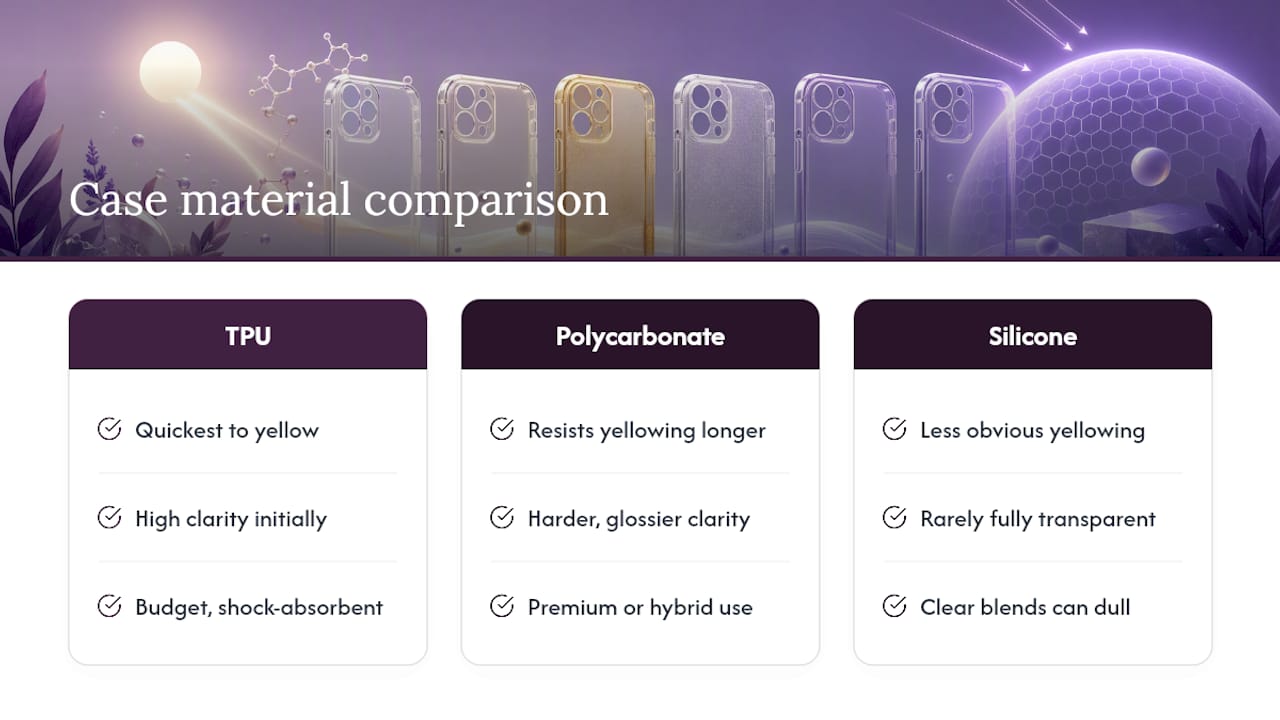
The mechanism is straightforward chemistry. UV radiation breaks chemical bonds in the polymer chains, and the plastic responds by forming new compounds that scatter light differently, which is what you perceive as a yellow or amber tint. Heat accelerates this reaction significantly, which is why cases left on a dashboard or charging on a warm windowsill yellow faster than ones kept indoors. Body oils, sweat, and sunscreen residue add another layer of trouble: they seep into micro-pores on the case surface and oxidise alongside the plastic, compounding the discolouration.
Pollutants matter too, more than most owners expect. Car interiors trap volatile organic compounds from off-gassing dashboards and upholstery, and these interact with warm plastic in ways that speed up yellowing noticeably. A case left in direct sun on a dashboard can show visible yellowing relatively quickly. The same case kept in a bag or pocket, cleaned occasionally, might stay clear for a significantly longer time. Exposure time and heat are the real variables, not just the calendar.
If you’re choosing between materials for a replacement, it’s worth reading up on how TPU compares with silicone before buying, since the trade-off between clarity, grip, and yellowing resistance varies more than shoppers assume.
How to clean a yellowing phone case safely
Before anything else, take the case off the phone. Cleaning products and moisture near your device’s ports and buttons cause more damage than yellowing ever will.
- Basic wash. Mix warm water with a small squirt of mild dish soap. Use a soft-bristled brush, an old toothbrush works fine, to work the solution gently over the case, paying attention to the corners and camera cutout where grime collects. Rinse thoroughly under running water and pat dry with a microfibre cloth, then leave it to air-dry completely, ideally overnight, before reattaching it.
- Baking soda paste for stubborn grime. Mix baking soda with a few drops of water until it forms a thick paste. Apply it to the discoloured areas with a soft cloth or toothbrush, leave it for 10 to 15 minutes, then scrub gently in small circles. Rinse well and dry fully. This won’t reverse true UV yellowing, but it lifts surface residue that makes yellowing look worse than it is.
- Isopropyl alcohol for spot-cleaning. Dampen a cotton pad with isopropyl alcohol (70 to 90% concentration) and dab it on stained patches rather than soaking the whole case. Alcohol evaporates quickly and cuts through oily residue well, but test it on a hidden section first, like the inside edge, since some coated or painted cases react badly to solvents.
Avoid concentrated bleach entirely. It can react with the plastic and actually worsen the yellow or orange tint rather than remove it. Skip abrasive scrubbers, steel wool, or anything that scratches, since scratches trap even more dirt and accelerate future discolouration. And never try to “bake out” yellowing with a hairdryer or direct heat. It won’t lighten the plastic, and it risks warping the case permanently.
Pro Tip: Work on a towel or soft mat rather than a hard countertop. A wet case is more slippery than you’d expect, and a hard drop can crack a case you’re trying to save.
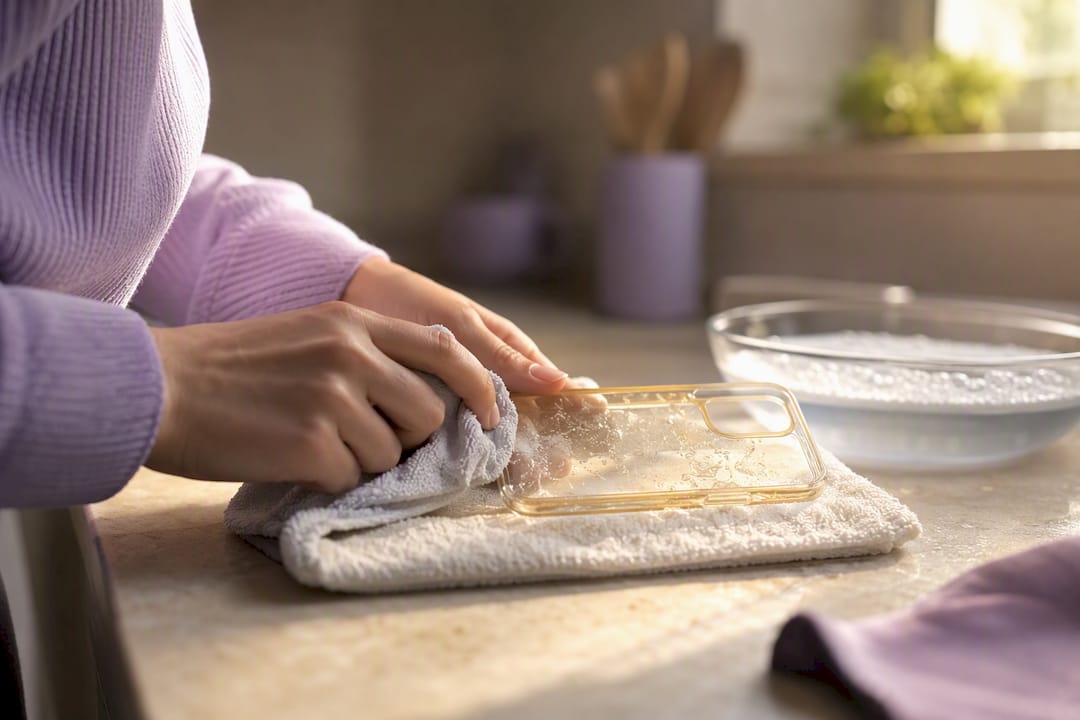
Once you’ve finished, resist the urge to rush drying with a cloth alone. Leave the case somewhere ventilated for a few hours minimum. Trapped moisture under a phone case is a bigger long-term risk to your device than a slightly yellow shell.
When yellowing is permanent, not just dirty
There’s a real difference between a dirty case and a chemically degraded one, and it’s worth knowing which one you’re dealing with before you spend an hour scrubbing. Surface grime, the greasy film from pockets and hands, wipes away with soap and water. True yellowing, caused by UV-driven oxidation, is baked into the polymer structure itself. No amount of cleaning lifts it because there’s nothing sitting on the surface to remove.
This is why aggressive fixes usually backfire. Scrubbing harder or using stronger solvents to “get through” chemical yellowing tends to thin the case, dull its clarity, or make it brittle enough to crack on the next drop. You end up with a case that protects less than it did before you started.
A few signs it’s time to replace rather than keep treating it:
- The tint doesn’t shift at all after a proper wash and baking soda treatment.
- The plastic feels stiffer or more brittle than when it was new.
- Corners show fine cracks or the case no longer sits flush against the phone.
An old yellowed case still has a second life. It works fine as a backup for travel, a loaner for family, or protection while your device sits in a drawer.
Preventing case yellowing before it starts
Prevention beats restoration every time with this problem, because you’re working with chemistry you genuinely can’t reverse once it’s underway. A few habits, done consistently, make a bigger difference than any cleaning product.
Wipe your hands before long phone sessions where possible, especially after applying lotion, sunscreen, or oily skincare. These products are some of the fastest yellowing accelerants because they combine oils with UV-sensitive chemical compounds. Wipe the case down after it’s been near food, sweat from a workout, or a hot car interior, since avoiding direct sunlight and heat, plus regular cleaning are the three habits that consistently show up across practical prevention advice.
Environmental control matters as much as cleaning routine. Don’t leave your phone on a dashboard, a sunny windowsill, or a poorly ventilated charging spot where heat builds up. Parked cars in particular can reach temperatures that dramatically accelerate polymer breakdown within a single season.
If long-term clarity matters more to you than anything else, consider your material choice at purchase rather than after the fact. Higher-grade TPU and polycarbonate blends with UV-resistant coatings hold their clarity longer, and if yellowing bothers you enough, a textured or patterned finish sidesteps the issue entirely since there’s no clear surface to discolour.
Pro Tip: Keep a spare case in rotation. Swapping between two cases weekly halves the UV exposure and oil contact each one takes on, and it means you’re never without protection while one is drying after a wash.
Build a simple weekly routine: five minutes with soap and water, a full air-dry, and a quick check for early tinting at the edges. Catching it early doesn’t reverse chemical yellowing, but it does buy the case more usable months before the tint becomes obvious.
SmartProtectors on durability, materials, and knowing when to move on
SmartProtectors stocks screen protectors, camera lens protectors, cases, and back covers across phones, tablets, smartwatches, laptops, and earbuds, including a sourcing service for models that are hard to find elsewhere. Material choice comes up constantly in customer questions about longevity, and it’s worth being straight about it: no clear case, regardless of brand, is immune to UV-driven yellowing. What differs is how quickly it shows and how well the case still protects once it does.
Textured, coated, or patterned finishes hide early ageing better than plain clear plastic, simply because there’s no glass-clear surface for a tint to stand out against. That’s a legitimate reason to choose one over the other if you’re buying with longevity in mind rather than pure transparency.
If cleaning genuinely hasn’t helped and your case feels brittle or thin at the corners, replacing it is the sensible call rather than the last resort. Browsing SmartProtectors’ case range gets you options in both clear TPU/PC builds and non-clear finishes, depending on which trade-off suits you better.
| Point | Details |
|---|---|
| Main causes | UV oxidation, heat, and skin oils break down clear plastic at the chemical level. |
| Cleaning has limits | Soap and water lift grime; they cannot undo polymer degradation once yellowing sets in. |
| Safe cleaning order | Try mild soap first, then baking soda paste, then isopropyl alcohol for stubborn spots. |
| Avoid harsh fixes | Bleach, abrasives, and direct heat risk cracking or thinning the case further. |
| Prevention beats cure | Weekly washing, avoiding sun and heat, and rotating cases slow yellowing meaningfully. |
The honest verdict on clear case care
Most advice on case yellowing oversells restoration and undersells prevention. Baking soda and isopropyl alcohol genuinely help with surface grime, but treating them as a fix for chemical yellowing sets people up to keep scrubbing a case that’s already degraded past the point of return. That’s wasted effort, and sometimes it damages the case further.
What the evidence actually supports is unglamorous: wash weekly, keep cases out of direct sun and hot cars, and accept that a clear case has a shelf life measured in months of heavy exposure, not years. Conventional advice treats yellowing like a stain problem. It’s closer to sunburn on skin, damage that’s already happened by the time you notice it.
If you want a clear case to stay clear, buy for UV resistance upfront and rotate cases rather than relying on one to last indefinitely. When a case does yellow beyond saving, replacing it isn’t giving up. It’s just recognising the plastic did what plastic does.
— Dian
Sources
For manufacturer-level cleaning guidance, see Google’s Pixel case instructions. For material science behind UV degradation, see how UV resistance affects polymer durability.
- Why Your Clear Phone Case Turned Yellow (And Can It Be Cleaned?)
- Here’s what you can do to stop your clear phone case from turning yellow so quickly