

A case-friendly tempered glass protector is the single best choice for most UK phone users. It costs a few pounds, takes minutes to fit, and stands between your display and the kind of scratch or drop that can turn into a £150–£300 repair bill. Screen repairs account for over 60% of smartphone damage, making them the most common device repair category by a wide margin. SmartProtectors is our recommended supplier: a UK-accessible e-commerce shop stocking tempered glass, privacy filters, anti-glare films, lens protectors, and cases across hundreds of device models, including hard-to-find ones.
Pair a tempered glass protector with a case that has a raised lip, and you have covered the two most common failure points: the screen and the corners. That combination costs less than most people spend on a single takeaway meal, and it works.
Table of Contents
- What to check before you buy a screen protector
- Which type of screen protector should you choose?
- Which protector suits your lifestyle?
- How much does a screen protector cost in the UK, and where do you buy one?
- How to fit a screen protector correctly
- How long does a screen protector last, and when should you replace it?
- What a screen protector will and won’t do
- Why SmartProtectors is our recommended supplier
- Key takeaways
- The case for keeping it simple
- Get the right protector for your phone from SmartProtectors
- Useful sources
What to check before you buy a screen protector
Before you click “add to basket,” run through this quick checklist. Getting one item wrong means a protector that lifts at the edges, blocks your fingerprint sensor, or simply does not fit.
- Exact device model and year. “iPhone 15” and “iPhone 15 Pro” are different shapes. Check Settings or the box your phone came in.
- Screen shape. Flat, curved (Samsung Galaxy S series), or foldable screens each need a different protector type. Curved screens often require a 3D glass or flexible TPU film.
- Coverage type. Full-coverage glass reaches edge to edge; case-friendly cuts leave a small border so a standard case does not peel the edges. Confirm which your case needs.
- Material and primary purpose. Tempered glass for impact resistance, PET/TPU film for curved or foldable screens, liquid nano-coat for a near-invisible layer.
- Special features. Privacy filters come in 2-way and 4-way variants with different clarity trade-offs; anti-glare suits outdoor use; blue-light filters help late-night reading.
- Installation aids. An alignment tray, dust-removal stickers, and a squeegee card raise your chances of a bubble-free fit considerably.
- Warranty and reviews. A replacement policy signals the seller stands behind the product. Check verified customer ratings for your specific model.
Pro Tip: Before buying, search the seller’s site by your exact model number rather than just the brand name. A protector listed for “Samsung Galaxy S24” may not cover the S24 Ultra’s larger, more curved display.
Which type of screen protector should you choose?
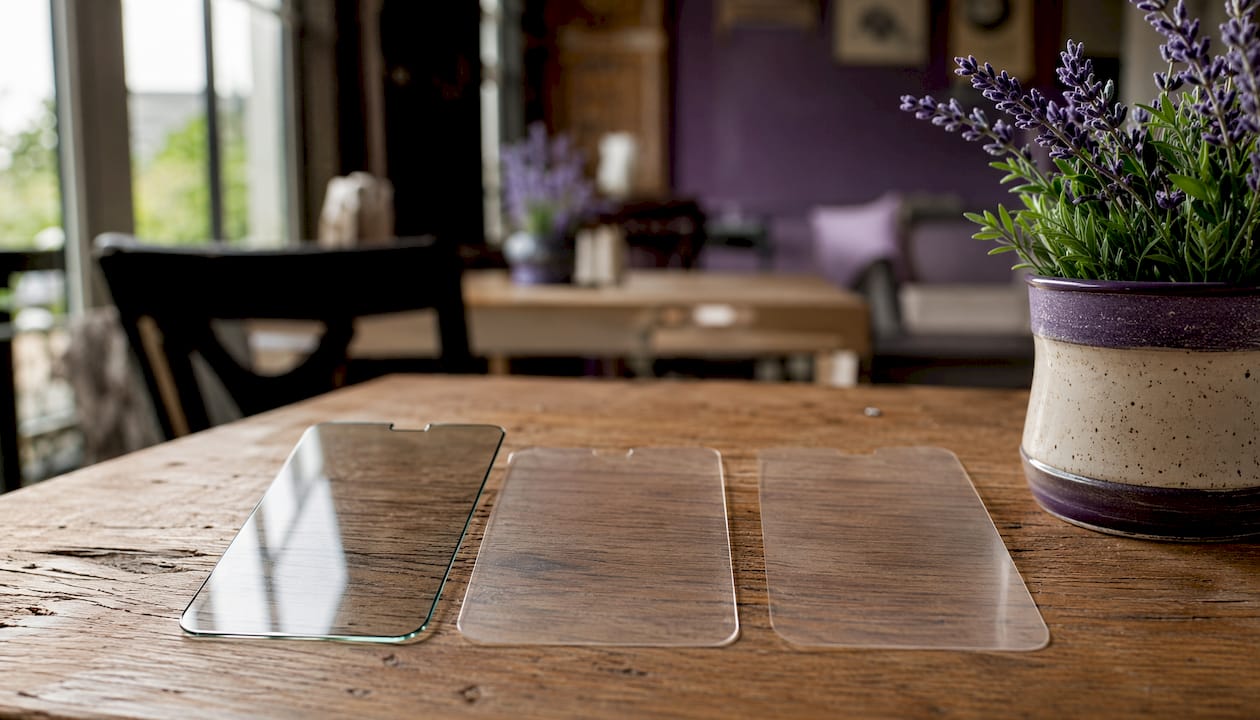
Screen protectors are broadly made from PET/TPU film or laminated glass, each with distinct trade-offs in thickness, feel, and scratch resistance. Here is how the main types compare.
| Type | Material | Hardness | Best for | Limitations |
|---|---|---|---|---|
| Tempered glass | Chemically strengthened glass | 9H (Mohs scale) | Impact resistance, everyday use | Thicker; may not suit curved screens |
| PET film | Polyester plastic | ~3H | Budget, low-profile look | Minimal impact protection |
| TPU film | Thermoplastic polyurethane | ~4H | Curved/foldable screens, self-healing | Softer feel, less scratch-resistant |
| Liquid nano-coat | Silicon dioxide | Varies | Near-invisible layer, pore-filling | No meaningful impact protection |
| Privacy glass | Tempered glass + filter | 9H | Commuters, open-plan offices | Reduces brightness and viewing angle |
| Anti-glare/matte | Tempered glass + coating | 9H | Outdoor use | Slight clarity reduction |
Tempered glass
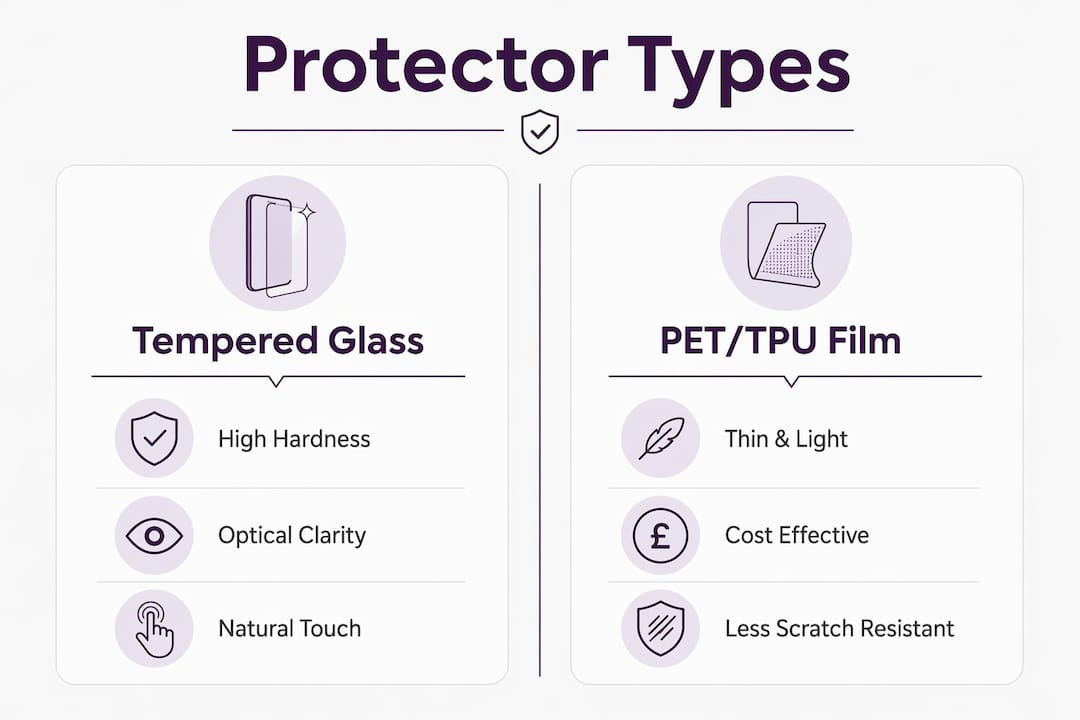
Tempered glass gives the best balance of impact resistance, optical clarity, and natural touch feel, typically transmitting 99%+ of light while maintaining original touch sensitivity. The 9H rating refers to the Mohs hardness scale: a 9H-rated glass resists scratching from materials up to pencil hardness 9H, which covers keys, coins, and most everyday abrasives. Common thicknesses run from 0.2 mm to 0.5 mm; thinner glass feels more natural but offers slightly less impact absorption.
PET and TPU films
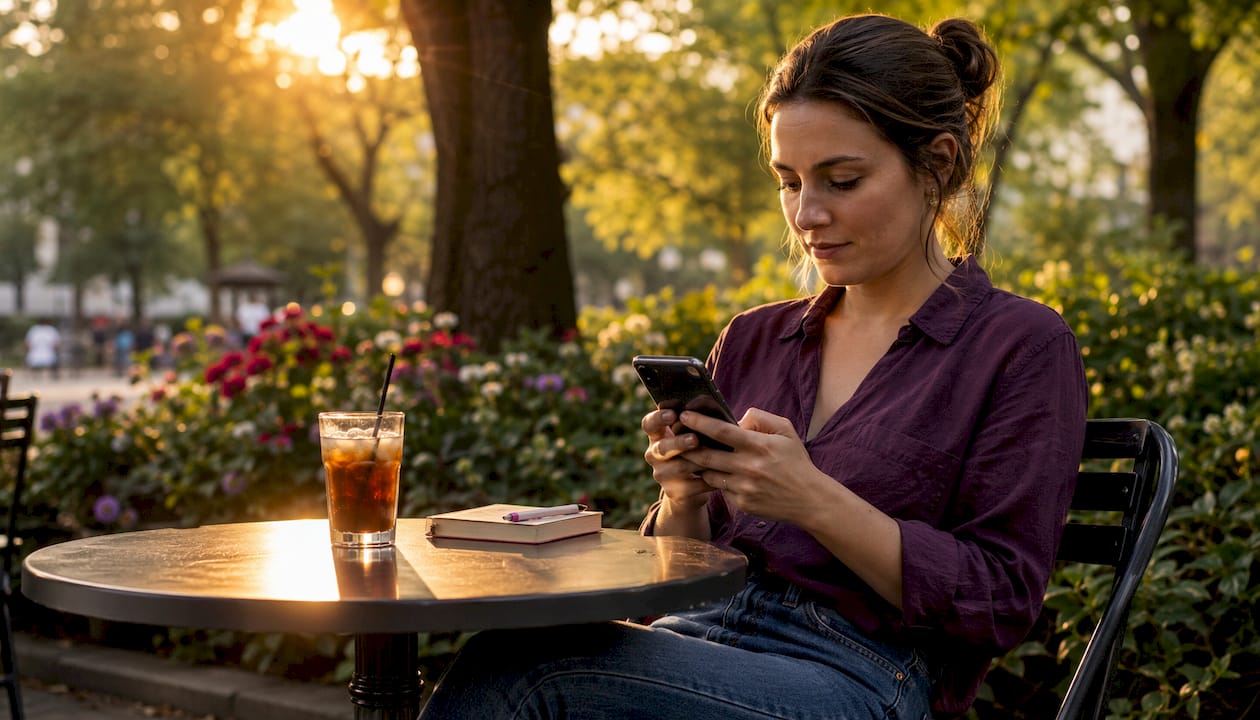
PET film is thinner and cheaper, making it a reasonable pick if you want a near-invisible look and are not worried about drops. TPU goes a step further: its self-healing properties mean light surface scratches can close up over time, and its flexibility makes it the go-to for curved or foldable displays where rigid glass would crack or lift. Neither film type offers meaningful protection against a hard drop.
Liquid nano-coatings
Liquid coatings fill the microscopic pores in your screen glass, marginally hardening the surface against fine scratches. They add no measurable impact protection, so they work best as a supplement to a case rather than a standalone solution. You can explore alternative protector options if you are curious about where liquid coatings fit in a broader protection strategy.
Specialty and edge-coverage types
Specialty features address specific lifestyle needs: privacy filters block side-on viewing for commuters, matte/anti-glare coatings cut reflections for outdoor users, and blue-light filters reduce eye strain for late-night readers. Check compatibility with your phone’s fingerprint sensor and Face ID before buying a privacy or matte glass, as some thicker filters can reduce sensor accuracy.
Edge coverage matters too. A 2D flat glass suits flat screens; 2.5D has slightly rounded edges for comfort; 3D/curved glass wraps the display edges. Curved displays, in-display fingerprint sensors, and foldables need specialist protector types, sometimes requiring LOCA (liquid optically clear adhesive) or UV-cured installation.
Which protector suits your lifestyle?
One protector type does not fit every situation. Match your choice to how you actually use your phone.
- Commuters and public transport users. A privacy filter stops the person next to you reading your messages. Look for 2-way privacy glass (blocks side views) or 4-way (blocks top and bottom too). Expect a slight reduction in screen brightness.
- Outdoor users and photographers. A matte/anti-glare tempered glass cuts sun glare without sacrificing the 9H hardness rating. Pair it with a camera lens protector if you shoot a lot; lens glass is expensive to replace.
- Drop-prone users. Go for a thicker tempered glass (0.4–0.5 mm) and combine it with a shock-absorbing case that has a raised lip above the screen. The protector absorbs the first impact; the case handles the corners.
- Minimalists and style-focused users. An ultra-thin 0.2 mm tempered glass or a high-quality PET film keeps the phone looking as close to stock as possible. Touch sensitivity stays high and the added bulk is negligible.
- Business users who type frequently. Prioritise an oleophobic coating, which repels fingerprint oils and keeps the screen clean during long typing sessions. High touch-sensitivity glass also matters here: look for products that explicitly state sensor compatibility.
Pro Tip: If you use an in-display fingerprint sensor (common on Samsung Galaxy and many mid-range Android phones), check the product listing specifically for “fingerprint sensor compatible” before buying any glass thicker than 0.3 mm.
For a deeper breakdown of which screen protector type suits your needs, SmartProtectors has a dedicated guide covering materials, coatings, and use-case matching.
How much does a screen protector cost in the UK, and where do you buy one?
Retail prices in the UK break into three broad bands:
- Budget film protectors (under £5). PET or basic TPU films, often sold in multipacks. Minimal impact protection, but fine for scratch prevention on a secondary device or a child’s tablet.
- Mid-range tempered glass (£5–£15). The sweet spot for most users. A 9H case-friendly tempered glass with an alignment tray and dust stickers. This is where SmartProtectors’ core range sits.
- Premium privacy, anti-glare, or specialist glass (£15–£30+). Full-coverage curved glass for flagship Samsung or iPhone models, LOCA-applied protectors, and 4-way privacy filters. Worth the extra cost if your lifestyle demands it.
For buying channels, you have several options. Online specialists like SmartProtectors offer the widest model coverage, including rare and older devices, with clear product descriptions and warranty support. General online retailers carry popular models but model-specific listings can be inconsistent. High-street phone shops and mobile network stores stock a limited range, usually at a premium, but staff can advise on fit. Dedicated repair shops will often fit a protector for you, which is worth considering for curved screens or LOCA installs where alignment is genuinely tricky.
Professional fitting in the UK typically costs £5–£15 on top of the protector price. For a standard flat-screen phone, a careful DIY install with an alignment tray is perfectly achievable. For a curved flagship or a foldable, paying for professional fitting is a reasonable call.
SmartProtectors’ tempered glass range covers current flagship and mid-range devices, with a sourcing request service for models not yet in the catalogue.
How to fit a screen protector correctly
A clean install takes about five minutes. Rushing the preparation is where most people go wrong.
- Prepare your space. Choose a well-lit, dust-free room. A bathroom works well: run the hot shower for two minutes before you start. Steam settles airborne dust particles, which are the main cause of bubbles under glass.
- Wash and dry your hands. Oils from your fingers transfer to the adhesive side of the protector and cause permanent smears.
- Clean the screen. Use the alcohol wipe included in your kit (or a 70% isopropyl wipe) to remove oils and residue. Follow with the dry microfibre cloth.
- Remove dust. Use the dust-removal stickers to lift any remaining particles. Hold the phone up to a light source and check at an angle.
- Peel and align. If your kit includes an alignment tray, slot the phone in before peeling the backing. The tray holds the glass in position so you do not have to eyeball it. Peel the backing and lower the glass onto the screen.
- Apply pressure. Use the squeegee card (or a wrapped cloth) to press from the centre outward, pushing air to the edges.
- Check for bubbles. Small bubbles at the edges are normal. Edge bubbles typically disappear within 24–48 hours as the adhesive cures; do not peel and reapply unless a bubble is large and central.
For TPU wet installs, spray the adhesive side lightly with the solution provided, position the film, then squeegee out the liquid from the centre. Allow 24 hours to dry fully before using the phone normally.
Pro Tip: If you get a large central bubble that does not shift after 48 hours, lift the glass from one corner using a fingernail or thin card, re-clean the screen, and reapply. Avoid using sharp tools near the screen.
Common troubleshooting:
- Edge lifting. Usually caused by a case pressing against the protector edge. Switch to a case-friendly cut or trim the case lip slightly.
- Fingerprint sensor not responding. The glass may be too thick for your sensor. Try a 0.2–0.25 mm option or a film specifically listed as sensor-compatible.
- Persistent dust bubbles. You need a cleaner environment. The steam trick above is the most effective fix without specialist tools.
How long does a screen protector last, and when should you replace it?
Daily cleaning is straightforward: a dry microfibre cloth removes fingerprints and smudges without scratching the oleophobic coating. For a deeper clean, a screen-safe alcohol wipe works well. Avoid kitchen paper, clothing fabric, or abrasive cloths, all of which scratch the coating over time.
Signs it is time to replace your protector:
- Visible cracks or chips, even hairline ones. A cracked protector has already absorbed an impact and offers reduced protection from the next one.
- Edge lifting that will not stay down after gentle pressure.
- Rainbow shimmer or delamination between the glass layers.
- Noticeably reduced touch sensitivity or sensor errors that were not present before.
Expected lifespan varies by type. A quality tempered glass protector typically lasts 12–18 months with normal use before the oleophobic coating degrades noticeably. PET film tends to show scratches and yellowing sooner, often within 6–12 months. TPU self-healing film sits somewhere in between. Liquid coatings generally need reapplication every few months.
To remove an old protector safely, lift one corner gently with a fingernail or a thin plastic card. Pull slowly and evenly to avoid leaving adhesive residue. If residue remains, a small amount of isopropyl alcohol on a microfibre cloth removes it cleanly. Then follow the installation steps above for the new protector.
What a screen protector will and won’t do
A protector is not a force field. Knowing its limits helps you build a protection strategy that actually works.
What it does well:
- Prevents scratches from keys, coins, and everyday abrasives.
- Absorbs minor impacts and distributes force across the glass surface.
- A cracked protector often means it absorbed an impact your phone screen did not.
- Privacy and anti-glare variants add lifestyle benefits beyond physical protection.
What it cannot do:
- Protect the phone’s chassis, frame, or corners from drops.
- Guarantee the screen survives a severe impact onto a hard surface from height.
- Replace a case for all-round protection.
Pro Tip: A shattered screen protector after a drop is usually good news. It means the protector took the hit. Replace it promptly, because a cracked protector offers almost no protection from the next drop.
The most effective complement to a screen protector is a case with a raised lip around the screen edge. A raised-lip case remains the most effective single complement for protecting edges and corners in drops. For camera-heavy phones, a lens protector rounds out the package. If your phone is expensive or you work in a high-risk environment, a manufacturer warranty extension or third-party insurance plan is worth considering alongside physical protection.
The combination that covers most scenarios: 9H tempered glass + shock-absorbing case with raised lip + lens protector for camera modules. SmartProtectors stocks all three components, and you can search by device model to confirm compatibility before buying.
Why SmartProtectors is our recommended supplier
SmartProtectors is a UK-accessible e-commerce shop built around one practical promise: finding the right protective product for your specific device, even if it is an older or less common model. The catalogue covers smartphones, tablets, smartwatches, laptops, and earbuds, with screen protectors, lens protectors, cases, and back covers across all categories.
Two product lines worth knowing about:
- IMAK series tempered glass. The IMAK H series and IMAK Pro full-glue glass are model-specific fits with 9H hardness, high optical clarity, and installation aids included. The full-glue variant bonds edge to edge, which eliminates the lifting problem common with standard adhesive rings.
- Full-coverage anti-glare PET films. For users who want a matte finish or need a flexible film for a curved screen, SmartProtectors stocks full-coverage options designed for specific device dimensions.
| Feature | IMAK tempered glass | Anti-glare PET film |
|---|---|---|
| Hardness | 9H | ~3–4H |
| Touch sensitivity | High | High |
| Clarity | 99%+ light transmission | Slight matte reduction |
| Best for | Everyday impact protection | Outdoor use, curved screens |
| Installation aids | Alignment tray, dust stickers | Squeegee, wet solution |
If your model is not yet listed, the sourcing request service means SmartProtectors will locate and add it to the catalogue. That is particularly useful for less mainstream Android brands and older flagship models that most retailers have stopped stocking.
Key takeaways
A 9H tempered glass protector paired with a raised-lip case is the most cost-effective way to protect your phone screen against scratches, minor impacts, and the repair bills that follow.
| Point | Details |
|---|---|
| Best all-round choice | A 9H case-friendly tempered glass protector suits most UK users and most budgets. |
| Screen repairs are costly | Screen repairs account for over 60% of smartphone damage; a protector costs a fraction of a replacement screen. |
| Installation matters | Use an alignment tray, dust stickers, and the steam trick; small edge bubbles clear within 24–48 hours. |
| Replace when cracked | A cracked protector has done its job but offers little further protection; replace it promptly. |
| SmartProtectors | Stocks IMAK tempered glass and anti-glare films for hundreds of models, with a sourcing service for unlisted devices. |
The case for keeping it simple
There is a tendency in phone accessory coverage to over-complicate the choice. Reviewers compare nano-coatings, graphene-infused glass, and military-grade drop ratings as though most people are dropping their phones from a first-floor window onto concrete daily. Most are not.
For the vast majority of UK phone users, the decision is genuinely straightforward: a 9H tempered glass protector, fitted with an alignment tray in a steamy bathroom, paired with a decent case. That combination handles the realistic threat profile: keys in a pocket, a phone face-down on a café table, the occasional slide off a sofa arm.
Where I think people go wrong is in treating the protector as the whole solution. The corners of your phone are the most vulnerable point in a drop, and no screen protector touches them. A case with a raised lip is not optional if you drop your phone regularly. SmartProtectors’ range covers both sides of that equation, and the model-specific sourcing service means you are not stuck choosing between a generic fit and no fit at all.
The one area where spending more genuinely pays off is curved flagship screens. A cheap flat glass on a Samsung Galaxy S25 will lift at the edges within weeks. Either buy a proper 3D curved glass or a quality TPU film, or pay a repair shop to fit it with LOCA adhesive. The extra few pounds are worth it.
Get the right protector for your phone from SmartProtectors
Finding a screen protector that actually fits your exact model should not require an hour of searching and second-guessing. SmartProtectors cuts that down to a model search and a few clicks.
The shop covers screen protectors, lens protectors, cases, and back covers for smartphones, tablets, smartwatches, laptops, and earbuds. The IMAK tempered glass range is a strong starting point for most users: 9H hardness, model-specific cuts, and installation aids in the box. If your device is not listed, submit a sourcing request and the team will add it to the catalogue.
Browse the full range at SmartProtectors and search by your device model to find a confirmed-fit protector with warranty support. For case options that complement your new protector, the shop stocks everything from slim clear covers to shock-absorbing designs with raised screen lips.
Useful sources
- Screen protector — Wikipedia: foundational overview of materials, types, and trade-offs.
- The Ultimate Guide to Screen Protection — Travelling Technicians: installation techniques, material comparisons, and cost-justification data.
- Do you still need a screen protector in 2026? — SlashGear: honest assessment of whether modern phone glass changes the calculus.
- What kind of screen protector should I get? — PC Mag UK: practical buying advice covering film vs glass and lifestyle matching.
- Screen protector buying guide — T-Mobile: privacy filter specifics, 2-way vs 4-way, and clarity trade-offs.
- How to choose the perfect tempered glass — SmartProtectors: thickness, coatings, and installation guidance for tempered glass buyers.
- Types of screen protectors and how to choose — SmartProtectors: full material and feature breakdown for UK buyers.