

TPU wins on durability, drop protection, and design precision. Silicone wins on grip and tactile comfort. That is the short answer. Which one you actually need depends on how you use your phone, what you carry it in, and how long you expect the case to last.
| Feature | TPU | Silicone |
|---|---|---|
| Durability | High | Medium |
| Drop protection | Excellent | Good |
| Grip | Moderate | High |
| Cost | Medium | Lower |
| Customisation | Excellent | Limited |
| Fit longevity | Retains shape long-term | May loosen over time |
| Material hardness | Shore 80A–95A | Shore 50A–60A |
| Temperature versatility | Stable to 80°C | Stable to 260°C |
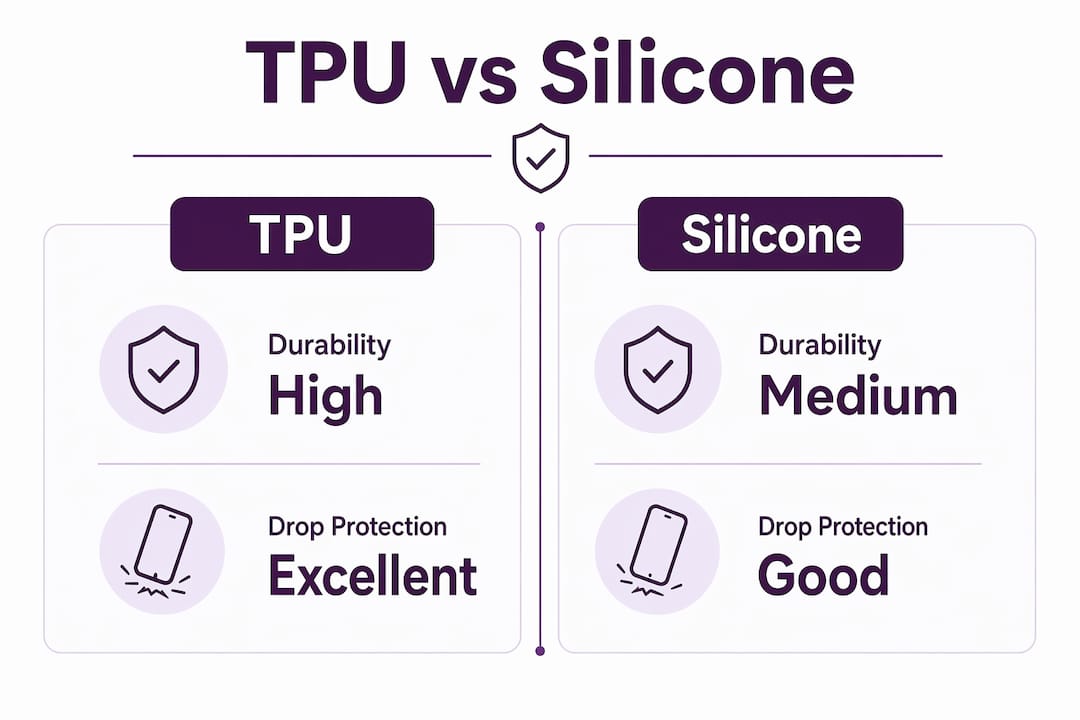
TPU disadvantages: yellows under UV exposure, slightly less grip than silicone, not suited to extreme temperatures.
Silicone disadvantages: attracts dust and lint, loses snug fit with repeated removal, limited printing options.
Mobile Lyme Limited, a certified UK smartphone accessories retailer, stocks both TPU and silicone phone cases with same-day free shipping and a money-back guarantee.
What are the real material differences between TPU and silicone?
TPU, short for Thermoplastic Polyurethane, is a hybrid polymer that blends rubber-like flexibility with plastic-like structure. Its molecular architecture alternates hard and soft segments, which is precisely what lets it absorb and disperse impact energy rather than simply compressing under force. That structure also gives TPU superior abrasion resistance and tensile strength compared to silicone. TPU is also recyclable through standard thermoplastic streams, which matters if sustainability is part of your buying decision.
Silicone is a synthetic rubber built on a silicon-oxygen backbone, which gives it properties that no thermoplastic can match. It remains flexible across an extraordinary temperature range: stable from -54°C to 260°C, compared to TPU’s narrower -40°C to 80°C window. It is also biocompatible and chemically inert, which is why medical-grade silicone appears in everything from surgical tools to baby products.
For everyday phone use, the hardness difference is the most practical distinction. TPU sits at Shore 80A–95A, giving it structured flexibility. Silicone at Shore 50A–60A is noticeably softer and squishier. One consequence of silicone’s softer surface is that it acts as a dust and lint magnet, while TPU’s smoother finish resists pocket debris far better.
Clear TPU cases are susceptible to yellowing caused by UV exposure and oxidation. This is a chemical property of the material, not a manufacturing fault. Silicone, by contrast, holds its colour stably over time.
How do TPU and silicone cases compare for durability and drop protection?
TPU’s alternating hard and soft molecular segments disperse impact energy efficiently, which is why it appears in the inner shells of multi-layer cases designed for serious drop protection. When a phone hits a hard floor, a TPU case absorbs the shock across the whole structure rather than concentrating force at the point of impact. That mechanical advantage is why TPU maintains its shape and resists abrasion better than silicone over months of daily use.
Silicone’s contribution to drop protection works differently. Its high-grip surface reduces the chance of the phone slipping in the first place, and its natural elasticity provides vibration damping on impact. Silicone cases also tend to have thicker raised edges around the screen, which helps when a phone lands face-down. The limitation is structural: silicone lacks the shape memory of TPU and can stretch or loosen after repeated removal and reinstallation.
Pro Tip: If you remove your case regularly, for wireless charging pads or swapping between cases, choose TPU. Silicone loses its snug fit faster under that kind of repeated stress.
Fit longevity is a real differentiator. TPU preserves precise cutouts for ports and buttons over time, while a silicone case that has been on and off a phone dozens of times may start to feel baggy around the corners.
Which case feels better in your hand: TPU or silicone?
Silicone’s soft, skin-like texture creates high friction against your palm, which is genuinely reassuring if you use your phone one-handed or in wet conditions. The trade-off is that the same surface that grips your hand also grips everything in your pocket. Silicone attracts dust and lint readily, and that debris can work its way between the case and the phone, potentially scratching the device finish over time.
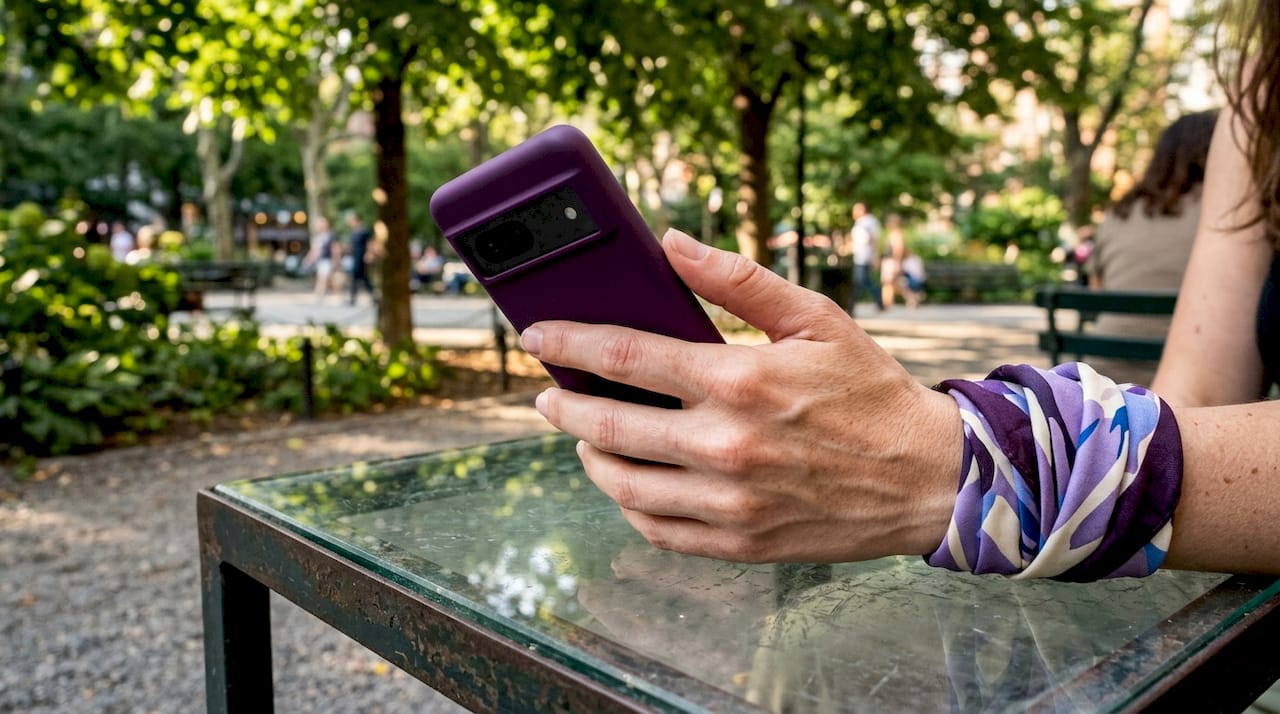
TPU feels firmer and slides more cleanly in and out of tight jeans pockets. It is not slippery, but it lacks the almost sticky quality of silicone. For people who carry their phone in a jacket or bag rather than a trouser pocket, that smoother surface is an advantage rather than a drawback.
Cleaning is simpler with TPU. A quick wipe with a damp cloth removes most grime. Silicone needs more frequent attention, and you should avoid abrasive cloths that can degrade any soft-touch coating.
Pro Tip: For silicone cases, a lint roller works faster than a cloth for removing surface debris. For TPU, a small amount of isopropyl alcohol on a microfibre cloth keeps the surface clear without damaging the material.
Can you get good-looking designs on TPU and silicone cases?
TPU is the clear winner for printed designs. Its non-porous surface accepts high-resolution UV and IMD printing without the artwork fading or peeling. Translucent and crystal-clear TPU cases are also possible, which lets the phone’s own colour show through. That transparency option simply does not exist with silicone, which can only achieve a translucent finish at best.
Silicone offers a wide range of vibrant solid colours and holds them stably over time without yellowing. Where it falls short is in complex patterns and photographic prints. Printing on silicone requires specialist inks and primers, and the results are less sharp and less durable than on TPU. For brands or individuals who want a bold, single-colour case with a premium soft feel, silicone works well. For anyone who wants a custom photo, intricate pattern, or brand logo, TPU is the practical choice.
The yellowing issue with clear TPU cases is worth planning for. UV-resistant TPU formulations slow the process, and some retailers position clear TPU cases as replaceable every six to twelve months rather than permanent accessories.
How do TPU and silicone cases compare on price in the UK?
At bulk quantities of 1,000 or more units, silicone cases cost 20–35% less than equivalent TPU cases. That gap comes primarily from raw material costs: TPU resin costs more than silicone at source. For individual buyers in the UK, silicone cases typically sit at the lower end of the retail price range, with TPU occupying the mainstream tier.
The durability offset matters for value calculations. TPU’s superior resilience can reduce warranty claims and returns compared to silicone, particularly for drop-related damage—TPU lowers returns and warranty claims by 15–25%. Over the life of a case, a slightly more expensive TPU option may cost less in replacements.
| Cost component | Silicone case | TPU case |
|---|---|---|
| Base material (per unit) | 20–35% lower | higher |
| Mould amortisation | — | — |
| Colour and customisation | — | — |
| Total landed cost | 20–35% lower | higher |
Source: Alibaba.com seller data, 2026. Figures in USD at bulk volume; excludes import duties.
Mobile Lyme Limited offers percentage discounts on selected lines, including deals of up to 56% off on certain cases, which can bring TPU options into the same price bracket as standard silicone products.
TPU vs silicone case: side-by-side summary
| Category | TPU | Silicone | Best choice |
|---|---|---|---|
| Durability | High, resists abrasion | Medium, scuffs over time | TPU |
| Drop protection | Excellent, disperses impact | Good, cushions and grips | TPU |
| Grip | Moderate, smooth feel | High, skin-like friction | Silicone |
| Cost | Medium retail price | Lower retail price | Silicone |
| Customisation | Excellent, HD printing | Limited, solid colours | TPU |
| Fit longevity | Retains shape long-term | May loosen with use | TPU |
| Material hardness | Shore 80A–95A | Shore 50A–60A | Depends on preference |
| Temperature versatility | Stable to 80°C | Stable to 260°C | Silicone |
Choose TPU if you want a case that holds its shape, accepts custom prints, and provides reliable drop protection over the long term. An airbag-corner TPU case for a flagship device combines the material’s impact-dispersal properties with reinforced corner protection. Choose silicone if grip and tactile comfort are your priorities, particularly for outdoor use or if you frequently handle your phone with wet hands.
Find the right case at SmartProtectors
SmartProtectors stocks a broad range of TPU and hybrid cases for smartphones, tablets, and wearables across hundreds of models, including hard-to-find devices. If your model is not listed, you can submit a request and the team will source it. Every order comes with fast UK delivery, and the full device protection range covers screen protectors, lens protectors, and back covers alongside cases.
Key takeaways
TPU cases outperform silicone on durability, drop protection, and design precision, while silicone cases deliver superior grip, softness, and temperature tolerance across a wider range.
| Point | Details |
|---|---|
| Hardness drives performance | TPU at Shore 80A–95A offers structured protection; silicone at Shore 50A–60A prioritises grip and comfort. |
| Fit longevity favours TPU | Silicone stretches and loosens with repeated removal; TPU retains precise port cutouts far longer. |
| Silicone costs less upfront | At bulk volumes, silicone cases cost 20–35% less than TPU, and TPU reduces returns and warranty claims by 15–25%. |
| Printing is a TPU strength | TPU accepts high-resolution designs; silicone is limited to solid colours and specialist inks. |
| Temperature range suits silicone | Silicone stays stable from -54°C to 260°C, versus TPU’s narrower -40°C to 80°C window. |