

A screen protector hides shallow, hairline scratches by softening light reflection, but cannot fill in or repair a deep gouge. Tempered glass and matte films often perform better on surface-level marks. If your screen has fine scratches, fitting a protector can help prevent worsening; deep scratches that catch a fingernail typically require screen repair rather than just coverage.
TL;DR:
- A screen protector can hide shallow scratches by softening light reflection, but it cannot fill or repair deep gouges that catch a fingernail.
- Full-glue tempered glass protectors, especially glossy and thicker variants, provide the best concealment for fine marks and impact resistance.
- The effectiveness of hiding scratches depends on the scratch’s depth, adhesive type, surface finish, lighting conditions, and cleanliness during application.
- Applying a protector over a deep or structural damage can leave shadows or glare, and should only be done after confirming the scratch is superficial.
- Regular cleaning and careful installation are essential to prevent trapping debris and ensure the protector effectively masks minor damage.
Table of Contents
- Does a screen protector really hide scratches?
- Which type of screen protector hides scratches best?
- What happens when you apply a protector to an already scratched screen?
- How do you apply a screen protector to a scratched screen safely?
- When should you replace the protector instead of repairing the screen?
- How our hands-on experience shapes this advice
- A practical view on living with a scratched screen
- Shop scratch-hiding screen protectors that actually work
- Sources
- FAQ
Does a screen protector really hide scratches?
The honest answer is: it depends entirely on how deep the damage goes. A screen protector sits on top of the glass, and light behaves differently when it passes through an extra layer versus reflecting straight off bare, damaged glass. That difference in light behaviour is the entire mechanism behind scratch concealment, and it explains why some marks vanish almost completely while others stay stubbornly visible.
Light hitting a scratch on bare glass scatters unevenly, because the groove disrupts the flat surface and refracts light in odd directions. That’s what makes a scratch flash and catch your eye, especially under bright light or sunlight. Add a protector on top and you introduce a second, uniform surface. Light now refracts through the new layer first, and the adhesive underneath can partially fill the groove, which reduces the scatter. Different protector materials interact with a scratch through their own optical and adhesive behaviour, which is why a tempered glass sheet and a thin film can produce noticeably different results on the same crack.
Adhesive plays a bigger role in this than most people realise. A full-glue protector spreads liquid or gel adhesive across the entire surface, and that adhesive settles into micro-grooves before curing. Once it’s set, the groove is partially levelled out optically, even though the physical scratch is still there underneath. Edge-only adhesive protectors, by contrast, only stick around the perimeter and leave an air gap over the rest of the screen, so they do far less to disguise fine marks.
Finish matters just as much as adhesive. A glossy tempered glass protector matches the reflective quality of the original screen closely, which helps shallow scratches blend in without adding texture. A matte or anti-glare finish works differently: it diffuses light across a slightly textured surface, scattering reflections evenly rather than letting them bounce cleanly. That diffusion is genuinely good at masking fine surface abrasion, though it also softens the sharpness of what’s on-screen and gives the glass a slightly grainy feel under your finger.
None of this rebuilds glass. A protector reduces the visibility of shallow scratches by smoothing how light reflects, but it cannot refill missing material, so a deep gouge will still show a shadow or catch light at certain angles even with a good protector fitted.
What actually determines the result:
- Depth of the scratch (surface-level versus into the glass structure)
- Type of adhesive (full-glue versus edge-only)
- Surface finish (glossy versus matte)
- Ambient lighting when you’re viewing the screen
- Cleanliness of the screen before application
Pro Tip: Hold your phone flat under a desk lamp and tilt it slowly. If a scratch disappears at most angles but flashes at one specific angle, it’s shallow enough that a good protector will hide it almost entirely.
Which type of screen protector hides scratches best?
Tempered glass is generally the strongest all-round choice for concealing shallow marks, mainly because its thickness and glossy finish mimic the original screen surface closely. A full-glue tempered glass sheet, in particular, spreads adhesive evenly across the whole panel rather than just the edges, and that even coverage does more to disguise fine scratches than edge-glue designs. Tempered glass and thicker protectors tend to outperform thin films both cosmetically and for impact resistance, which is why it’s the default recommendation when someone wants a screen to look clean again as well as survive the next drop.
PET and TPU films sit at the opposite end of the thickness scale. They’re thin, flexible, and cheap, and they diffuse light differently to glass because they don’t have the same optical density. On very fine abrasion, a film can do a reasonable job of softening the look of a mark. The problem comes with anything deeper: thin film has a tendency to “sink” into a groove rather than sit level over it, which can actually draw the eye to the scratch rather than away from it. Films are also more prone to peeling at the edges over time, which undoes whatever cosmetic benefit they gave in the first place.
Matte and anti-glare protectors take a different approach entirely. Rather than trying to match the original glass finish, they deliberately scatter light across a textured surface. That diffusion effect is genuinely useful for hiding fine scratches under most indoor and outdoor lighting, and it also cuts down glare and fingerprint visibility, which matters if smudges bother you as much as scratches do. User reports on matte films are mixed: plenty of people find they mask light marks well, but deeper scratches can still show through, and the trade-off is a slight loss of screen sharpness and a grainier feel under the finger.
Liquid screen protectors are worth mentioning only to manage expectations. These are chemical coatings applied directly to the glass, and they’re marketed on hardness rather than concealment. They add a thin nano-layer that can smooth out the very finest surface wear, but they do nothing meaningful for a scratch you can already feel with a fingernail. If concealment is the goal, a liquid coating is the weakest option on this list by a wide margin.
Quick summary of what each type actually does:
- Tempered glass (full-glue): best all-rounder for hiding shallow scratches and adding impact protection
- PET/TPU film: cheap and thin, fine for very light abrasion, poor on deeper marks
- Matte/anti-glare: strong at diffusing light around fine scratches, softer screen feel, reduces glare and fingerprints
- Liquid coating: minimal cosmetic benefit, mainly adds surface hardness rather than disguise
If appearance and shock resistance both matter, tempered glass is the sensible default. If glare and fingerprints on the screen bother you more than the scratches themselves, a matte finish is worth choosing instead.
What happens when you apply a protector to an already scratched screen?
Before fitting anything, it helps to work out how deep the damage actually goes, because that single detail decides whether a protector will genuinely hide the mark or just sit on top of an obvious flaw.
A simple fingernail test is the easiest way to check without risking further damage. Run a fingernail gently across the scratch at a right angle. If your nail glides over smoothly with barely any catch, the scratch is shallow and sits mostly in the surface coating rather than the glass itself. If your nail visibly catches or drags, the damage has gone deeper into the glass structure, and no protector is going to disguise that fully.
Shallow scratches respond well. Once a protector, especially full-glue tempered glass, is fitted over a shallow mark, the combination of adhesive fill and matched optical refraction usually makes the scratch very difficult to spot in normal use. You might still catch a faint line under a torch held at a sharp angle, but day-to-day, it disappears.
Deep scratches behave differently. Adhesive can’t fill a groove that goes below the surface coating, so light still scatters unevenly through that section even with a protector on top. You’ll usually still see a shadow or a faint glint at certain angles, particularly outdoors. Fitting a protector over minor damage does make fine scratches less visible and works as a temporary barrier, but it’s a management strategy for a deep scratch, not a fix.
There are real downsides to covering a heavily gouged screen without addressing it first:
- Loose glass fragments or debris can get trapped under the protector, creating visible specks or bumps
- Deep grooves near the edge of the screen make it harder for the adhesive to seal properly, which increases the risk of lifting over time
- If the scratch has compromised the screen’s structural integrity, applying pressure during installation can worsen the crack
For most people with cosmetic surface marks, fitting a protector is a genuinely good long-term solution, not just a stopgap. For anyone with deeper, structural damage, it buys time and stops things getting worse while you save for or arrange a proper screen repair.
How do you apply a screen protector to a scratched screen safely?
Getting this right matters more on a scratched screen than a pristine one, because trapped debris or a rushed application will draw attention to the exact marks you’re trying to hide.
- Wash and dry your hands thoroughly, then wipe the screen with a microfibre cloth followed by an isopropyl alcohol wipe to remove oils and residue.
- Inspect the scratch closely under good light and gently clear any loose grit or dust from inside the groove using canned air. Avoid rubbing abrasively, which can widen a shallow scratch or push debris deeper in.
- Use a dust-removal sticker to lift any remaining particles from the screen surface immediately before application; even one speck of dust under a protector will show as a visible bump.
- Choose a full-glue tempered glass protector where possible, since the liquid adhesive spreads across the whole panel and settles into fine grooves far more effectively than edge-only adhesive strips. Full-glue designs reduce air gaps and produce a more even optical result over damaged glass than protectors that only stick around the border.
- Align the protector using the camera cutout and edges as reference points, then lower it flat rather than dropping it at an angle.
- Press from the centre outward with a card or the applicator provided, pushing air and any excess adhesive towards the edges rather than trapping it in the middle.
- Lift and reposition only while the adhesive is still workable; most full-glue kits give you a short window before the bond sets properly.
Small bubbles usually work themselves out within a day as the adhesive settles, but persistent bubbles or dust trapped under the glass need a fresh attempt. If you keep getting lifting at the edges, the screen probably wasn’t fully clean or dry before application. For a slower, photo-led walkthrough, SmartProtectors’ bubble-free installation guide covers the same steps in more detail, and the dust-under-protector troubleshooting guide is worth bookmarking if you spot a speck after the adhesive has already cured.
Pro Tip: If you’ve got a scratch near the very edge of the screen, apply slightly more pressure along that edge during the “press outward” step. Edge grooves are where lifting starts first, and a firmer initial seal there prevents most future peeling.
When should you replace the protector instead of repairing the screen?
A scratched protector is a five-minute fix. A cracked screen is not, and knowing which situation you’re actually in saves both money and frustration.
Replace the protector alone when the damage is limited to the protector’s surface and the phone still works normally. Touch response is accurate, there’s no flickering or dead pixels, and the scratches you’re seeing are on the removable layer rather than the glass underneath. In this case, peeling off the old protector and fitting a new one restores a clean look in minutes.
Screen repair becomes necessary once damage moves past cosmetic. Watch for:
- Touch input becoming unresponsive or inaccurate in certain areas
- Chips or cracks deep enough to expose the display layers beneath the glass
- Any moisture getting under the glass, which risks corrosion and permanent display damage
- Spiderweb cracking that’s spreading further with normal use
A well-fitted protector genuinely extends the practical life of a screen by absorbing the wear that would otherwise land directly on the glass, particularly from pocket grit and keys. It’s not a permanent shield, but a good tempered glass protector used consistently means far fewer scratches reach the actual screen in the first place. Readers who carry their phone while running or exercising often find pocket friction is the single biggest source of fine surface scratches, which is one reason a running belt or armband is worth considering alongside a protector.
Cost is the other deciding factor. Replacing a protector costs a small fraction of what a professional screen repair does, and takes minutes rather than days. If you’re on the fence about whether a repair is worth it against the phone’s resale value, it’s worth comparing repair costs against insurance or resale options before committing either way.
Never try to smooth a deep gouge yourself with toothpaste, metal polish, or similar abrasives. Community advice consistently warns against this, because abrasive compounds can strip coatings, alter the glass’s reflectivity permanently, and introduce new micro-scratches on top of the original damage.
How our hands-on experience shapes this advice
This guidance comes from Dian at SmartProtectors, drawing on close, practical familiarity with how protectors behave once fitted to real, damaged screens rather than pristine ones. That includes writing SmartProtectors’ guides on fixing dust trapped under a protector and on choosing between protector types, both of which come from the same everyday installation problems covered here.
The store stocks protectors for a wide range of devices, including models that are harder to find protection for elsewhere, and offers a request service for devices not yet listed. The focus throughout is on reliable, cost-effective protection rather than premium pricing.
Three products cover most of the scenarios discussed above:
- The Tempered Glass Screen Protector IMAK H Series for Honor Power2 5G suits anyone wanting a glossy, high-clarity finish that closely matches the original screen while masking shallow marks.
- The Anti-glare Matted Explosion-proof Full Coverage PET Film for iPhone 16 works best for anyone prioritising glare and fingerprint reduction alongside fine-scratch concealment.
- The Anti-glare Matted Explosion-proof PET Film for iPhone 15 / iPhone 15 Pro gives iPhone 15 owners the same matte, diffusing finish in a thinner film format.
If your device isn’t listed anywhere on the site, the sourcing request option means it’s worth asking before assuming nothing exists for your model.
A practical view on living with a scratched screen
If your screen already has a few fine scratches, fit a protector sooner rather than later, and pair it with a case. Together they cover the two things that actually damage screens day to day: surface abrasion from pockets and bags, and drop impact.
Be honest with yourself about what a protector actually does. It’s a preventative, cosmetic layer, not a repair. It stops new damage reaching the glass and softens how existing shallow marks catch the light, but it will never turn a cracked screen back into a whole one.
One last practical check before you fit anything: press gently around any existing crack to feel for loose glass shifting under your finger. If it moves, don’t apply adhesive-backed protection until the screen has been properly assessed. Sealing loose glass under a protector can trap sharp fragments right against your finger.
— Dian
Shop scratch-hiding screen protectors that actually work
Choosing between tempered glass, matte film, and liquid coatings is easier once you know what your screen actually needs, and SmartProtectors carries options across all three categories for a genuinely wide range of phones, including harder-to-find models most retailers skip.
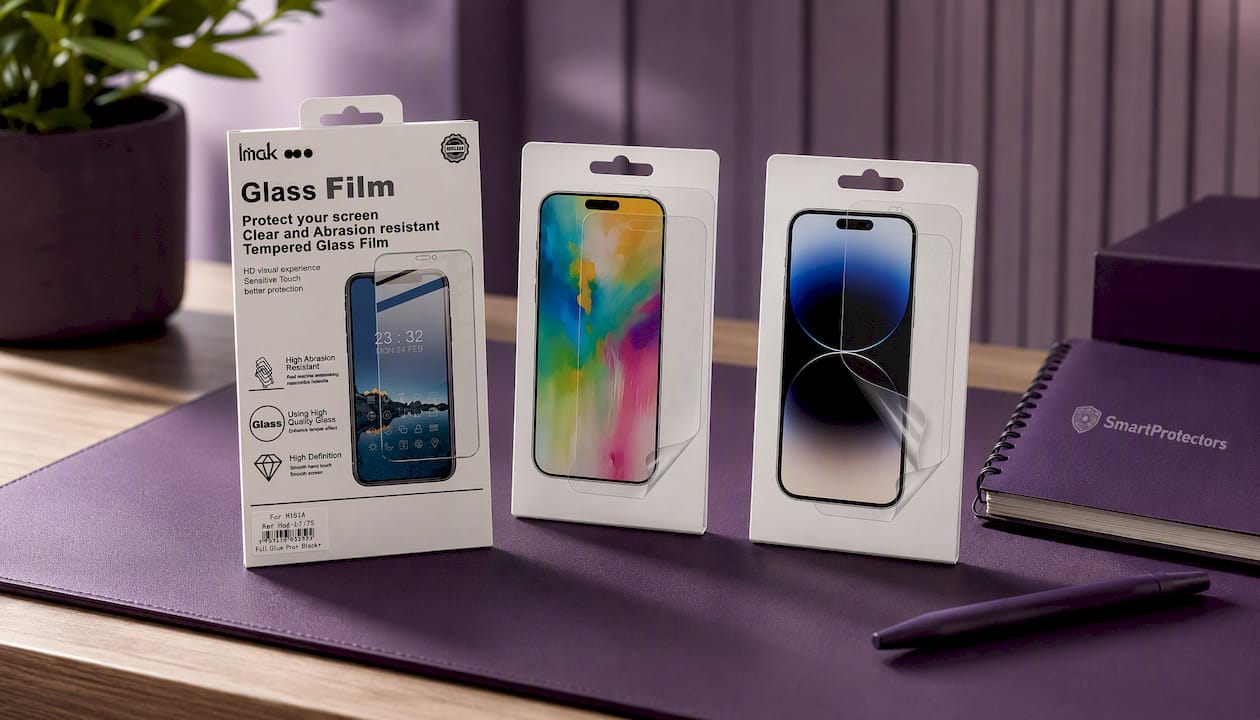
For anyone dealing with shallow surface scratches on an Honor device, the Tempered Glass Screen Protector IMAK H Series for Honor Power2 5G gives a glossy, near-invisible fit that masks fine marks while adding real drop protection. If glare and fingerprints bother you as much as scratches, the Anti-glare Matted Explosion-proof Full Coverage PET Film for iPhone 16 diffuses light across a textured matte surface that hides micro-abrasion effectively. iPhone 15 and 15 Pro owners get the same matte treatment with the Anti-glare Matted Explosion-proof PET Film for iPhone 15 / iPhone 15 Pro.
If your exact device model is not listed, submitting a request to a supplier that sources protectors for uncommon devices may help find a suitable product. Browse the full range and check compatibility with your phone, tablet, or smartwatch, then follow the installation guide for a clean, bubble-free fit on your first attempt.
Sources
- Do you really need a screen protector? What it actually protects | Asurion
- Do Screen Protectors Hide Scratches? | Rokform Blog
- Will a Screen Protector Hide Scratches? (Answer Revealed!) | MobileTechAddicts
FAQ
Will putting a screen protector hide scratches on my phone?
Yes, for shallow, surface-level scratches. A protector smooths how light reflects off the mark, making it far less noticeable, though deep gouges will still show through.
Can you fix scratches on a screen protector itself?
Not really. Once a protector’s own surface is scratched, the practical fix is replacing it rather than trying to polish it out, since most polishing methods risk damaging the coating further.
What type of screen protector is best for hiding scratches?
Full-glue tempered glass generally works best for concealment and impact protection combined, while matte or anti-glare film is the stronger choice if glare and fingerprints are your main concern.
How can I hide scratches on my phone screen without replacing it?
Fit a well-matched screen protector, ideally full-glue tempered glass or a matte PET film, after cleaning the screen thoroughly and clearing any debris from inside the scratch first.